
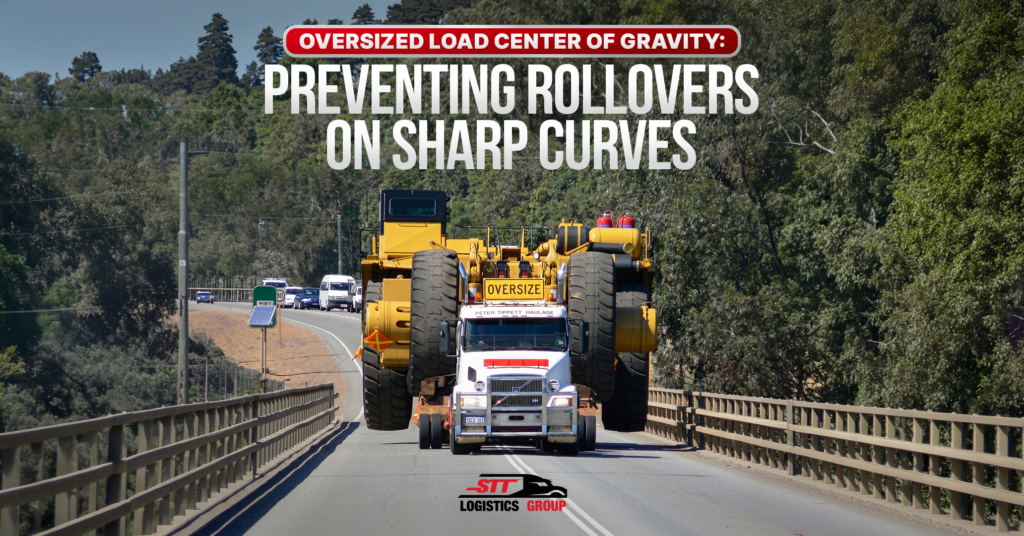
Navigating heavy haul transportation requires far more than just powerful trucks and wide-load permits. When moving massive industrial equipment, safety hinges entirely on precise engineering calculations. Among these critical factors, correctly identifying the oversized load Center of Gravity (CoG) stands out as the ultimate line of defense against catastrophic highway accidents—especially when taking sharp, low-radius turns.
What Is Center of Gravity and Why Does It Shift in Transit?
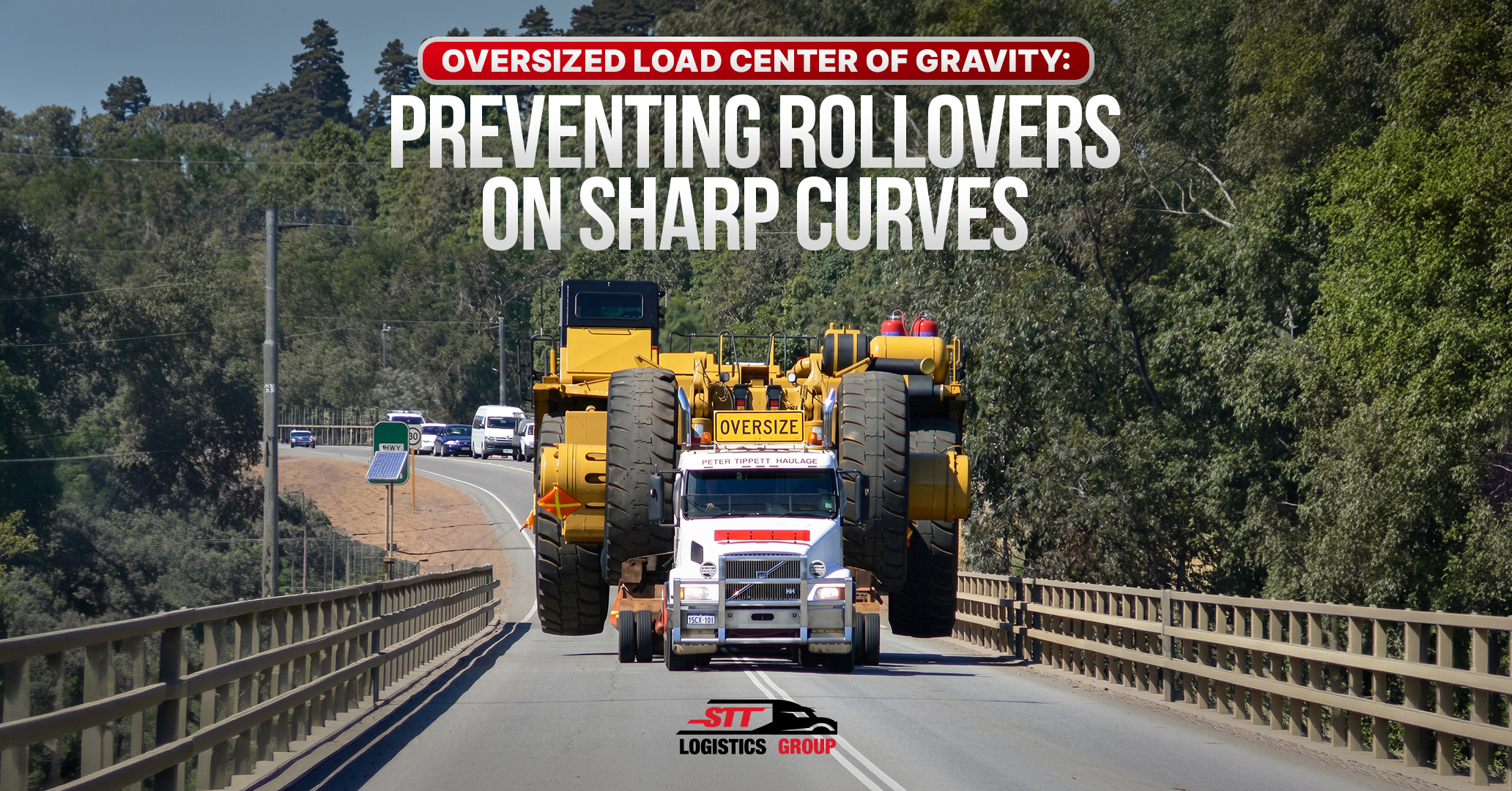
The Center of Gravity (CoG) represents the single point where the total weight of a body is concentrated. In standard cargo, the CoG remains predictably low and centered. However, oversized and heavy-haul machinery—such as industrial turbines, transformers, or mining components—frequently feature asymmetrical weight distributions and high profiles.
While driving on a straight highway, a high CoG might go unnoticed. Yet, as soon as a heavy transport vehicle enters a curved ramp or a tight turn, lateral forces begin to act immediately.
How Centrifugal Force Threatens Heavy Cargo
When a truck navigates a low-radius curve, centrifugal force pushes the cargo outward, away from the turn center. If the oversized load Center of Gravity is positioned too high or off-center:
- The tipping torque quickly exceeds the vehicle’s restoring torque.
- The inner wheels lose contact with the road surface.
- The entire rig reaches a point of no return, leading to a dynamic rollover.
Why Miscalculating CoG Leads to Catastrophic Accidents
A minor miscalculation of just a few inches in CoG height or lateral position can severely alter a trailer’s tipping limit. When drivers enter low-radius curves, even at reduced speeds, the combination of road superelevation (bank angle), speed, and elevation shifts the dynamic weight onto one side of the trailer.
If the freight forwarder or logistics team relies on estimates rather than precise axle-weight distribution formulas, the risk of structural failure or balance loss increases exponentially.
According to research published in the Transportation Research Record, rollover crashes account for a disproportioned number of heavy vehicle fatalities, with vehicle instability and improperly secured high-CoG loads cited as major contributing factors in heavy transport incidents.
How Professional Engineering Protects Your Heavy Haul
To eliminate rollover risks on low-radius curves, specialized logistics teams perform rigorous pre-trip route planning and structural simulations.
Key Measures to Prevent CoG-Related Rollovers:
- 3D Weight Distribution Modeling: Engineers map the load’s exact dimensions to determine the precise balance point before loading.
- Hydraulic Multi-Axle Trailers: Specialized trailers automatically adjust height and balance to keep the payload level on banked curves.
- Route Geometry Sweeps: Advanced software simulates the exact turn radius of every curve along the transport route to ensure safe clearance and speed limits.
- Proper Securement and Lashing: Direct lashing calculations are performed so the cargo cannot shift laterally during continuous cornering.
Partner with the Heavy Transport Experts
Do not leave your high-value cargo to guesswork. Safe, reliable heavy haul transportation demands precision engineering, route clearance analysis, and flawless execution from start to finish.
At STT Logistics Group, our expert team calculates every variable—from axle weights to exact Center of Gravity tolerances—ensuring your oversized load arrives safely and on schedule.
Ready to move your heavy machinery safely?
Contact STT Logistics Group Today to Request Your FREE Quote!
Don’t forget to stay updated on heavy haul insights and specialized transport solutions! Follow our new official page at @sttlogisticsgroup across all social platforms.