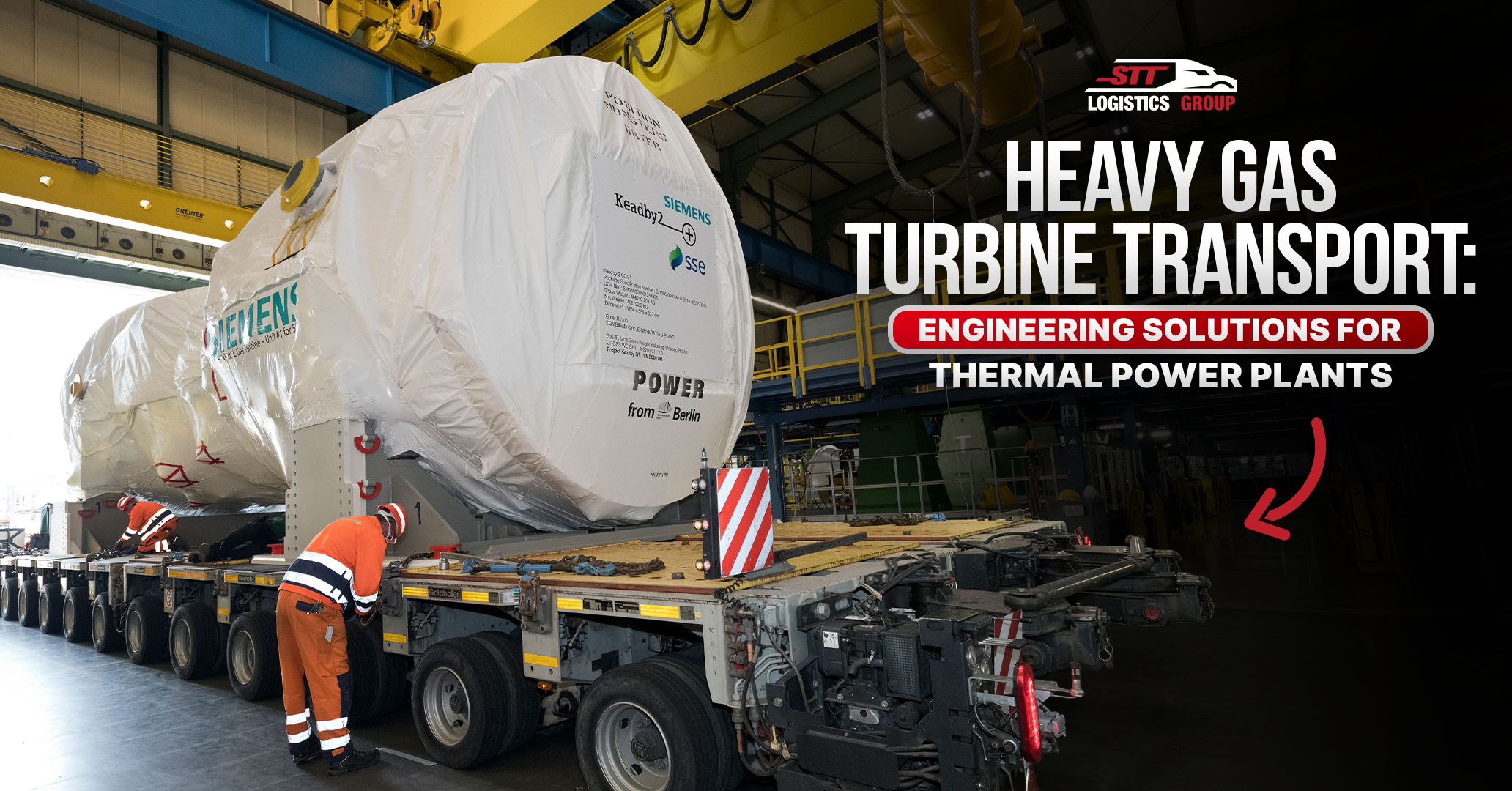

Moving massive power generation equipment requires precision engineering, robust planning, and flawless execution. When thermal power plants demand high-capacity energy solutions, heavy gas turbine transport becomes a critical operation. Handling monolithic modules weighing over 200 tons presents unique logistical challenges. However, specialized logistics experts turn these complex operations into safe, predictable routines.
The Challenge of Monolithic Loads Weighing 200+ Tons
Thermal power generation relies heavily on large-scale equipment, including heavy gas turbines, electrical generators, and heat recovery steam generators (HRSGs). Because engineers design these components as dense, unified structures, technicians cannot easily disassemble them for transit. Transporting a single 200-ton piece creates localized ground pressure that standard highway infrastructure cannot support.
For this reason, specialized carriers must evaluate total weight, dimensions, and center of gravity long before the cargo leaves the manufacturing facility.
Axle Load Distribution and Hydraulic Platform Trailers
To transport heavy gas turbines safely across public roads and access points, engineers rely on multi-axle hydraulic platform trailers, such as Self-Propelled Modular Transporters (SPMTs). By spreading thousands of pounds across dozens of individual wheel lines, logistics teams effectively distribute the ground pressure.
- Load Spreading: Weight is distributed across multiple axle lines to stay within legal surface limits.
- Hydraulic Suspension: Independent hydraulic lines maintain level orientation, protecting cargo stability across uneven terrain.
- Precision Steering: Advanced steering modes allow operators to maneuver massive, rigid loads through tight turns and narrow access gates.
Through meticulous engineering, logistics teams balance the load dynamically while navigating changing gradients.
Engineering Provisional Bridges and Route Reinforcement
Infrastructure limitations often present the largest obstacle in heavy gas turbine transport. Standard highway bridges and overpasses carry strict gross vehicle weight (GVW) caps. When a 200+ ton turbine combined with heavy transport equipment exceeds bridge safety margins, civil engineers design provisional bridge solutions.
These temporary engineering measures include:
- Over-Bridging: Laying temporary steel girder bridges directly above existing structures to transfer the load safely past vulnerable spans.
- Provisional Bypass Routes: Constructing heavy-duty gravel beds or steel-mat roads to bypass weak infrastructure completely.
- Structural Shoring: Installing temporary support columns underneath existing bridges to increase structural load capacity during transit.
According to research published in the Transportation Research Record, specialized heavy-load transport permits and route analyses show that structural bridge evaluations can prevent infrastructure fatigue and reduce transport delays by up to 35% on complex heavy-haul corridors. Therefore, comprehensive route surveys remain non-negotiable for project safety.
Partner with STT Logistics Group
Executing complex heavy-haul moves requires experienced engineering and dedicated project management. At STT Logistics Group, we deliver tailor-made transportation solutions for the energy and power generation sectors, ensuring your high-value equipment arrives safely, on budget, and on schedule.
Ready to move your heaviest power assets without the stress? Contact STT Logistics Group today to get your free quote!
Don’t forget to follow our official page at @sttlogisticsgroup to stay updated on our latest heavy-lift projects, industry insights, and engineering achievements!