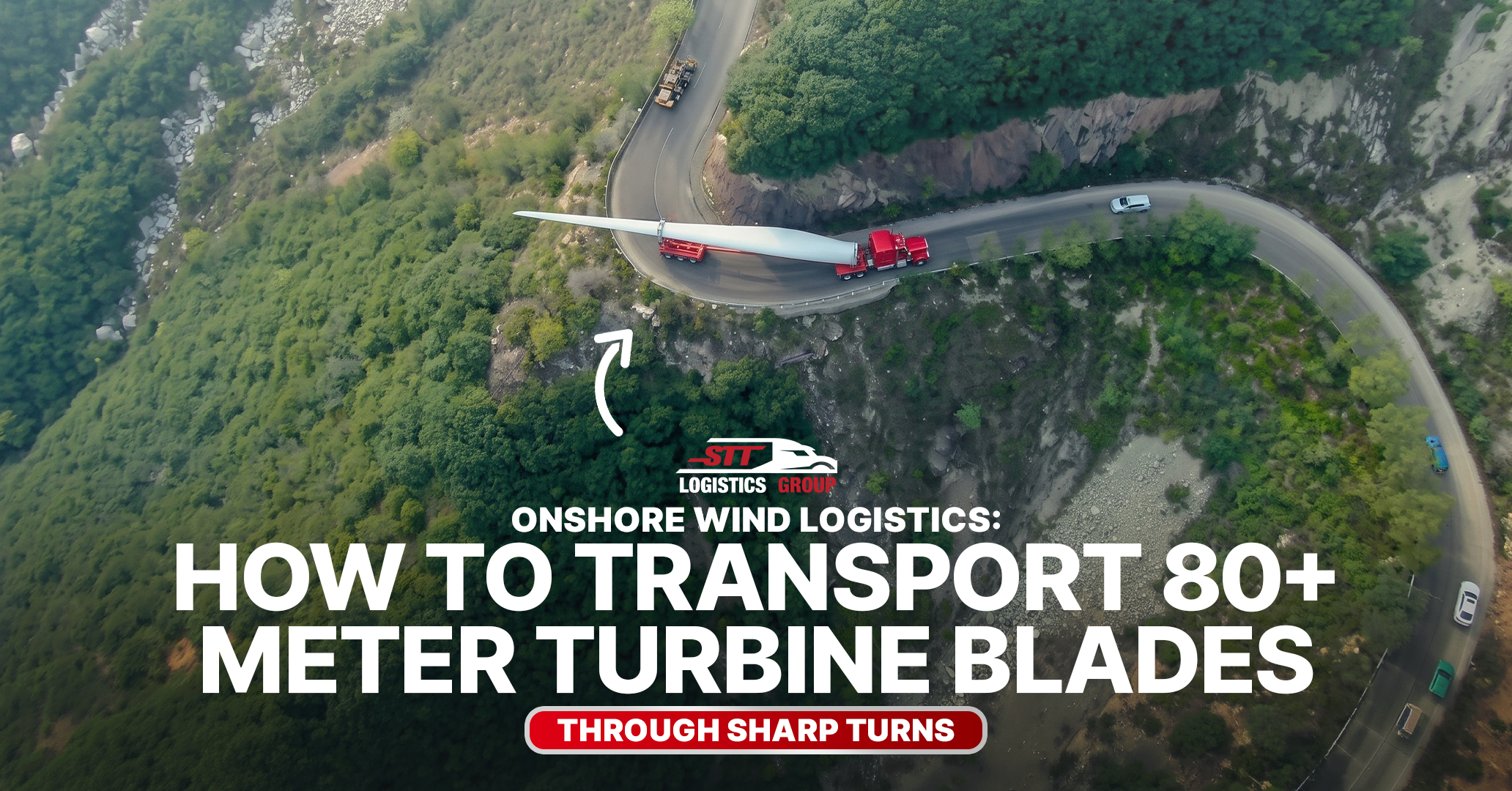

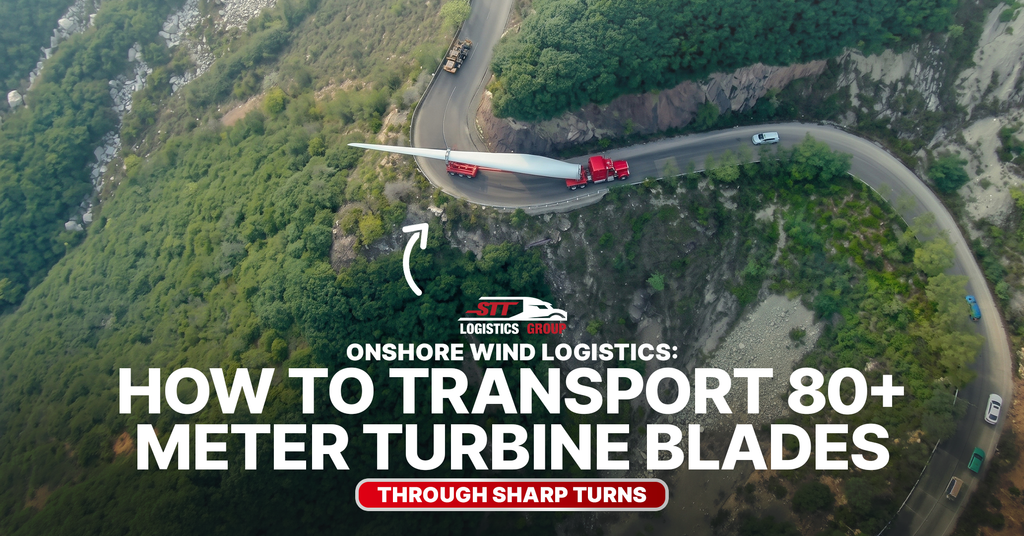
The renewable energy sector is expanding rapidly, and wind turbines are growing larger to maximize energy efficiency. Modern turbine blades now stretch beyond 80 meters in length, presenting massive logistical challenges. Navigating these gargantuan components across tight corners, narrow mountain pass roads, and steep inclines requires specialized expertise in onshore wind logistics.
Transporting mega-blades from ports or manufacturing plants to remote wind farms is no longer a simple haul. Heavy haul transport teams face severe topographical obstacles, sharp turning radiuses, and low-clearance bridges. However, engineering innovation has introduced advanced trailer technologies that make these complex operations possible.
The Power of Blade Lifters and Mega-Trailers
Traditional long-haul flatbeds cannot navigate tight, 90-degree turns on narrow rural roads. To overcome these physical constraints, logistics specialists deploy state-of-the-art extendable mega-trailers and specialized blade lifters (blade adapters).
- Extendable Telescopic Trailers: These trailers extend to match the extreme length of the cargo while maintaining stability on highways. Hydraulic steerable axles allow operators to manually or automatically maneuver the rear wheels around sharp curves.
- Blade Lifters / Tilt Adapters: When approaching tight hairpin turns or urban bottlenecks, blade lifters tilt the turbine blade up to 60 degrees into the air. By lifting the blade vertically, the transport team reduces the overall footprint of the truck, enabling it to navigate sharp turns without clearing adjacent trees or structure barriers.
According to a industry report by the National Renewable Energy Laboratory (NREL), transport constraints on land directly limit blade dimensions, prompting logistics providers to adopt specialized tip-lifting and rear-steering adapters to reach remote, complex sites.
Navigating Mountain Wind Farms and Terrain Challenges
Developing mountain wind projects presents unique topographical hurdles. Steep gradients, unpaved access roads, and unpredictable weather conditions test the limits of heavy machinery.
Prior to transport, specialized teams perform route survey simulations using 3D swept-path analysis. Engineers identify high-risk obstacle areas and precisely plan where blade lifters must be engaged. Furthermore, multi-axle heavy transport vehicles distribute the multi-ton weight evenly, preventing road damage and ensuring traction on unpaved inclines. Through rigorous planning and advanced transport technology, onshore wind logistics transforms complex geographical challenges into seamless delivery operations.
Partner with STT Logistics Group
Transporting oversized wind components requires precision, safety, and specialized heavy-haul machinery. At STT Logistics Group, we manage end-to-end heavy transport solutions tailored to the renewable energy industry.
Are you planning your next wind energy project? Contact STT Logistics Group today to get your free quote! Let our team handle your most challenging oversized loads with speed and safety. Don’t forget to follow our brand-new official page at @sttlogisticsgroup to stay updated on our latest project highlights and logistics insights!