
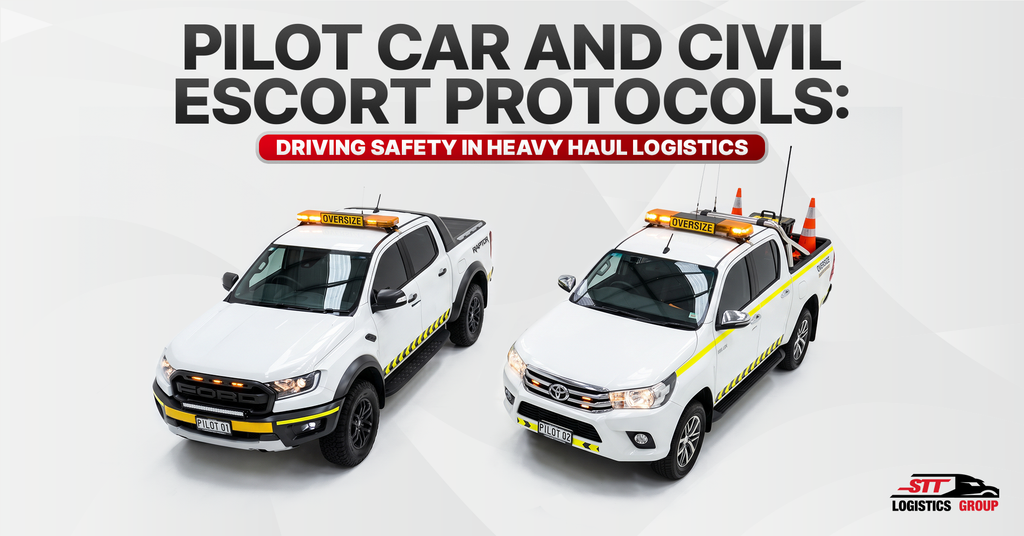
Transporting oversized loads requires immense precision, specialized equipment, and unwavering attention to safety. When massive industrial machinery or structural components move across highway networks, standard driving rules are no longer sufficient. Consequently, pilot car and civil escort protocols serve as the bedrock of incident-free superload transit.
According to a study published by the Federal Highway Administration (FHWA), effective pilot car operations significantly reduce risk factors in oversize/overweight (OS/OW) movements by pre-screening route hazards and warning surrounding traffic. By deploying lead and rear escort vehicles (P/EVs), specialized logistics teams safeguard both the specialized cargo and the traveling public.
The Vital Roles of Lead and Rear Escorts
Escort vehicles function as an operational early-warning system. However, their duties differ depending on their placement relative to the heavy haul rig.
1. The Lead Escort (Front Pilot)
Positioned well ahead of the oversized load, the lead escort vehicle continuously evaluates upcoming road conditions.
- Height Pole Monitoring: When transporting over-height loads, the lead car uses a certified height pole to physically check overhead clearings, bridges, and utility lines.
- Traffic Warning: Incoming traffic is alerted about an approaching oversized vehicle, especially on narrow or two-lane highways.
- Hazard Identification: Lane closures, construction zones, and tight intersections are identified before the main load reaches them.
2. The Rear Escort (Tail Escort)
While the front driver scans ahead, the rear escort protects the trailing footprint of the transport vehicle.
- Blind-Spot Protection: Rear escorts prevent passenger vehicles from tailgating or attempting dangerous pass maneuvers in blind spots.
- Lane Management: Multi-lane changes are coordinated smoothly because the rear escort secures the target lane first.
- Rearward Visibility: Bright amber beacons and warning signage keep surrounding traffic vigilant.
Driver Certification and Regulatory Standards
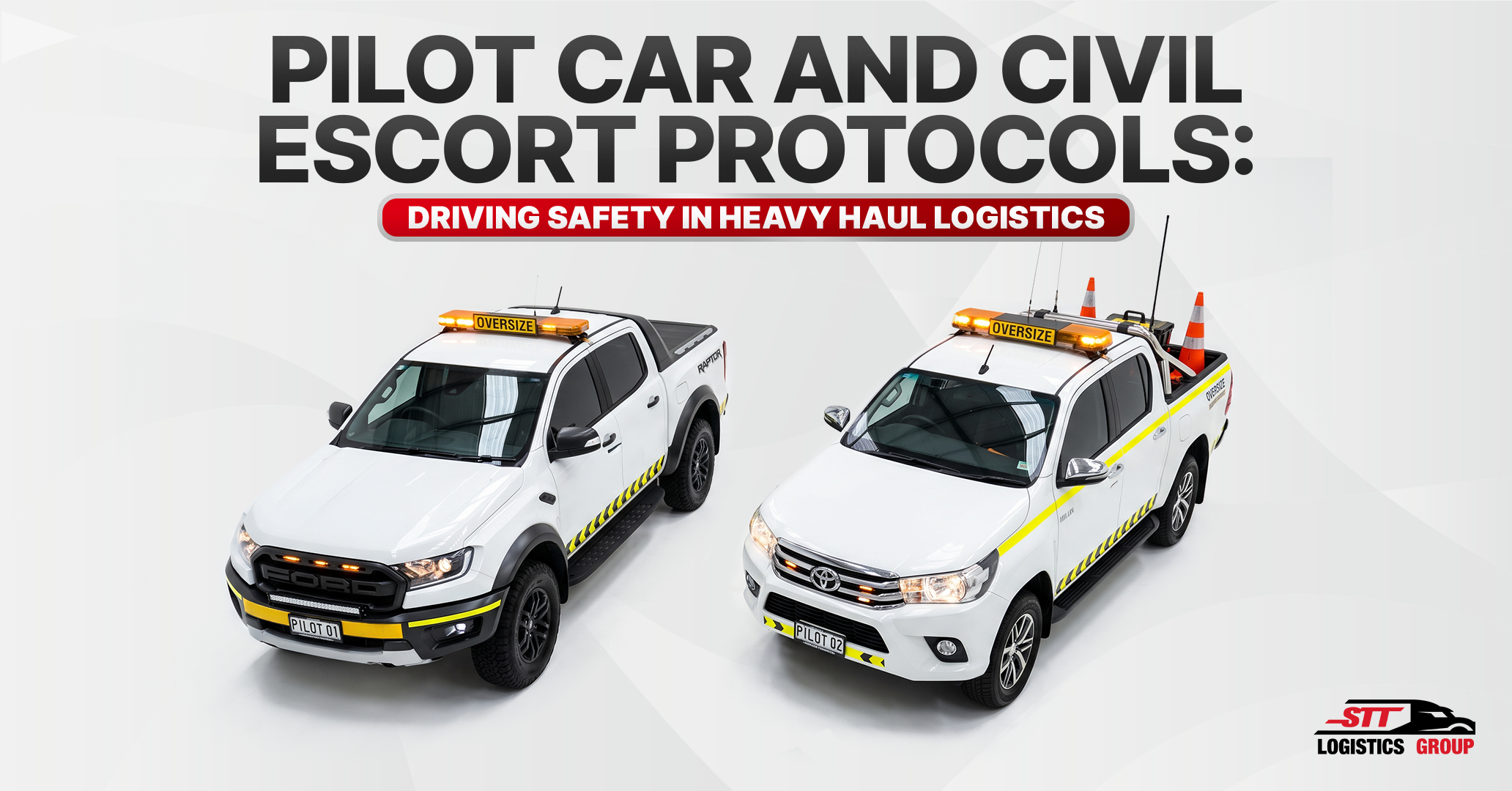
Operating an escort vehicle involves far more than simply placing an amber light on top of a pickup truck. Pilot car drivers must complete specialized training and certification programs in many states. Certification requirements ensure drivers understand state-specific length/width thresholds, flagger duties, and proper positioning techniques.
Moreover, safety equipment must meet strict federal and state guidelines. Standard safety gear includes:
- CB Radios for instant communication.
- HIGH OFF-LOAD signage and high-visibility safety vests.
- Safety cones, flares, and wide-load flags.
When standardized pilot car and civil escort protocols are strictly enforced, transport companies minimize delays and maintain full regulatory compliance across state lines.
Real-Time Radio Coordination and Emergency Protocols
Flawless communication prevents costly delays and unscheduled road closures. CB radio channels are assigned prior to departure so that the lead escort, the heavy haul truck driver, and the rear escort remain in constant contact.
For instance, if the lead pilot encounters an unexpected road hazard, clear vocal directions are transmitted immediately to the truck driver. This real-time feedback allows the heavy haul operator to slow down safely rather than taking abrupt, dangerous braking maneuvers.
What Happens During an Emergency?
Despite thorough planning, unexpected emergencies can happen on the road. When mechanical failures or severe weather conditions strike:
- Controlled Pull-Offs: The lead pilot identifies a safe, wide shoulder or parking area before the rig comes to a stop.
- Visual Perimeter Control: Both escort vehicles deploy warning cones and flare lines to divert traffic safely away from the stranded rig.
- Emergency Dispatch: Local authorities and DOT officials are notified immediately if a lane blockage cannot be avoided.
By practicing these pilot car and civil escort protocols, logistics teams turn potential highway hazards into manageable, controlled situations.
Partner with STT Logistics Group
Navigating complex oversized load regulations doesn’t have to be stressful. At STT Logistics Group, your heavy haul projects are managed by certified professionals who prioritize safety, efficiency, and full compliance every mile of the way.
Ready to move your next heavy haul load?
Contact STT Logistics Group today to get your FREE QUOTE!
Don’t forget to follow our journey on our brand-new page: @sttlogisticsgroup!