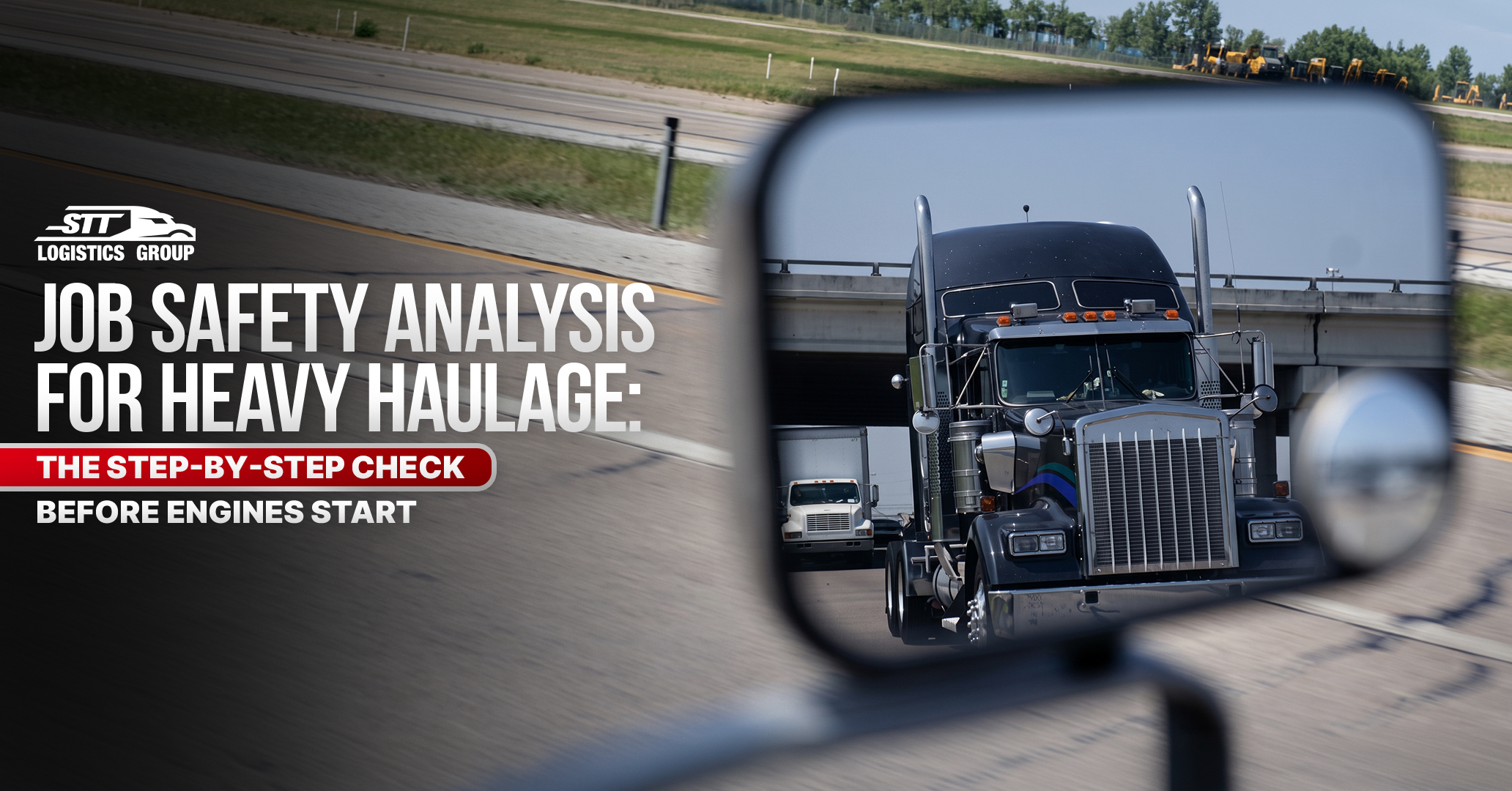

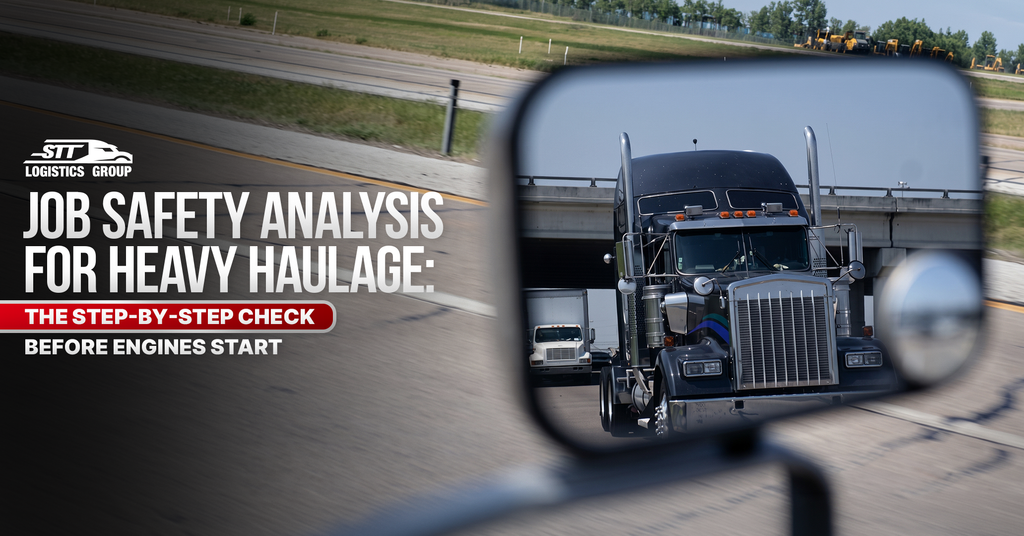
Transporting superloads requires meticulous precision, absolute discipline, and zero room for error. Before a heavy haulage convoy turns the key, logistics teams must execute a rigorous Job Safety Analysis for heavy haulage (JSA) to identify hazards, secure critical routes, and ensure every team member operates under maximum safety standards.
Beyond regulatory compliance, proactive risk management protects human life and high-value cargo. According to the Occupational Safety and Health Administration (OSHA), systematically analyzing job hazards before work begins significantly reduces workplace injuries, preventing costly equipment downtime and operational delays on complex industrial moves.
Executing a structured JSA ensures that every variable is accounted for before a superload hits the road.
1. On-Site Hazard Identification
Safety begins long before the convoy moves. Field engineers conduct a comprehensive on-site hazard assessment to evaluate soil stability, staging area capacity, and equipment positioning. During this phase, safety supervisors review mechanical load limits, inspect heavy transport rigs, and assign specific roles to ground crews, ensuring everyone understands the operational risks.
2. Critical Route Evaluation and Pavement Studies
A successful superload transport relies entirely on route integrity. Engineers map out turns, road gradients, bridge weight capacities, and potential pinch points. Specialized transport teams perform turning radius calculations and load-distribution analyses to prevent structural damage or rollover risks during transit.
3. Managing High-Voltage Lines and Overhead Obstacles
Overhead hazards present some of the most dangerous risks during heavy transport maneuvers. Field teams coordinate directly with local utility companies to measure clearance beneath high-voltage lines. By establishing strict clearance thresholds and coordinating temporary power shutdowns or line lifts, teams safely navigate high-voltage corridors without endangering crews or local infrastructure.
4. Navigating Urban Interferences and Traffic Control
Operating heavy haulage vehicles through urban environments requires seamless coordination with municipal authorities, escort vehicles, and local law enforcement. Traffic management plans are established to divert public traffic, adjust traffic signal placement, and clear street parking along the route, minimizing public disruption while keeping the convoy moving steadily.
Start Your Next Heavy Move with Total Confidence
Executing complex superload maneuvers demands expert coordination, technical precision, and an uncompromised commitment to safety. At STT Logistics Group, we manage every stage of your heavy transport with industry-leading safety protocols and customized logistics strategies.
Contact STT Logistics Group today to claim your free quote and secure your freight! Don’t forget to follow our new page @sttlogisticsgroup to stay updated on our latest logistics engineering projects and industry insights.