
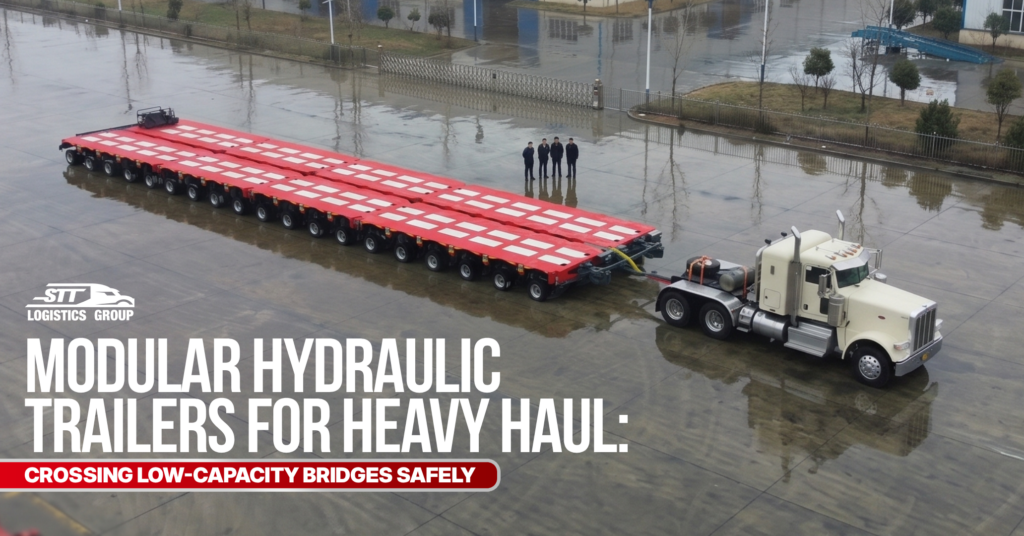
Transporting super-heavy or oversized cargo presents unique engineering challenges. Project managers often face strict route restrictions, particularly when cargo must cross bridges with low load capacities. Standard flatbeds simply cannot distribute massive weight evenly enough to meet highway regulations. Consequently, logistics teams rely on specialized equipment: modular hydraulic trailers for heavy haul (such as SPMTs and Thinline trailers).
In this article, we will explore how modular hydraulic trailers work, why axle weight distribution matters, and when you should deploy these heavy-duty transport solutions for your project.
What Are Modular Hydraulic Trailers?
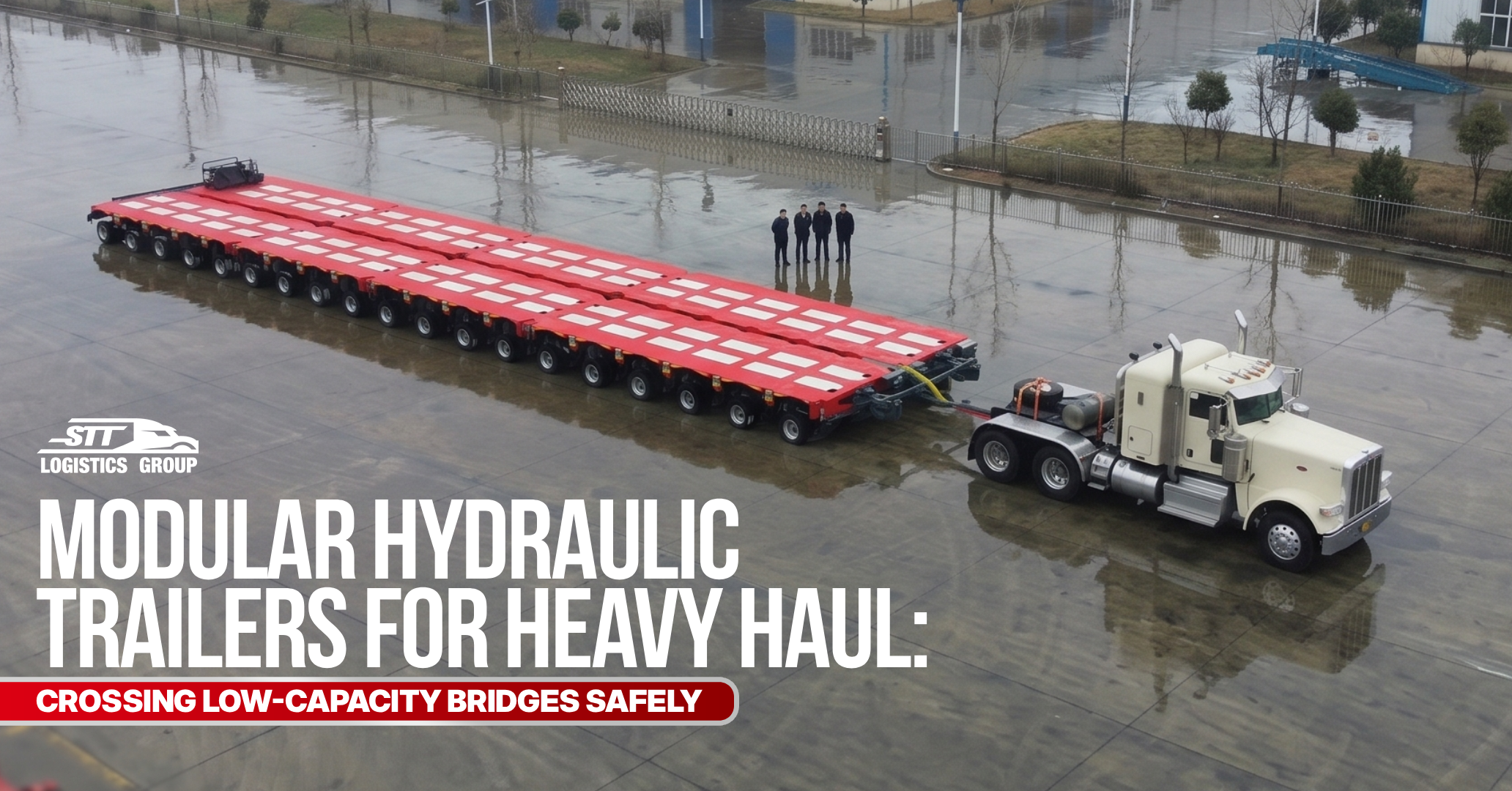
Modular hydraulic trailers—often categorized as Self-Propelled Modular Transporters (SPMTs) or towed modular lines—are advanced transport systems designed for extreme loads. These trailers feature multiple lines of axles, each equipped with independent hydraulic suspension and steering mechanisms.
Because engineers can assemble these units in various combinations (end-to-end or side-by-side), logistics teams can customize the platform to match the exact length, width, and weight requirement of the cargo.
How Hydraulic Axles Protect Low-Capacity Bridges
When heavy equipment crosses a bridge, the total gross weight is not the only factor structural engineers consider. Instead, the concentrated load per axle determines whether a bridge can safely support the vessel, transformer, or turbine.
Modular trailers solve this structural challenge through three main mechanisms:
- Hydraulic Equalization: The hydraulic suspension links adjacent axles into common fluid circuits. Therefore, as the trailer moves over uneven terrain or bridge approaches, the hydraulic pressure equalizes across every tire, preventing single-axle overloading.
- Weight Dispersion Over Space: By adding more axle lines, the gross weight is divided across dozens—or even hundreds—of tires. As a result, the weight footprint per square foot decreases drastically.
- Dynamic Leveling: If a bridge deck inclines or tilts, the trailer’s hydraulic system automatically compensates, keeping the center of gravity stable throughout the crossing.
When Should You Use SPMTs or Thinline Modules?
While standard multi-axle trailers work for routine heavy loads, specific project conditions require upgrading to modular hydraulic platforms:
- Gross Cargo Weight Exceeds Standard Limits: When payloads top 100 to 1,000+ tons, traditional trailers cannot legally or physically handle the stress.
- Strict Bridge Weight Posting Limits: If the transport route includes aging infrastructure or bridges rated for low per-axle limits, additional axle lines must be added to lower the weight per footprint.
- Extreme Center-of-Gravity Considerations: Taller industrial components require active hydraulic leveling to prevent tipping on cambered roads or bridge ramps.
- Tight Radius Navigation: Hydraulic multi-way steering allows individual axle pairs to rotate up to 180 degrees, allowing long loads to maneuver tight bridge entryways.
Real-World Impact: The Science Behind Axle Distribution
Proper axle weight distribution is not just a best practice—it is a regulatory and engineering necessity. Infrastructure damage caused by overweight transport can lead to costly delays and bridge closures.
According to research published by the Federal Highway Administration (FHWA), implementing effective multi-axle load-spreading techniques reduces peak pavement and bridge deck stress levels significantly, allowing super-heavy loads to safely pass through corridors that would otherwise be off-limits.
Plan Your Heavy Transport Route with STT Logistics Group
Navigating complex permits, bridge surveys, and specialized equipment demands an experienced partner. At STT Logistics Group, our heavy haul specialists analyze your route, calculate axle weight requirements, and dispatch the exact modular hydraulic trailer setup your cargo demands.
Don’t let bridge weight restrictions stall your project. Contact STT Logistics Group today for a free quote and let our team handle your specialized heavy transport safely and efficiently!
Follow us on our new official page @sttlogisticsgroup to stay updated on our latest heavy haul projects and transport insights.