
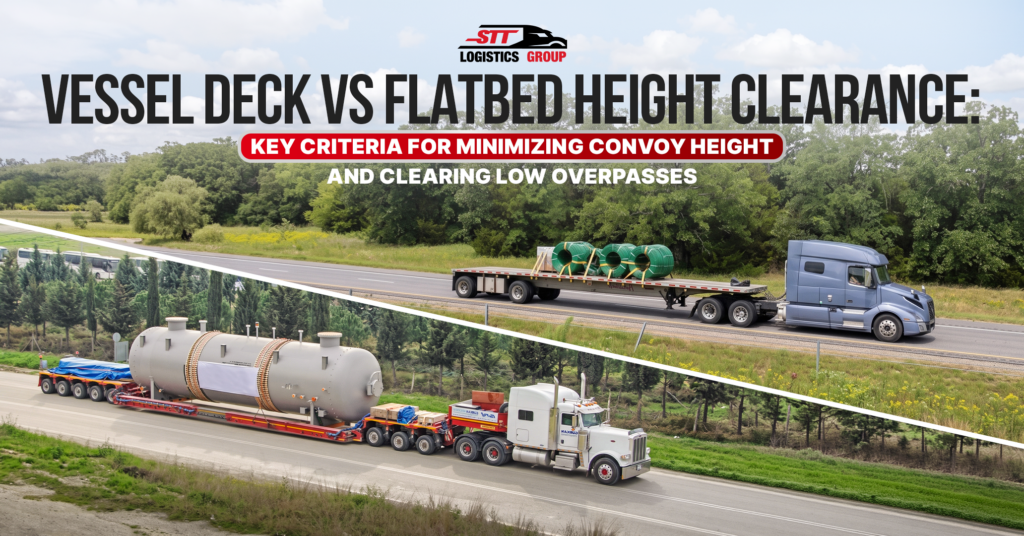
Navigating heavy haul transportation requires precise planning, specialized equipment, and strict compliance with highway regulations. When transporting tall or bulky industrial machinery, a few inches of vertical space often make the difference between a seamless transit and a costly reroute. Logistics managers must constantly evaluate trailer configurations to keep total convoy height under state and federal thresholds.
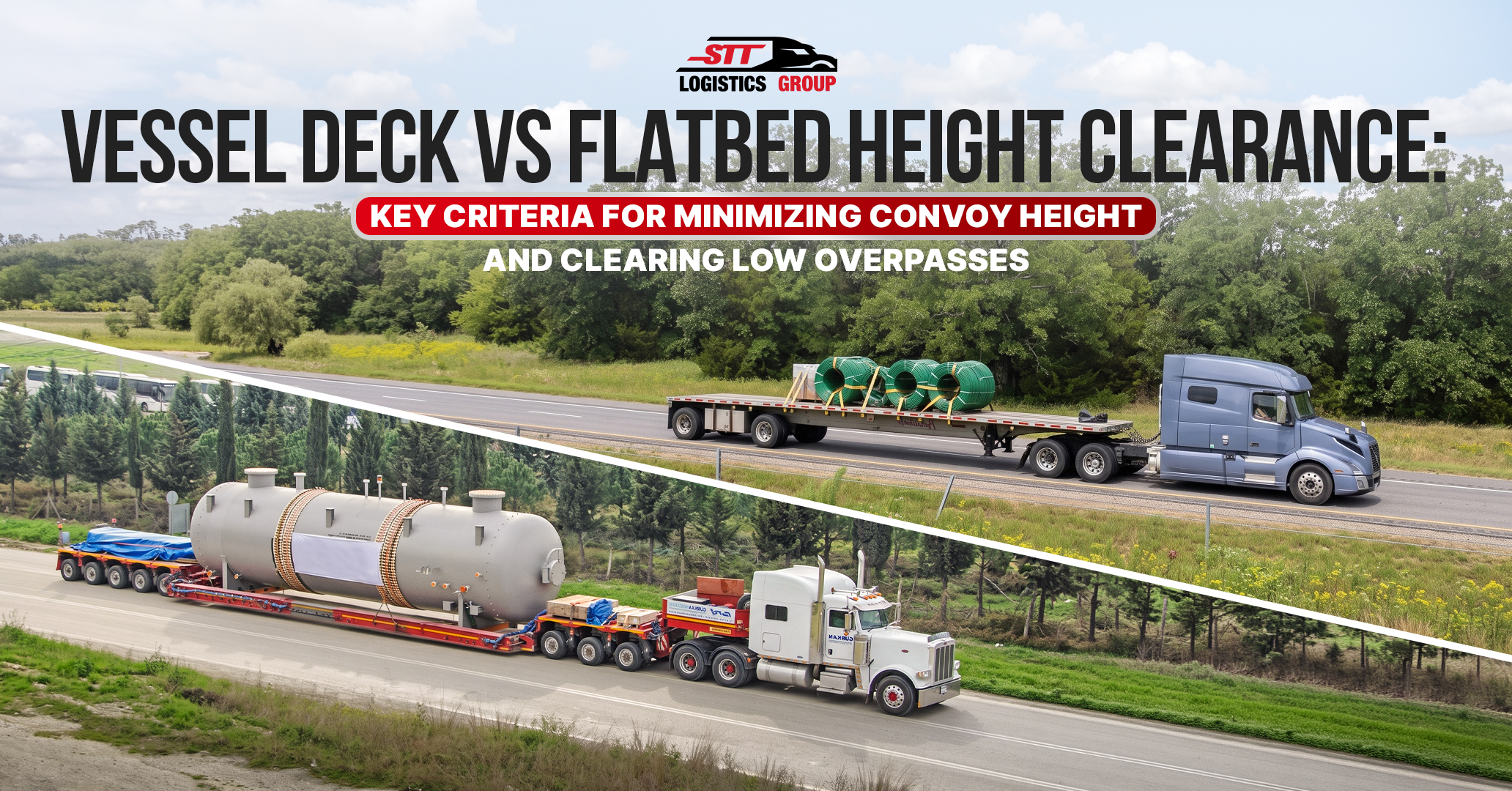
Understanding vessel deck vs flatbed height clearance is critical when designing routes and selecting specialized heavy haul equipment. While standard flatbeds offer operational flexibility for general freight, vessel decks (a specialized variation of double-drop or lowboy trailers) sit mere inches above the ground to accommodate tall cylindrical vessels, tanks, and overheight industrial components.
In this guide, we break down the key differences between these two trailer types, analyze selection criteria for clearance management, and highlight how proper equipment selection protects your cargo and project timeline.
The Basics: Flatbeds vs. Vessel Decks
Before evaluating route geometry, shippers must understand how trailer deck height dictates total load height. Total loaded height is calculated by adding the height of the trailer deck to the height of the cargo itself.
1. Standard Flatbed Trailers
- Deck Height: Typically sits 47 to 54 inches (approx. 4 feet) off the ground.
- Best Used For: Standard industrial goods, steel beams, packaged machinery, and cargo that fits within standard legal limits.
- Operational Advantages: Flatbeds allow fast loading from the side, top, or rear using forklifts or cranes. However, because the deck sits relatively high, cargo height must remain below 9.5 feet to clear the standard 13.5 to 14-foot legal height threshold without specialized permits.
2. Vessel Deck Trailers (Double-Drop / Lowboy Variant)
- Deck Height: Sits as low as 10 to 18 inches off the pavement (or lower when using drop-well configurations).
- Best Used For: Extremely tall equipment, heavy industrial pressure vessels, generators, and cylindrical tanks.
- Operational Advantages: By dropping the deck between the front gooseneck and the rear axle assembly, overall convoy height is drastically reduced. The lower center of gravity increases driving stability, while several vertical feet of clearance are preserved for overhead obstacles.
Why Managing Convoy Height Matters
Exceeding maximum vertical clearances introduces severe safety risks and financial penalties. Bridges, overpasses, utility lines, and traffic signals present physical barriers that cannot be compromised.
Industry Fact: According to data cited by the Federal Highway Administration (FHWA), more than 1,500 bridge strike incidents occur annually in the United States alone. These collisions cause millions of dollars in property damage, severe freight delays, and infrastructure repair liabilities.
Furthermore, when total load height exceeds legal limits (typically 13’6″ to 14′ depending on state regulations), specialized permits and route surveys are legally mandated. Escort vehicles equipped with height poles, bucket-truck utility crews, and specialized law enforcement escorts may be required, which quickly inflates logistics budgets. Consequently, choosing the right trailer deck type is the most direct method to keep convoy height as low as possible.
Decision Matrix: How to Choose the Right Trailer
To optimize your logistics strategy and ensure safe overhead clearance, consider the following evaluation criteria when comparing vessel deck vs flatbed height clearance:
| Selection Factor | Standard Flatbed | Vessel Deck / Double Drop |
| Average Deck Height | 47″ – 54″ | 10″ – 18″ |
| Max Cargo Height (Legal) | ~8.5 ft to 9.5 ft | ~11.5 ft to 12.5+ ft |
| Primary Advantage | Fast loading, low cost, widely available | Maximum vertical overhead clearance |
| Permit Requirements | Unnecessary for standard-height freight | Required if total height exceeds 13’6″ – 14′ |
| Loading Complexity | Simple crane or forklift loading | Requires crane or specialized rigging |
Key Questions for Logistics Planners:
- What is the exact height of the cargo? If the cargo height plus 4.5 feet (flatbed deck) exceeds 13’6″, a flatbed cannot legally or physically execute the move without route restrictions.
- Does the route contain low-clearance structures? Secondary roads, older urban overpasses, and rural railway bridges frequently have clearances below 14 feet. In addition, temporary construction zones often temporarily lower vertical clearances.
- Is the cargo cylindrical or irregularly shaped? Cylindrical tanks and heavy vessels fit naturally into the cradle-like structure of a vessel deck, keeping the belly of the load inches above the road surface.
Trust STT Logistics Group for Your Heavy Haul Operations
Selecting the proper trailer configuration requires deep industry knowledge, precise route planning, and dedicated equipment handling. At STT Logistics Group, our specialized logistics engineers evaluate your load dimensions, map optimal transit corridors, and select the precise trailer technology needed to clear every overpass safely.
Ready to simplify your heavy haul logistics?
👉 Contact STT Logistics Group today for your Free Quote!
Don’t forget to connect with us! Follow our brand-new official social page at @sttlogisticsgroup to stay updated on heavy haul industry insights, project showcases, and logistics tips.