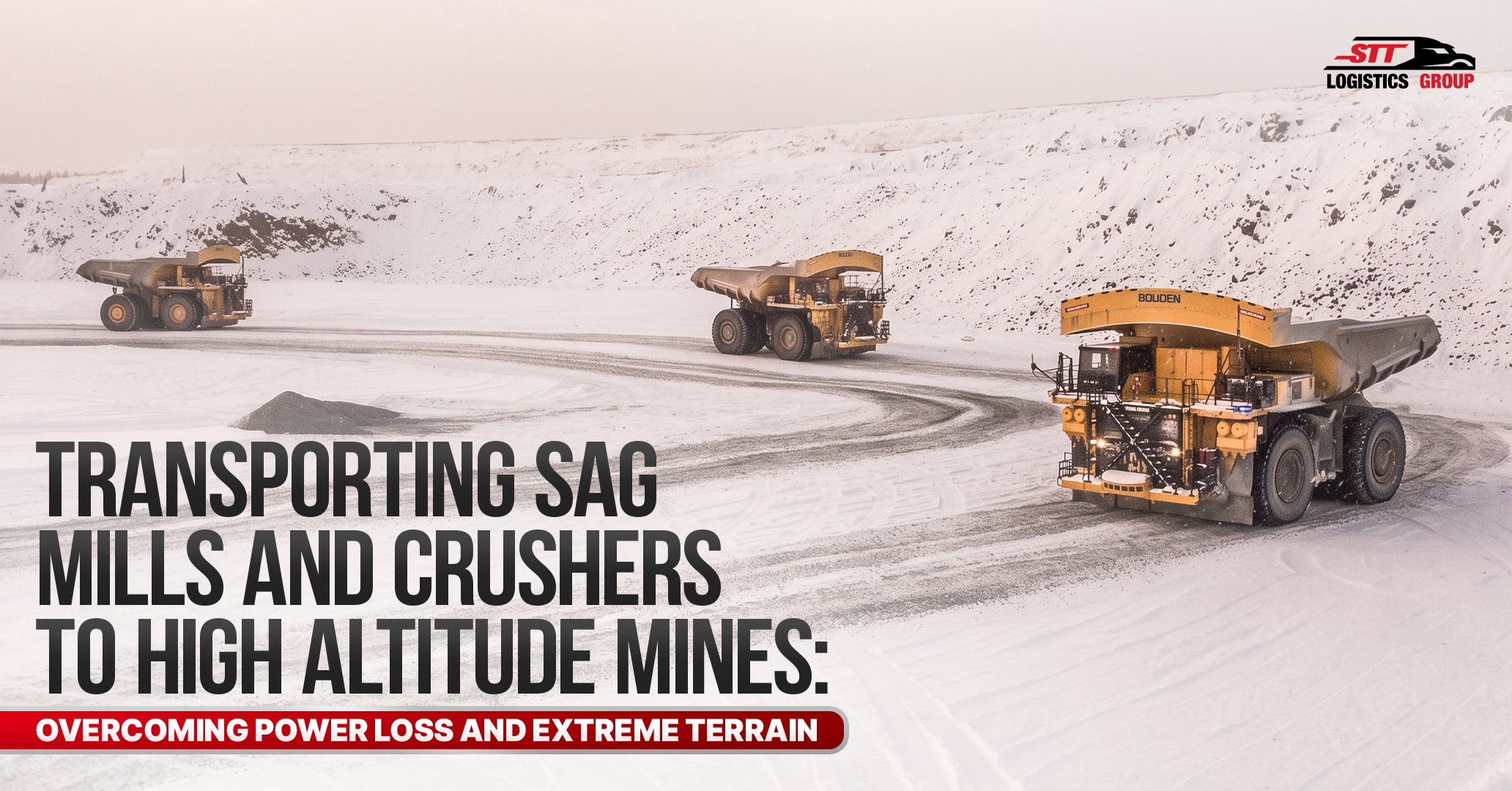
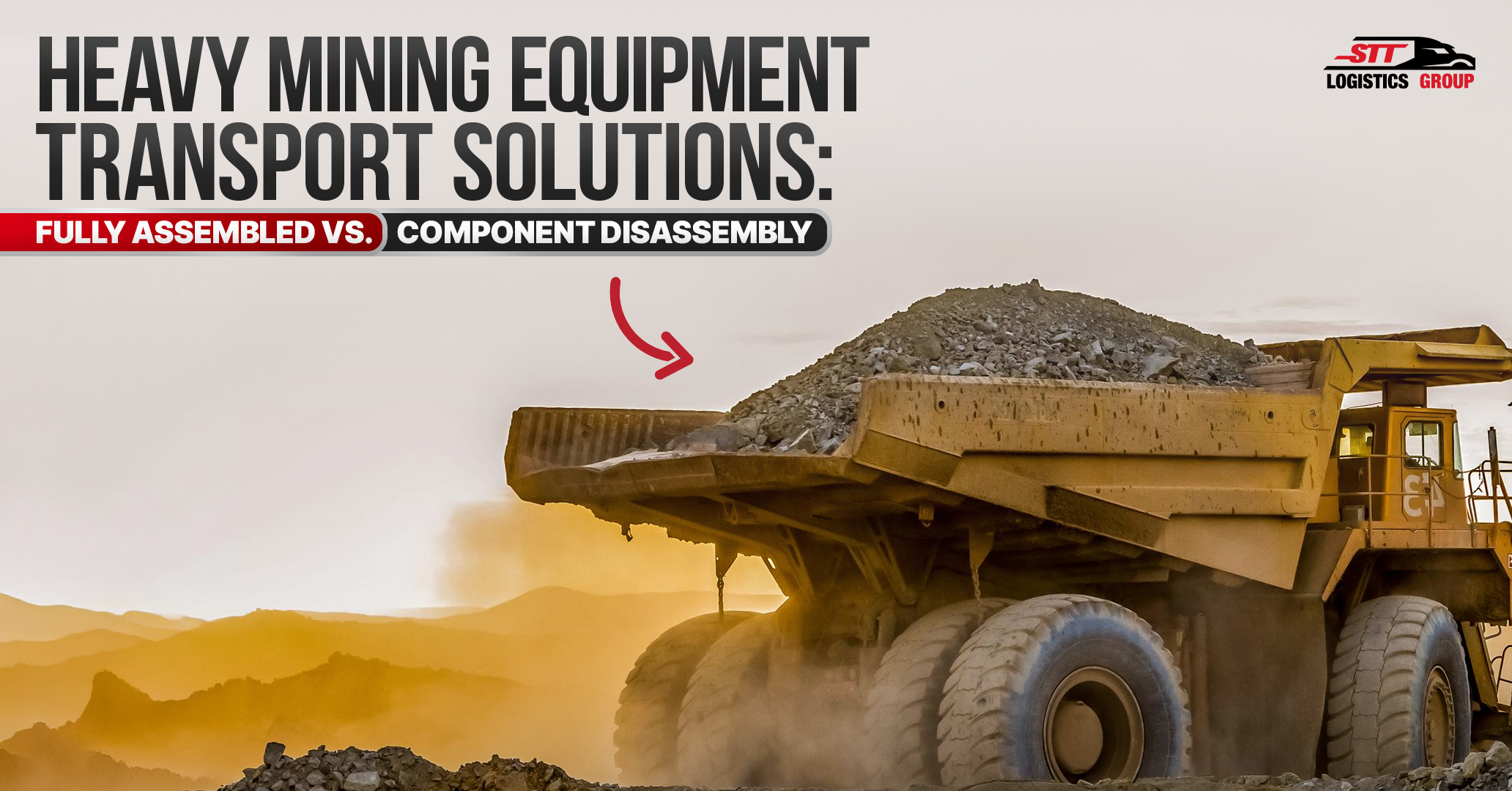

Transporting massive hydraulic shovels and haul trucks presents one of the most complex challenges in global heavy-haul logistics. Moving these behemoths requires rigorous route planning, heavy-haul permits, and specialized trailering systems. Ultimately, logistics managers face a critical decision: should you haul heavy mining equipment fully assembled, or disassemble it into component parts (CKD/Knocked Down)?
Choosing the right approach directly impacts transit schedules, transport costs, and operational downtime on site.
The Assembled Approach: Speed vs. Heavy-Haul Bottlenecks
Hauling fully or semi-assembled excavators and haul trucks saves valuable hours on site because reassembly time is minimized. Consequently, equipment can enter service almost immediately after delivery.
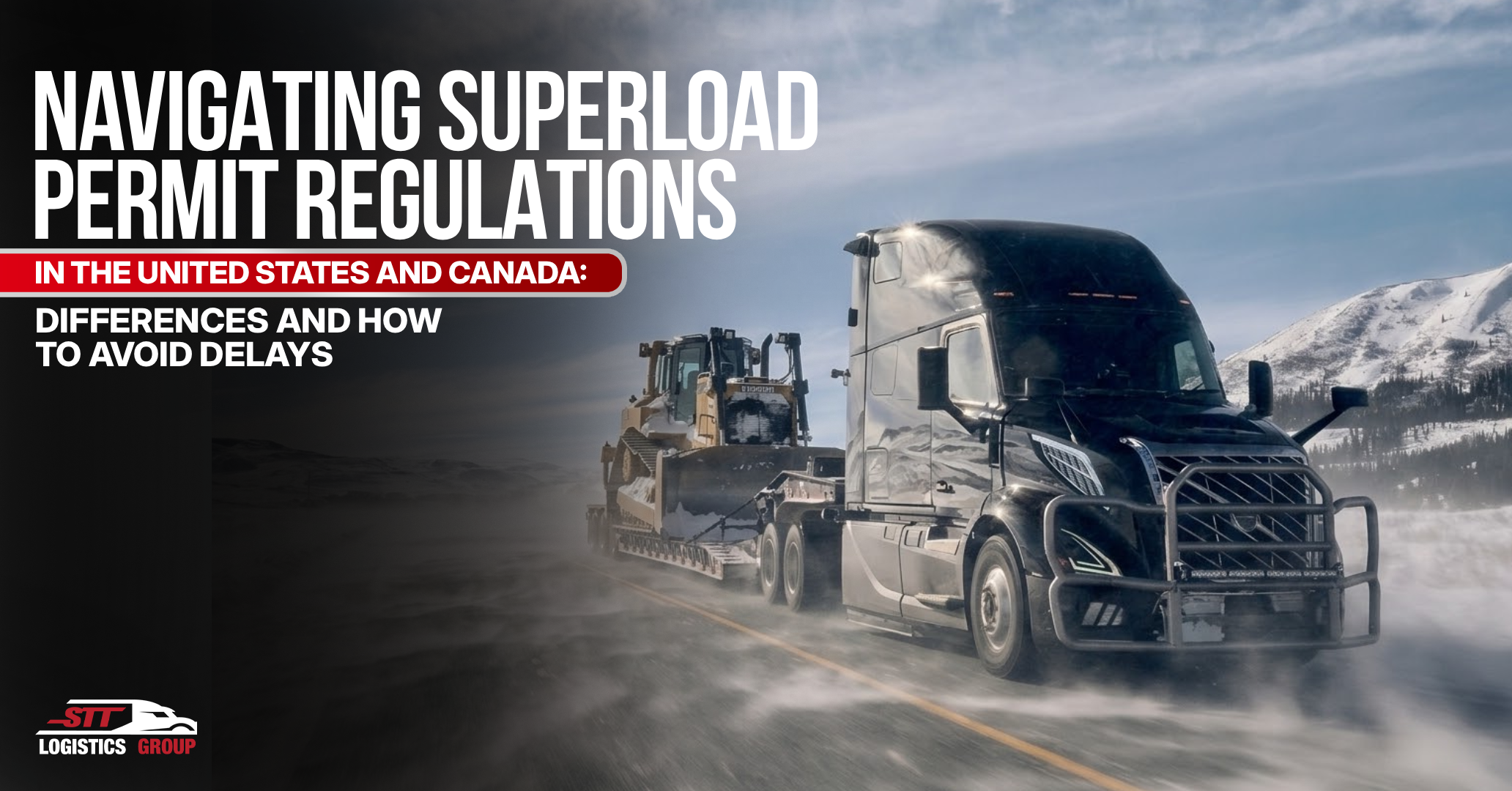
However, fully assembled units push axle weights and physical dimensions to extremes. Oversized loads frequently require escort vehicles, specialized multi-axle heavy transport platforms, and strict route surveys. Furthermore, obtaining superload permits across multiple jurisdictions can extend lead times significantly. While you cut labor costs at the mining facility, you often pay higher freight rates and permitting fees.
The Disassembly Route: Reduced Permit Drag at the Cost of On-Site Labor
In contrast, disassembling heavy machinery into distinct sub-assemblies—such as detaching the boom, bucket, counterweights, or dump body—transforms an extreme superload into several standard heavy-haul shipments.
Because axle load distribution improves, securing highway permits becomes faster and less expensive. Moreover, smaller dimensions open up alternative transport routes with lower bridge clearances and tighter turns. On the other hand, this strategy increases labor costs. Specialized rigging teams and cranes are required at both origin and destination to execute tear-down and reassembly safely.
The Cost-Benefit Equilibrium: Insights from Global Freight Logistics
To select the optimal method, project managers must evaluate total cost of ownership (TCO) during transit rather than looking at freight rates alone. According to data from the World Bank Logistics Performance Index, supply chain timeliness and logistical infrastructure quality heavily dictate total transit efficiency, making planning around permitting delays a primary driver of cost containment.
- Choose Fully Assembled Transport When: Transit distances are short, regional permitting timelines are predictable, and crane mobilization on site is costly or unavailable.
- Choose Disassembly (CKD) When: Moving superloads across multiple international borders or interstate corridors where permit delays exceed several weeks, or when physical route bottlenecks (bridges, utility lines) prohibit full-size dimensions.
Partnering with an experienced logistics provider ensures every route constraint, permit regulation, and equipment dimension is thoroughly analyzed before cargo ever moves.
Partner with STT Logistics Group for Seamless Heavy Hauling
Navigating the complexities of heavy-duty freight requires precise planning, deep regulatory knowledge, and robust execution. At STT Logistics Group, we deliver custom heavy mining equipment transport solutions designed to minimize downtime and maximize cost efficiency.
Contact our logistics team today to get your Free Quote and streamline your heavy machinery moves. Don’t forget to follow our new official page at @sttlogisticsgroup for updates and industry insights!