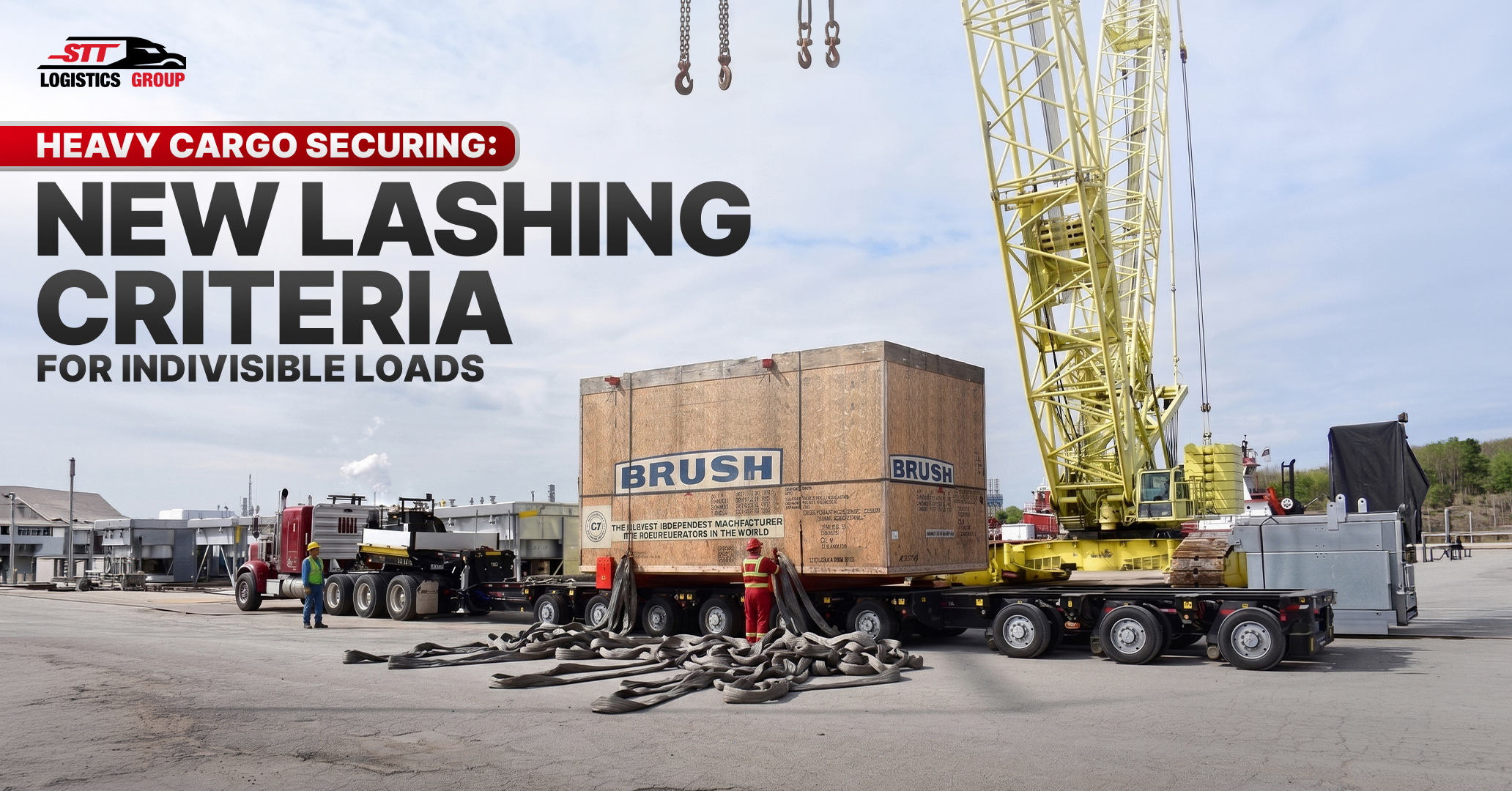

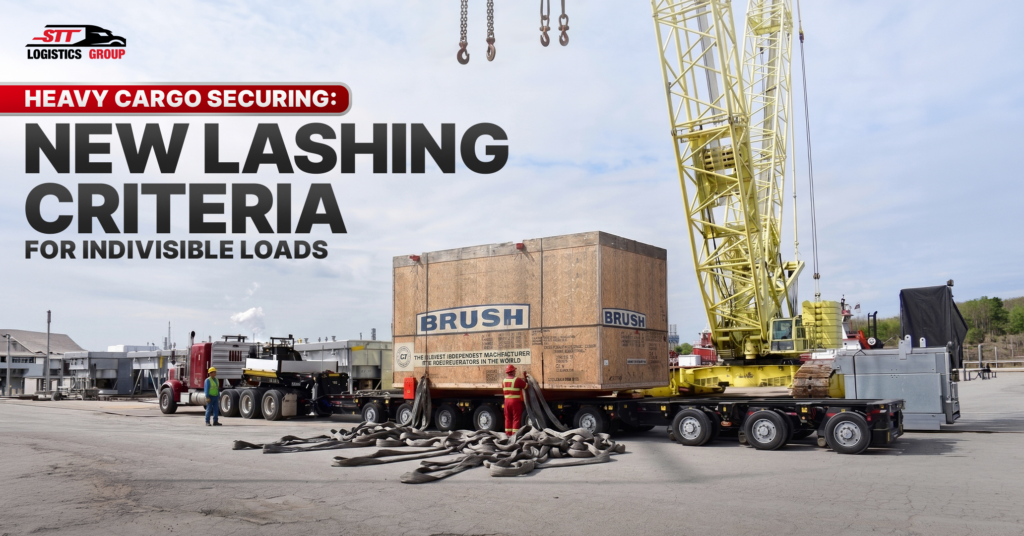
Moving massive, indivisible components is one of the most demanding challenges in modern logistics. When dealing with oversized machinery or industrial equipment, standard towing methods simply do not cut it. Effective heavy cargo securing is not just a regulatory checkbox; it is the ultimate line of defense against catastrophic transit failures.
Recently, international transport bodies updated the criteria for lashing, chains, and tensioners to prevent the dangerous displacement of heavy pieces. Whether you are a logistics manager or a fleet operator, understanding these new standards is crucial for a safe journey.
The Physics of Motion: Why New Standards Matter
During transit, heavy loads are subjected to intense aerodynamic forces, sudden braking, and sharp turns. If the cargo is not immobilized correctly, momentum will cause it to shift.
According to data compiled in the European Best Practice Guidelines on Cargo Securing, forces acting on a load during heavy braking can equal 80% of the cargo’s entire weight pushing forward.
Consequently, traditional ropes or sub-par straps are easily snapped by these forces. To counteract this, updated international criteria now mandate stricter calculations for securing indivisible loads of high tonnage.
Chains and Tensioners: The Backbone of Heavy Cargo Securing
To ensure maximum safety, heavy-duty transport relies heavily on grade 80 or grade 100 transport chains. Under the new guidelines, specific lashing techniques must be applied:
- Direct Lashing: The cargo is secured directly to the trailer using chains hooked into engineered lashing points. This method is highly favored for indivisible pieces because the chains directly absorb the forces.
- Frictional (Over-the-top) Lashing: Although useful for lighter freight, frictional lashing is rarely sufficient on its own for high-tonnage items. Therefore, it is now combined with direct lashing for a multi-layered safety approach.
In addition, tensioners have undergone design improvements. Standard ratchet binders are being replaced by modern turnbuckles with anti-loosening mechanisms. Because road vibrations frequently cause older tensioners to slacken, these new locking systems are now required to guarantee that the tension remains constant throughout the entire trip.
Achieving the Perfect Balance in Logistics
While advanced equipment is vital, proper execution is equally important. At STT Logistics Group, your high-tonnage cargo is handled by certified professionals who meticulously calculate the exact angles of the lashing chains. Furthermore, every single component is thoroughly inspected before the wheels start turning.
Safety should never be compromised for speed. By implementing these new lashing and tensioning criteria, risks are minimized, drivers are protected, and your valuable assets arrive intact.
Secure Your Peace of Mind with STT Logistics Group
Do you have a massive project on the horizon? Don’t leave your oversized freight to chance. Let our team of heavy-haul experts handle your next shipment with the highest industry standards.
[Contact STT Logistics Group today to claim your FREE QUOTE!] Make sure to follow us on our brand-new page @sttlogisticsgroup for more industry insights, project updates, and expert logistics tips!