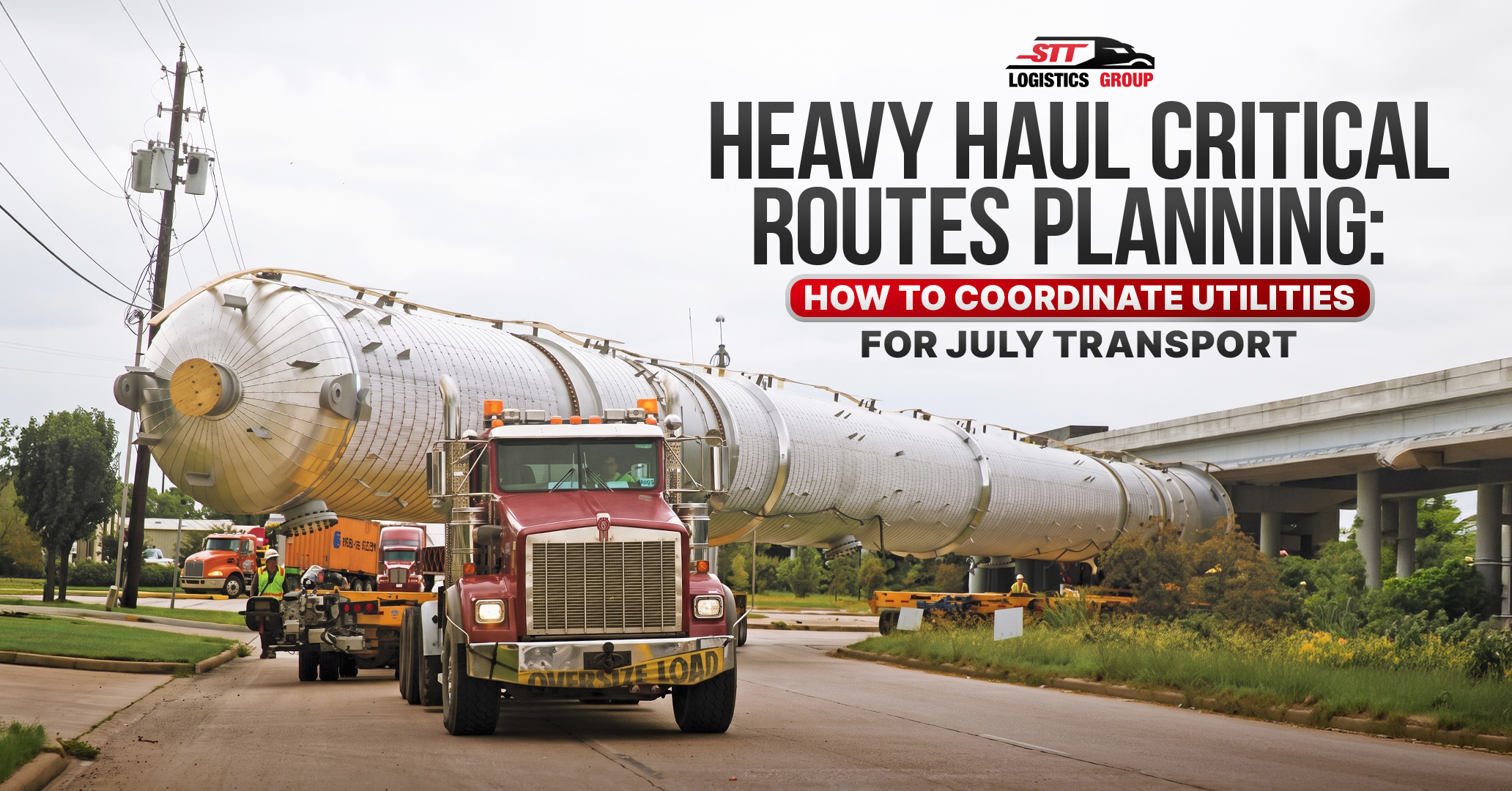

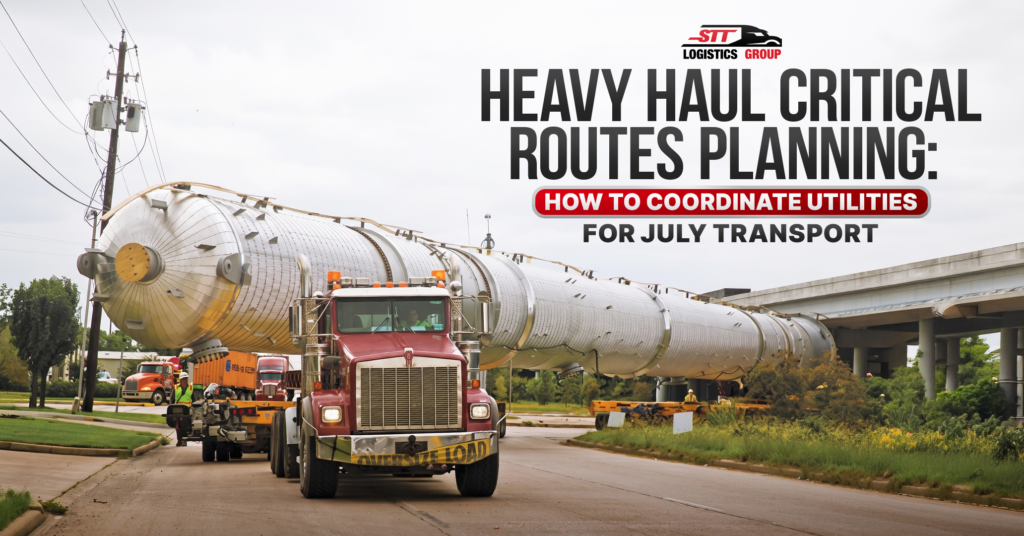
Moving oversized cargo is never a straightforward task. When your cargo is exceptionally tall or wide, standard roads turn into a labyrinth of obstacles. Heavy haul critical routes planning requires meticulous attention to detail, especially when navigating overhead power lines and municipal traffic signals.
July is peak construction and transport season. Therefore, securing timely permits and utility coordination is more urgent than ever. If you want to avoid costly transit delays and safety hazards, this guide will walk you through the essential steps of utility coordination.
Why Utility Coordination Defines Success in Heavy Haul
Before a heavy haul truck ever hits the pavement, weeks of preparation have already occurred behind the scenes. Heavy haul critical routes planning is heavily dependent on the cooperation of third-party utility companies.
- High-Voltage Overhead Lines: Heavy equipment often exceeds standard clearance heights. Consequently, local electric companies must be scheduled to lift or temporarily de-energize lines.
- Traffic Light Adjustments: Standard traffic light mast arms can block oversized loads. To prevent collisions, municipal technicians must be present to rotate or temporarily remove these signals.
Industry Insight: According to a comprehensive study by the Federal Highway Administration (FHWA), permit delays and route obstructions represent a significant bottleneck in specialized transportation, costing logistics providers millions annually in idle time. Proper route planning directly mitigates these financial risks.
Step-by-Step Guide to Coordinating with Utility Companies
To ensure a seamless transport on your July routes, follow this strategic timeline:
1. Conduct a Rigorous Route Survey
First, a physical route survey (or “pole run”) must be performed by an experienced scout team. During this survey, every low-hanging wire, bridge, and traffic light is documented. Accurate measurements are vital because a single miscalculation can halt an entire operation.
2. Submit Timely Utility Requests
As soon as the bottlenecks are identified, utility companies should be contacted immediately. Keep in mind that public utility departments often require a 14 to 30-day notice to schedule field technicians. Since July is a busy month for infrastructure projects, submitting your requests early is paramount.
3. Secure Police Escorts and Civils
In addition to utility workers, local law enforcement is usually required to manage traffic while traffic lights are being moved. While the utility crew handles the infrastructure, the police ensure the safety of the surrounding public. Therefore, synchronized scheduling between both parties is critical.
Balancing the Logistics: The STT Approach
At STT Logistics Group, efficiency is driven by a balanced operational strategy. On one hand, our specialized teams actively manage the communication with municipal departments to secure permits swiftly. On the other hand, safety protocols are strictly enforced by our drivers on the road to guarantee that your cargo arrives undamaged.
By balancing proactive management with rigorous safety execution, we eliminate the guesswork from heavy haul critical routes planning.
Ready to Simplify Your Next Heavy Haul?
Don’t let utility hurdles delay your supply chain this summer. Let the experts handle the logistics, permits, and utility coordination for you.
Contact STT Logistics Group today to get your FREE QUOTE!
P.S. Stay updated on the latest industry insights and heavy haul updates by following our brand-new page on Instagram and Facebook: @sttlogisticsgroup