
Summer is finally here, and while the sunny weather is great for road trips, it presents a massive challenge for the heavy haul trucking industry. When you are transporting extra-heavy loads, the combination of scorching asphalt and high weight capacity creates a recipe for disaster. Specifically, multi-axle trailers face immense stress during these months. Therefore, mastering heavy-duty tire maintenance is not just a recommendation—it is a safety requirement to prevent catastrophic blowouts.
The Science of Heat and Heavy Haul
Why does summer pose such a threat to your fleet’s rubber? As the ambient temperature rises, road surfaces absorb heat, often reaching temperatures well above $140^\circ\text{F}$ ($60^\circ\text{C}$). When a multi-axle trailer carries an oversized load over this scorching pavement, friction generates even more internal heat within the tires.
Underinflation is the primary catalyst for tire failure. When a tire lacks proper air pressure, its sidewalls flex more, which generates excessive heat. Consequently, the tire structure degrades rapidly, leading to tread separation or a sudden blowout.
Did You Know? > According to a comprehensive commercial vehicle study by the Federal Motor Carrier Safety Administration (FMCSA), tire-related issues represent roughly 5% of all commercial vehicle crashes, making tire health one of the most critical factors in roadside safety and breakdown prevention.
The Unique Challenge of Multi-Axle Configurations
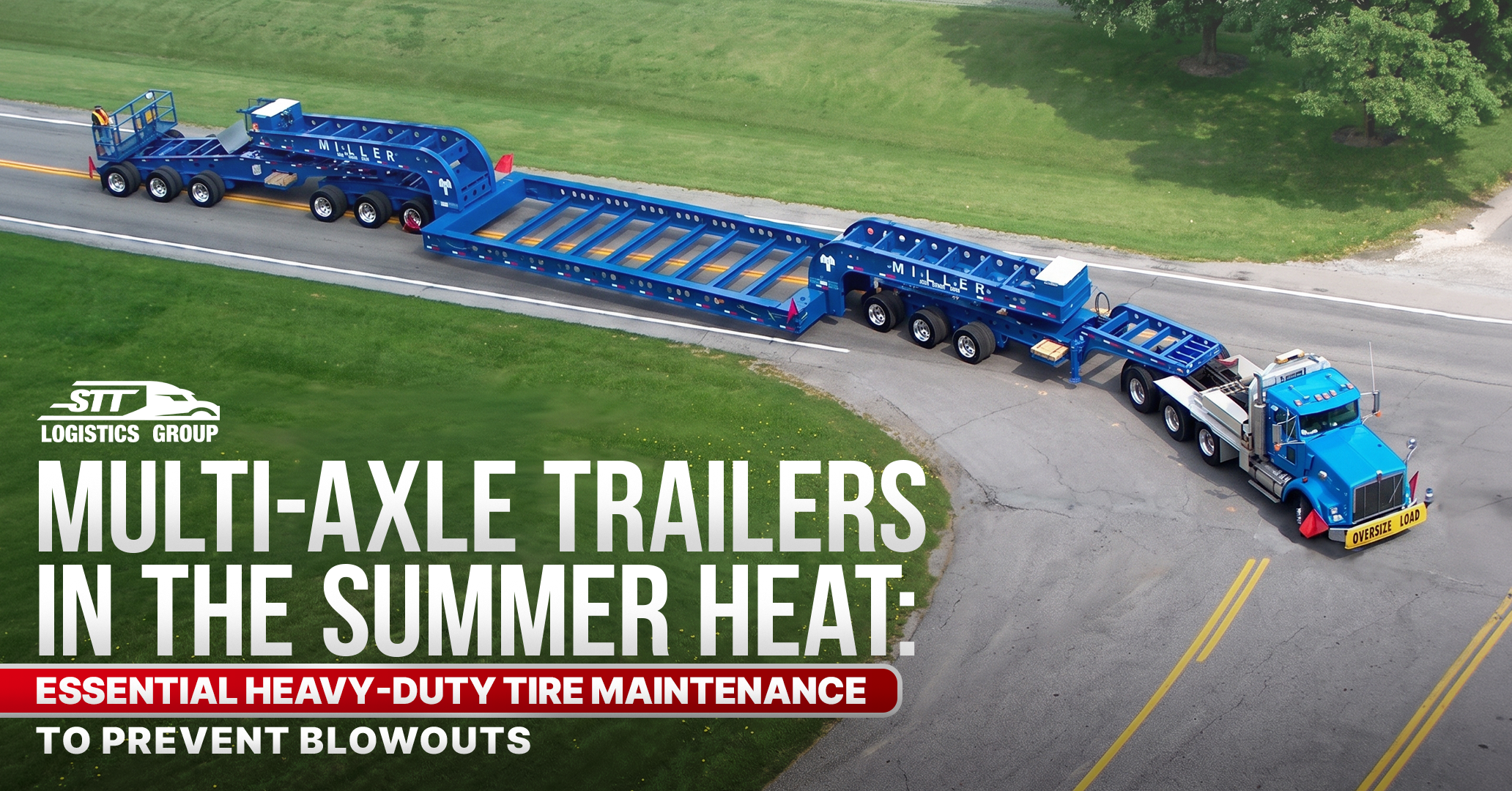
Multi-axle trailers are designed to distribute massive weights evenly across the pavement. However, this configuration introduces specific wear patterns that demand extra attention:
- Tire Scrubbing: During tight turns, the tires on spread axles or multi-axle setups do not pivot perfectly; instead, they drag sideways across the asphalt. This “scrubbing” effect is accelerated by summer heat, scraping off valuable tread.
- Uneven Weight Distribution: If your mechanical suspension is improperly aligned, certain tires will bear a disproportionate amount of the heavy haul load. As a result, those specific tires are pushed past their thermal and pressure limits.
Actionable Tips for Summer Tire Care
To keep your fleet moving safely this summer, a proactive inspection routine must be implemented by your fleet managers and drivers. Here is how you can stay ahead of the heat:
1. Check Pressure When Tires are “Cold”
Tire pressure should always be measured before the truck hits the road. As tires roll and heat up, the internal air pressure naturally increases. If you bleed air out of a hot tire to match the recommended PSI, the tire will actually become dangerously underinflated once it cools down.
2. Inspect the Inner Duals
The inner tires on dual assemblies are frequently neglected because they are harder to reach. However, they trap more heat because they are shielded from cooling airflow and sit close to hot brake drums. Therefore, dual assemblies must be checked with equal scrutiny during every pre-trip inspection.
3. Monitor Tread Depth and Wear Alignment
Look closely for signs of irregular wear, such as cupping or feathering. Because summer roads soften the rubber, any existing alignment issues will be aggressively accelerated, leaving your tires vulnerable to punctures and structural failure.
Partner with the Heavy Haul Experts
Managing logistics for extra-heavy loads requires precision, specialized equipment, and a relentless focus on safety. At STT Logistics Group, your cargo is handled by seasoned professionals who understand the complexities of summer transport and rigorous fleet maintenance.
Don’t let a preventable tire blowout delay your supply chain or endanger your cargo. Contact STT Logistics Group today to get your FREE quote and experience seamless heavy haul transport.
For more industry insights, heavy transport tips, and behind-the-scenes looks at our fleet, make sure to follow us on our brand-new Instagram page: @sttlogisticsgroup!