
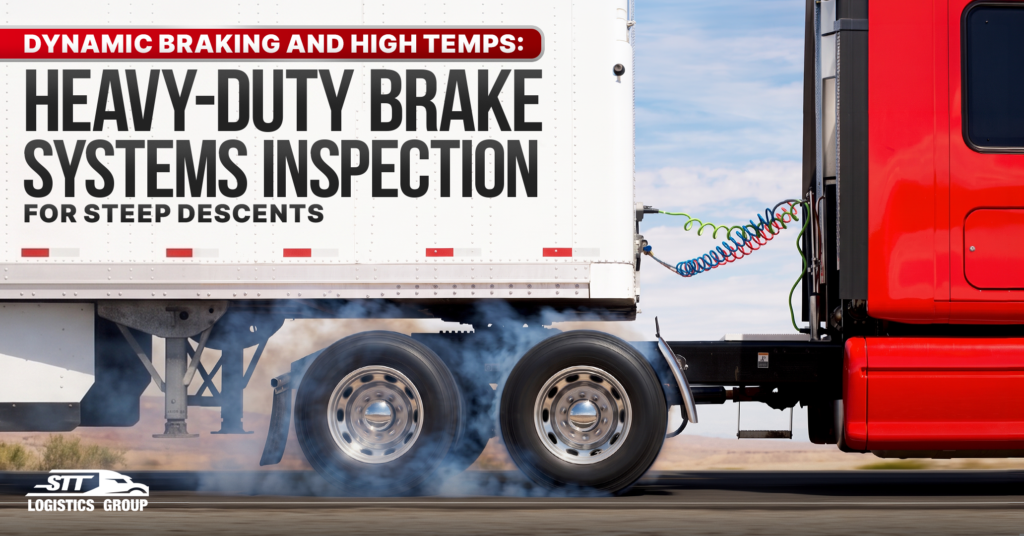
Navigating a steep descent with a payload exceeding 50 tons is one of the most demanding challenges a truck driver can face. When gravity pulls a massive load downhill, standard service brakes can easily overheat and fail. Therefore, understanding the synergy between dynamic braking and a rigorous heavy-duty brake systems inspection is vital for fleet safety.
The Danger of Brake Fade on Long Descents
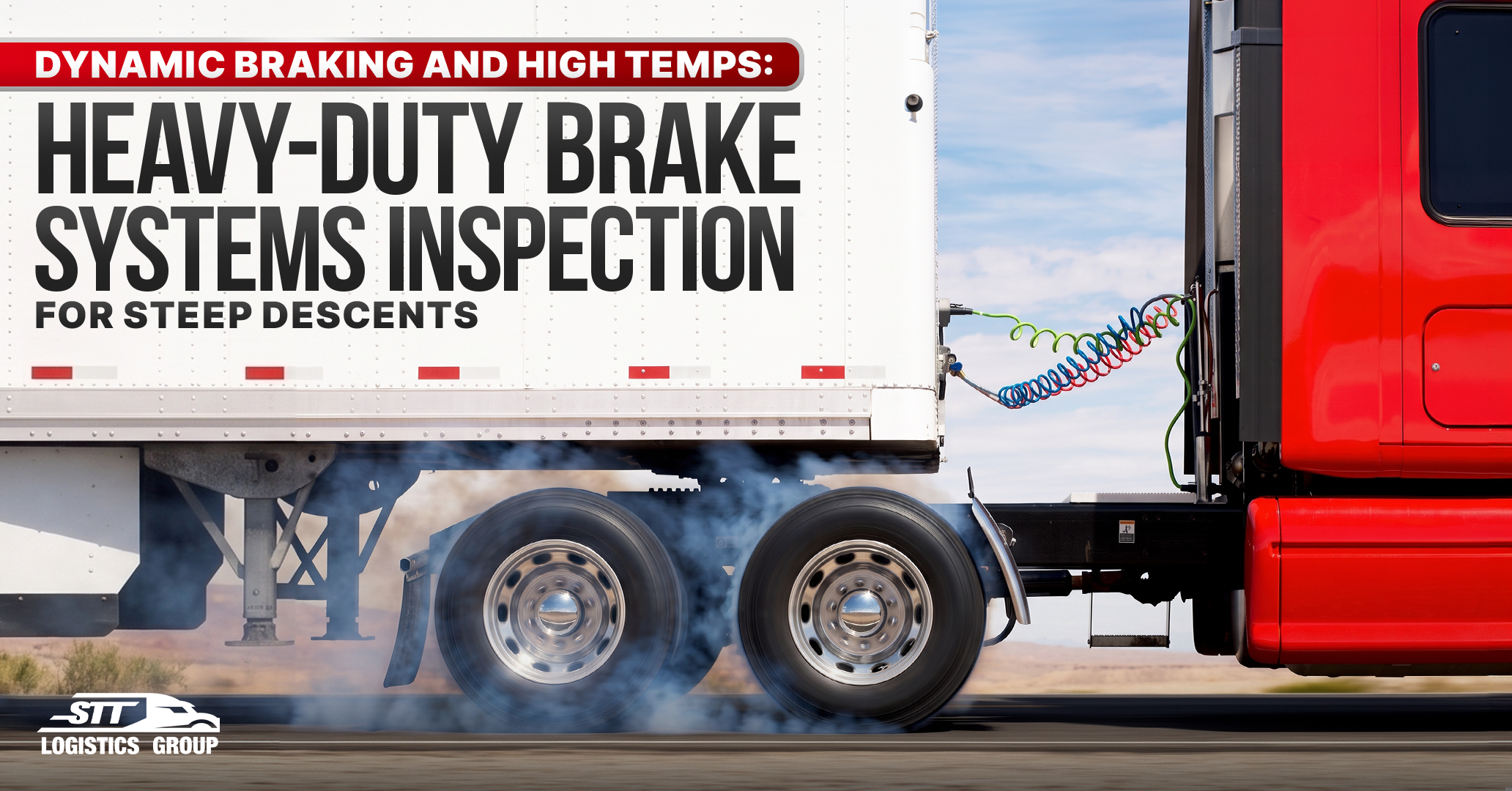
When a 50-ton vehicle goes downhill, immense kinetic energy must be converted into heat. If a driver relies solely on friction brakes, a phenomenon known as “brake fade” occurs. Brake fade happens when the brake pads and drums get so hot that they lose their gripping friction.
Consequently, alternative retardation methods must be used. This is where dynamic braking—such as engine brakes (Jake brakes) or hydraulic retarders—becomes indispensable. Engine braking is utilized by experienced drivers to absorb energy through the engine, which significantly reduces the burden on the mechanical brakes.
Why High Temperatures are a Silent Killer
Thermal stress alters the physical properties of your braking components. According to data published in a commercial vehicle safety study by the Federal Motor Carrier Safety Administration (FMCSA), brake-related violations consistently rank as a top cause for commercial vehicle out-of-service orders, accounting for nearly 30% of all vehicle roadblocks during safety campaigns.
When temperatures spike beyond normal operating limits, brake drums expand. As a result, the brake shoes must travel further to make contact, which drastically increases stopping distances. In the worst-case scenarios, the intense heat can even ignite the wheel-end lubricants, leading to catastrophic fires.
Your Critical Heavy-Duty Brake Systems Inspection Checklist
To prevent disaster before tackling a prolonged mountain descent, a meticulous inspection must be performed. Ensure your pre-trip routine includes these critical checks:
- Measure Brake Stroke: Ensure that the pushrod travel is within legal and safe limits. Out-of-adjustment brakes are the primary culprit behind runaway trucks.
- Examine Drums and Linings: Inspect the brake drums for heat checking, cracks, or blue coloration, which indicates past overheating. Linings should be checked for thickness and signs of contamination from oil or grease.
- Verify Retarder Functionality: Test your engine brake or hydraulic retarder controls before starting your journey. These systems must be fully operational to manage the descent.
- Check Air System Integrity: Air leaks can compromise the entire system. A thorough pressure drop test should be executed to confirm the compressor can keep up with heavy demand.
Ultimately, safety on the road is determined by the preparation done before the wheels start rolling. By balancing the use of dynamic braking and enforcing a strict heavy-duty brake systems inspection, fleet managers and drivers can ensure that even 50-ton loads arrive safely at their destination.
Don’t Roll the Dice on Heavy Logistics Safety
At STT Logistics Group, we prioritize safety and precision in every heavy-haul shipment. Managing heavy loads requires expertise, elite maintenance, and reliable planning.
Get Your FREE Quote Today! Let our team handles your heavy-duty freight safely and efficiently.
For more industry insights, fleet safety tips, and heavy logistics updates, make sure to follow us on our brand new page: @sttlogisticsgroup!