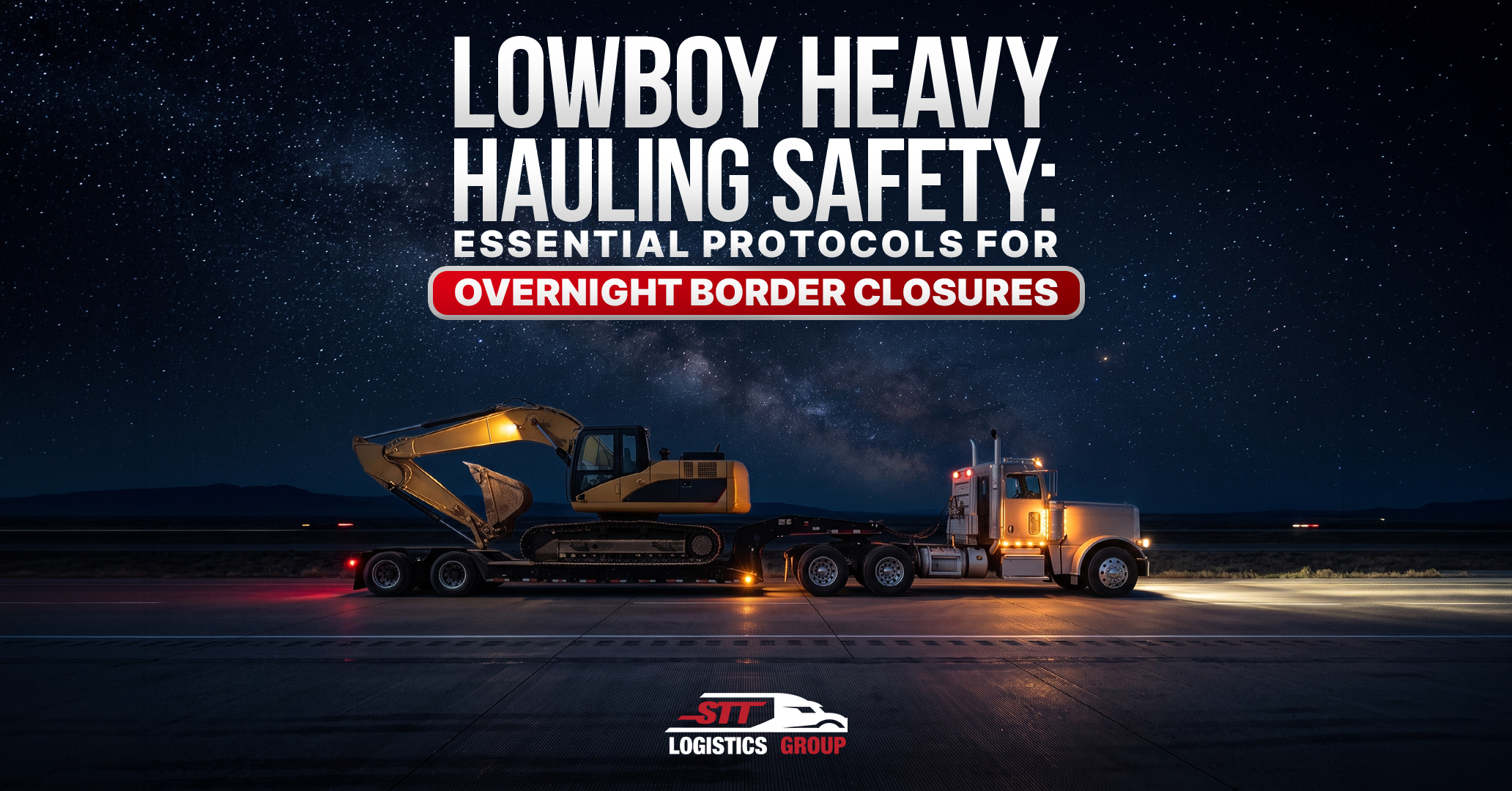

Navigating international borders with oversized cargo requires precise timing. However, customs closures or unexpected delays often force drivers into a mandatory overnight stop. When your heavy equipment is parked at the border, ensuring the safety of both the cargo and the transport vehicle becomes the top priority.
By implementing strict physical security measures and correct weight distribution, logistics teams can prevent costly accidents and cargo theft. Here is how you can optimize your lowboy heavy hauling safety protocols during a weekend or holiday border shutdown.
1. Physical Security: Safeguarding Your High-Value Cargo
When a lowboy trailer is parked overnight at a border patio, it becomes a visible target for cargo theft. Therefore, proactive security measures must be taken by the driver and the fleet managers immediately upon arrival.
- Strategic Parking: The lowboy should be parked in well-lit, secure areas with 24/7 surveillance. If possible, back the trailer against a solid wall or another fleet vehicle to block access to the ramps and rear cargo.
- Advanced Locking Mechanisms: Standard kingpin locks are highly recommended to prevent unauthorized tractor hookups. Additionally, heavy-duty outrigger locks and high-security padlocks should be utilized on all toolboxes and securing chains.
- Continuous Monitoring: Modern fleet management relies heavily on GPS tracking. Drivers are encouraged to verify that all trailer-mounted tracking devices are fully operational and transmitting before they leave the vehicle.
2. Weight Distribution: Preserving Trailer Integrity
While physical security protects against external threats, proper weight distribution protects the trailer itself from structural damage during extended stops. Lowboy trailers are engineered to transport massive loads, but static pressure over long periods can strain specific axles and tires.
- Axle Load Balancing: The heavy machinery must be positioned precisely over the trailer’s center of gravity. If the weight is shifted too far forward or too far back, excessive stress will be placed on either the tractor’s fifth wheel or the trailer’s rear axles.
- The Danger of Structural Fatigue: According to a comprehensive safety analysis by the Federal Motor Carrier Safety Administration (FMCSA), improper cargo securement and poor weight distribution remain leading contributing factors in heavy vehicle structural failures and stability accidents.
- Ground Support: Before leaving the lowboy parked for the weekend, ensure that the outriggers and blocking materials are firmly set on level, solid ground. This prevents the trailer from sinking into asphalt or soft soil under the immense weight.
3. Balancing Safety with Active Inspections
A balanced approach to lowboy heavy hauling safety involves both automated systems and physical inspections. While electronic logging devices (ELDs) monitor the status of the vehicle, a manual walk-around inspection must be performed by the driver before the overnight stay begins, and once again before departure.
Check for any signs of chain slack, tire pressure drops, or fluid leaks from the hauled machinery. Taking twenty minutes for a thorough inspection can save days of delays once the customs gates finally open.
Secure Your Next Heavy Haul Today
Don’t let border closures jeopardize your cargo’s integrity. At STT Logistics Group, your freight is protected by industry-leading safety protocols and experienced logistics coordinators.
Are you planning an oversized shipment? Contact us today to get your free quote and experience seamless heavy hauling. For more industry insights, updates, and expert logistics tips, make sure to follow us on our brand-new page: @sttlogisticsgroup.