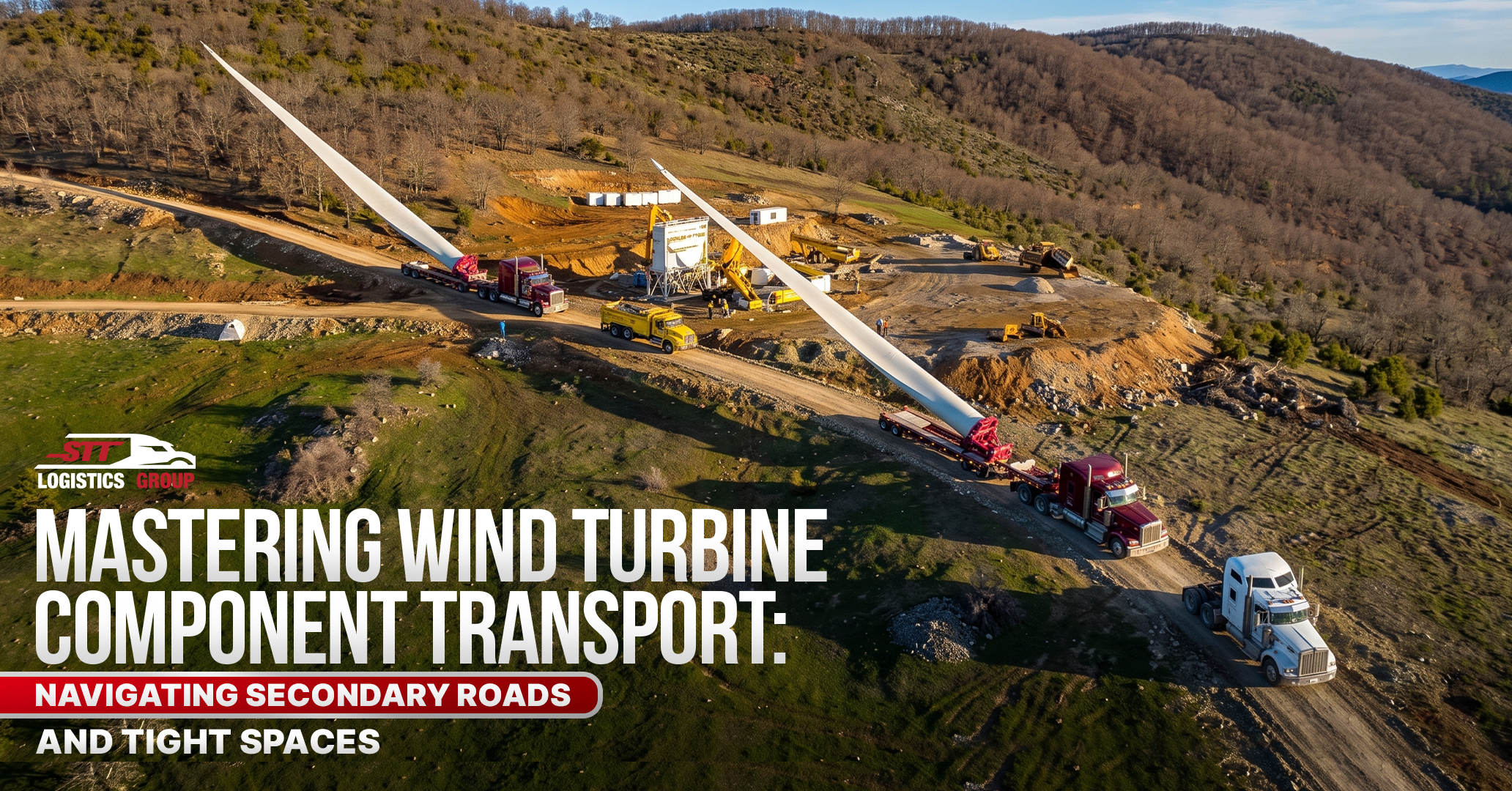

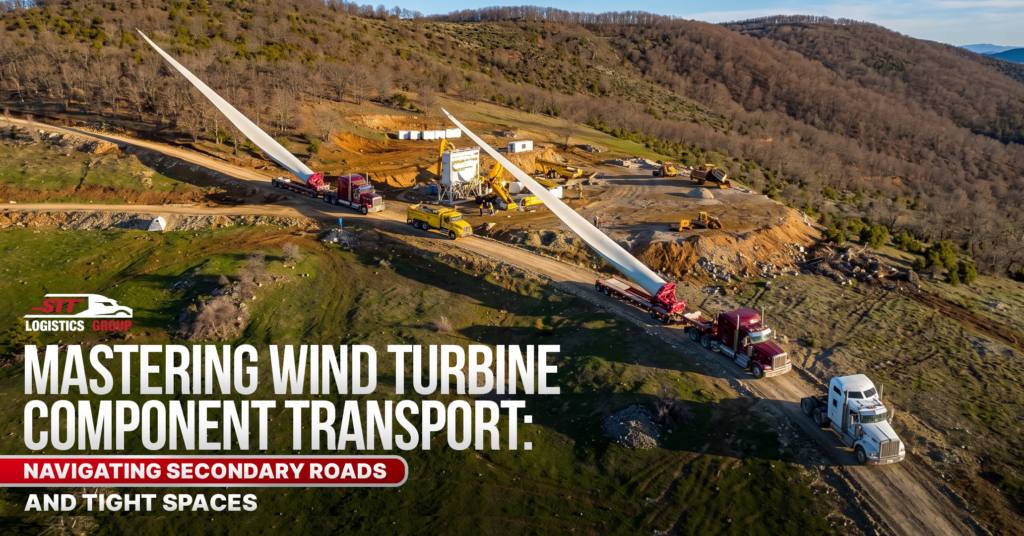
Navigating massive renewable energy equipment through tight rural routes is one of the most demanding challenges in modern heavy haul logistics. As green energy infrastructure rapidly expands across the continent, logistics providers must continuously adapt their route planning and equipment. Moving massive structures through narrow access roads requires precise engineering, advanced technology, and flawless execution. Consequently, successful wind turbine component transport relies on structured planning to overcome tight turns, weight limits, and steep terrain.
The Scale of Modern Wind Energy Logistics
Wind turbines are getting bigger every year to capture more energy efficiently. Modern turbine blades routinely exceed 70 to 80 meters in length, while tower sections weigh dozens of tons. According to the U.S. Department of Energy, the average capacity of newly installed wind turbines in the United States reached 3.4 megawatts (MW), with rotor diameters averaging over 130 meters.
As turbine dimensions grow, secondary roads and narrow jobsite access paths become significant bottlenecks. Standard flatbeds cannot handle these loads. Therefore, specialized trailers—such as extendable adapters, blade lifters, and multi-axle heavy haulers—must be utilized to protect both cargo and infrastructure.
Core Strategies for Navigating Restricted Access Routes
1. Advanced Route Surveying and Digital Simulations
Before any truck moves, comprehensive route surveys are conducted by technical specialists. Advanced 3D swept-path software simulates how long trailers will negotiate sharp bends, roundabouts, and narrow intersections. Furthermore, potential obstacles such as utility lines, low bridges, and tight turning radiuses are identified long before departure.
2. Utilizing Specialized Transport Equipment
Standard transportation methods often fail on narrow rural roads. Consequently, specialized equipment is deployed to navigate difficult paths:
- Blade Lifters (Adapters): These hydraulic units tilt turbine blades up to 60 degrees vertically, allowing them to tilt over tree lines, buildings, and narrow mountain passes without widening the road surface.
- Self-Steering Multi-Axle Trailers: Controlled remotely by qualified operators, these trailers allow the rear axles to turn independently from the tractor unit, significantly reducing the turning radius.
3. Obstacle Mitigation and Bridge Assessments
Secondary roads frequently feature bridges with strict weight limits. Therefore, axle loads must be distributed evenly across multi-axle hydraulic trailers. In addition, temporary road reinforcement, tree trimming, and temporary utility line lifts are coordinated with local authorities to ensure safe transit.
Active & Passive Balance in Wind Logistics
While precise planning is executed by expert logistics teams, real-time adaptability on the road is equally essential. Advanced equipment is monitored continuously throughout transit. Consequently, risks are mitigated before safety is compromised, ensuring high-value renewable assets arrive at remote wind farms safely and on schedule.
Partner with STT Logistics Group
Navigating complex terrain with oversized freight requires a team with specialized experience, state-of-the-art equipment, and meticulous planning standards. At STT Logistics Group, we deliver reliable solutions tailored to your complex project requirements.
Ready to move your heavy haul cargo with confidence?
Contact our logistics specialists today to discuss your project requirements and receive a [FREE QUOTE]!
Don’t forget to follow our new official page @sttlogisticsgroup to stay updated on our latest projects and industry insights!