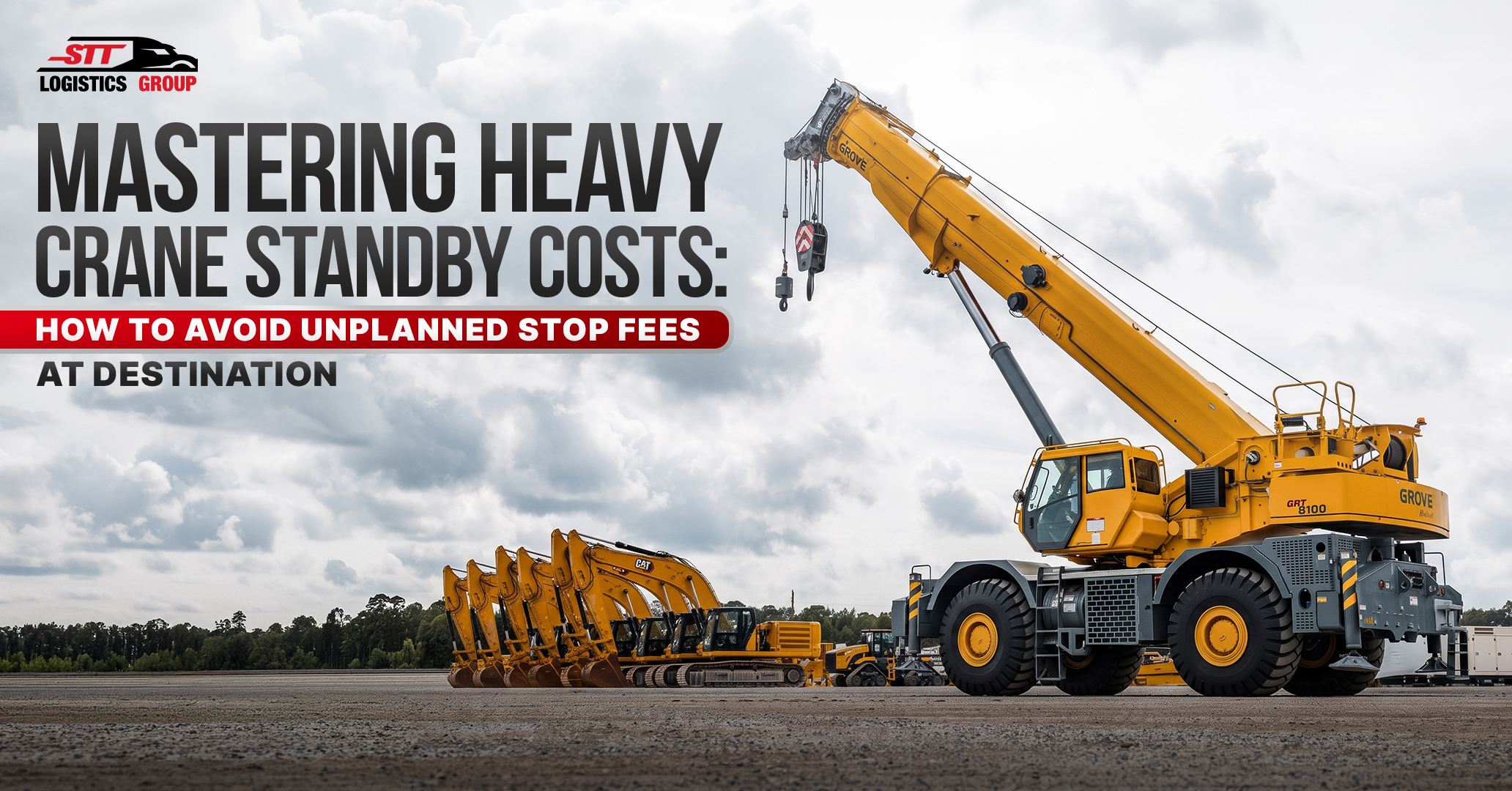

Heavy equipment transport requires precision, timing, and deep logistical expertise. However, project managers often face unexpected financial setbacks when heavy crane standby costs start accumulating at the final destination. Unplanned stops and site delays do not just slow down operations—they actively drain your project’s budget.
Fortunately, you can completely avoid these extra charges with proper preparation and real-time coordination. In this article, we will break down why crane standby fees happen and how you can prevent them to keep your supply chain running smoothly.
The Reality of Heavy Lift Delays
When heavy-duty cranes arrive at a job site, every minute counts. Cranes are rented on strict hourly or daily schedules, and heavy-lift equipment operators charge premium rates for downtime. If the receiving site is unprepared upon arrival, detention and standby fees are immediately applied by the carrier or crane provider.
Industry Data: Unplanned delays in heavy haul logistics quickly accumulate significant costs. According to data published by the Federal Motor Carrier Safety Administration (FMCSA), driver detention at loading and unloading facilities costs the trucking industry millions of dollars annually in lost productivity and extended operational expenses.
Why Unplanned Stops and Standby Charges Occur
To eliminate heavy crane standby costs, you must first understand what triggers them. The most common causes include:
- Site Unreadiness: The destination site may lack cleared access pathways or proper ground support for heavy cranes.
- Permit and Escort Delays: Transport routes can experience unexpected holds if oversize/overweight permits or police escorts encounter timing mismatches.
- Communication Gaps: Misalignment between the freight carrier, site manager, and crane operation team can lead to premature or delayed arrival.
How to Prevent Crane Standby Fees at Destination
While delays happen, proactive planning minimizes their financial impact. Here is how you can keep your projects on schedule and within budget:
1. Conduct Rigorous Site Route Surveys
Before any rig leaves the origin, the destination site must be thoroughly evaluated. Ensure that the ground is structurally stable, access gates are wide enough, and overhead obstacles are completely cleared.
2. Synchronize Crane and Transport Schedules
Timing is everything. Transport dispatchers must stay in constant contact with on-site crane operators. By using real-time GPS tracking and automated alerts, the transport team can adjust transit times dynamically, ensuring the crane arrives exactly when the site is ready.
3. Streamline Permit and Route Planning
Navigating multi-state regulations requires dedicated expertise. Escorts and specialized permits should be secured well in advance to prevent specialized trailers from sitting idle near the destination line.
4. Partner with Heavy Haul Logistics Experts
Complex cargo demands experienced handling. When your logistics are managed by seasoned freight professionals, potential bottlenecks are identified and resolved before your heavy machinery even hits the road.
Ready to Eliminate Unplanned Logistics Expenses?
Do not let heavy crane standby costs eat into your bottom line. At STT Logistics Group, we deliver seamless, end-to-end heavy haul and specialized transport solutions designed to keep your shipments moving on time and within budget.
Need reliable transport for your next project?
👉 Contact STT Logistics Group today to get your FREE QUOTE!
Stay connected with us for the latest industry updates, logistics tips, and fleet highlights! Follow our new official page on Instagram: @sttlogisticsgroup.