
Managing long-haul freight requires precise planning, strategic execution, and strict compliance with weight regulations. When shippers or drivers improperly load cargo onto a chassis, they inadvertently place massive stress on specific truck components. Achieving proper axle load distribution remains one of the most critical factors in keeping heavy-haul and long-distance transport safe, legal, and cost-effective.
Understanding how weight shifts across your steer axle, drive axles, and fifth wheel can mean the difference between a smooth delivery and catastrophic equipment failure.
Why Proper Weight Balance Matters
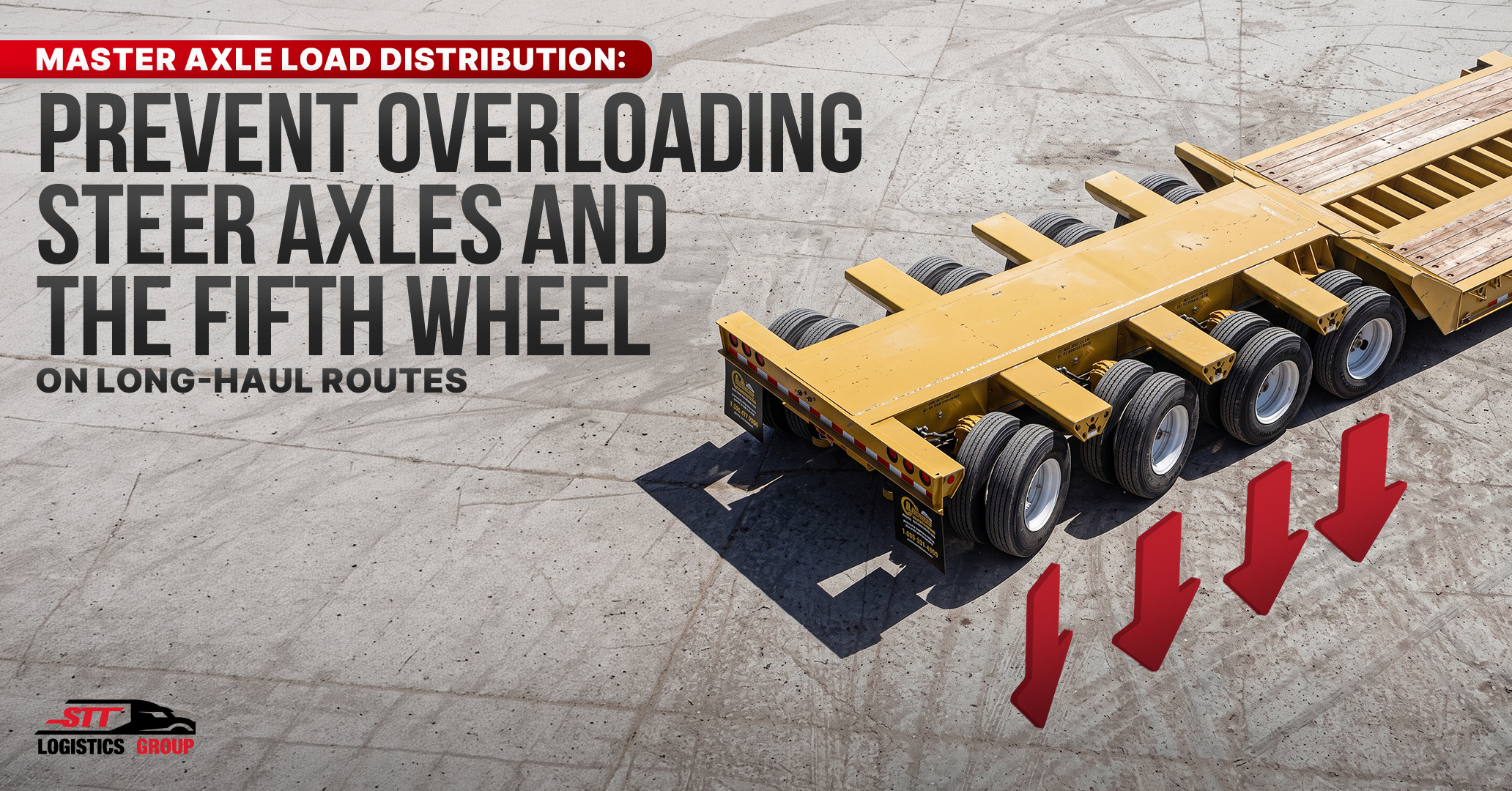
When cargo is placed on a trailer without a weight distribution plan, the steer axle or the fifth wheel often absorbs an excessive share of the payload.
- The Steer Axle: Excess weight on the front steer axle leads to difficult steering, accelerated front tire wear, and serious safety hazards during sudden braking.
- The Fifth Wheel: If too much weight is concentrated on the fifth wheel, the drive axles become overloaded. Consequently, this excess pressure shortens the lifespan of the truck’s suspension and drivetrain.
Conversely, placing weight too far back lightens the front of the truck. As a result, steering traction is severely reduced, making the vehicle dangerous to control at highway speeds. Proper axle load distribution ensures that every pound is shared correctly across the entire chassis.
The Real Cost of Improper Loading
Overloading an axle does not just risk mechanical damage; it also causes immediate financial strain. According to a study published by the Federal Highway Administration (FHWA), commercial vehicle weight enforcement programs monitor millions of trucks annually to protect highway infrastructure and prevent crashes caused by severe overweight conditions. When a truck fails a weigh-station inspection due to poor axle load distribution, state authorities issue hefty fines, and the driver is forced to shut down until the load is manually rebalanced.
Furthermore, uneven axle weight accelerates wear on highways and bridges, leading to higher maintenance costs for fleet owners and independent operators alike.
Simulating Load Distribution on the Chassis
To avoid costly road scale violations, fleet managers and dispatchers utilize cargo distribution simulations prior to departure. You can simulate and balance your load effectively by following these key strategies:
- Calculate the Fifth Wheel Position: Sliding the fifth wheel forward shifts weight directly onto the steer axle. Conversely, sliding it backward shifts weight toward the rear drive axles. Adjusting this position in small increments creates proper balance before the trip begins.
- Distribute Freight Over the Axle Groups: Heavier items should be positioned slightly ahead of the trailer’s center point—never directly over the tailgate or pressed entirely against the front bulkhead.
- Use Sliding Trailer Tandems: Moving the rear trailer tandems adjusts the percentage of weight carried by the trailer axles versus the drive axles.
- Leverage Onboard Axle Scale Simulations: Modern fleets use electronic weight sensors and simulation software to calculate exact axle weights immediately after loading, ensuring compliance before entering public highways.
By routinely practicing precise axle load distribution, drivers protect their equipment, maintain fuel efficiency, and ensure uninterrupted long-haul transport.
Partner with the Logistics Experts
Navigating complex weight restrictions and heavy-haul logistics requires an experienced team that gets the job done right the first time. At STT Logistics Group, every shipment is carefully planned, simulated, and monitored to guarantee safety and compliance from origin to destination.
Ready to streamline your freight transportation? Contact us today to request your FREE quote!
Don’t forget to follow our new official page at @sttlogisticsgroup to stay updated on industry tips, heavy-haul solutions, and logistics insights!