
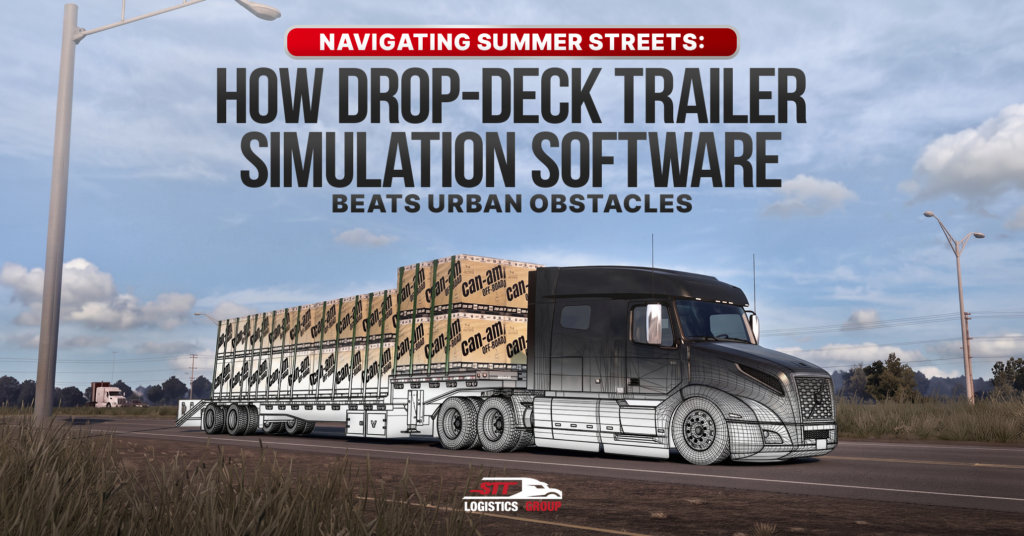
Summer is the peak season for construction and infrastructure projects. Consequently, heavy-haul companies face increased pressure to deliver oversized cargo through tight city streets. When you are moving massive loads, guesswork is not an option. Navigating sharp turns and low clearances requires absolute precision. To tackle this, modern logistics providers rely heavily on drop-deck trailer simulation software to predict exactly how a vehicle will behave before it ever hits the asphalt.
The Summer Challenge: Turning Radii and Vertical Clearances
Urban environments are inherently unforgiving for heavy haulers. During the summer months, challenges multiply due to active road construction, temporary detours, and heat-induced pavement expansion. Two critical factors must be calculated by logistics planners: turning radii (curvas de giro) and vertical clearances (gálibos).
A standard drop-deck trailer offers a lower deck height, which is excellent for hauling tall equipment. However, its unique wheelbase alters its turning physics. If a route is planned poorly, a trailer can easily bottom out on a steep incline or clip a historic city curb.
Enter Drop-Deck Trailer Simulation Software
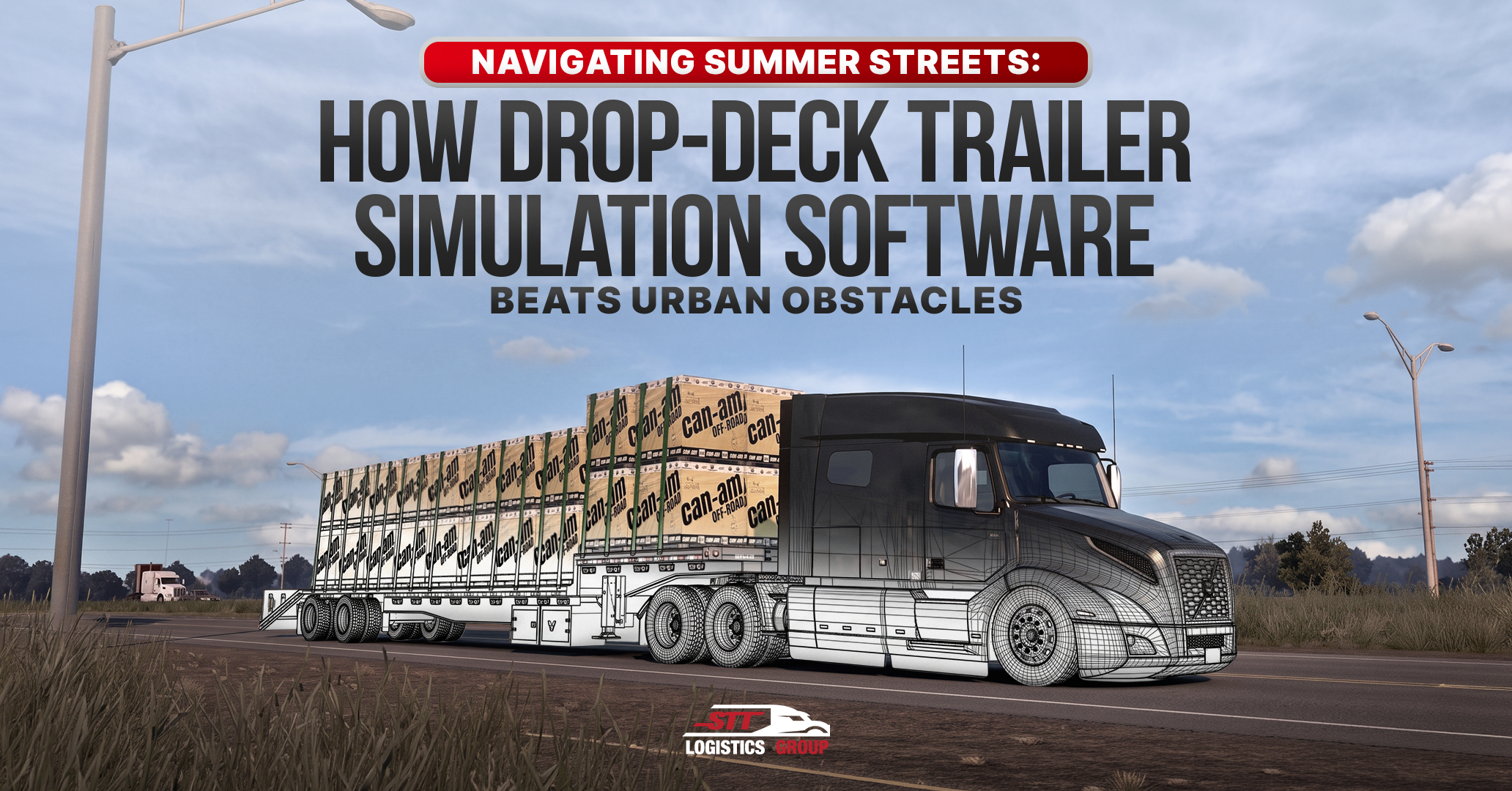
To prevent costly structural damage and logistical gridlock, engineers utilize advanced modeling programs. By using drop-deck trailer simulation software, 3D digital twins of both the transport vehicle and the specific city route are created.
- Swept Path Analysis: The software simulates the exact path that the trailer’s rear overhang will take during sharp turns.
- Clash Detection: Potential collisions with traffic lights, utility poles, and low-hanging summer foliage are flagged automatically.
- Vertical Alignment: Ground clearance is tested against sudden grade changes, ensuring the low-profile chassis does not get stuck.
Furthermore, these digital simulations allow transport teams to visualize real-world physics in a risk-free environment. While traditional route surveying is still utilized by experts, simulation software adds an indispensable layer of predictive accuracy.
The Real Cost of Logistical Delays
Why is this predictive technology so vital? The financial stakes of heavy-haul logistics are higher than ever. According to data from the Texas A&M Transportation Institute’s Urban Mobility Report, traffic congestion and freight delays cost the U.S. economy over $190 billion annually in wasted time and fuel. For an oversized load, a single wrong turn can stall an entire supply chain and rack up thousands of dollars in municipal fines.
By integrating drop-deck trailer simulation software into the pre-planning phase, STT Logistics Group eliminates these bottlenecks. Routes are optimized, permits are secured with highly accurate data, and transit times are significantly reduced.
Streamline Your Next Heavy Haul
Navigating urban obstacles in the summer requires a perfect blend of cutting-edge technology and field expertise. Don’t let tight city corners derail your project schedule.
Are you planning a complex transport this summer? Contact STT Logistics Group today to get your free quote! Our engineering team is ready to simulate, optimize, and execute your next heavy haul flawlessly.
Also, don’t forget to stay updated on the latest industry insights—follow us on our brand-new page: @sttlogisticsgroup!