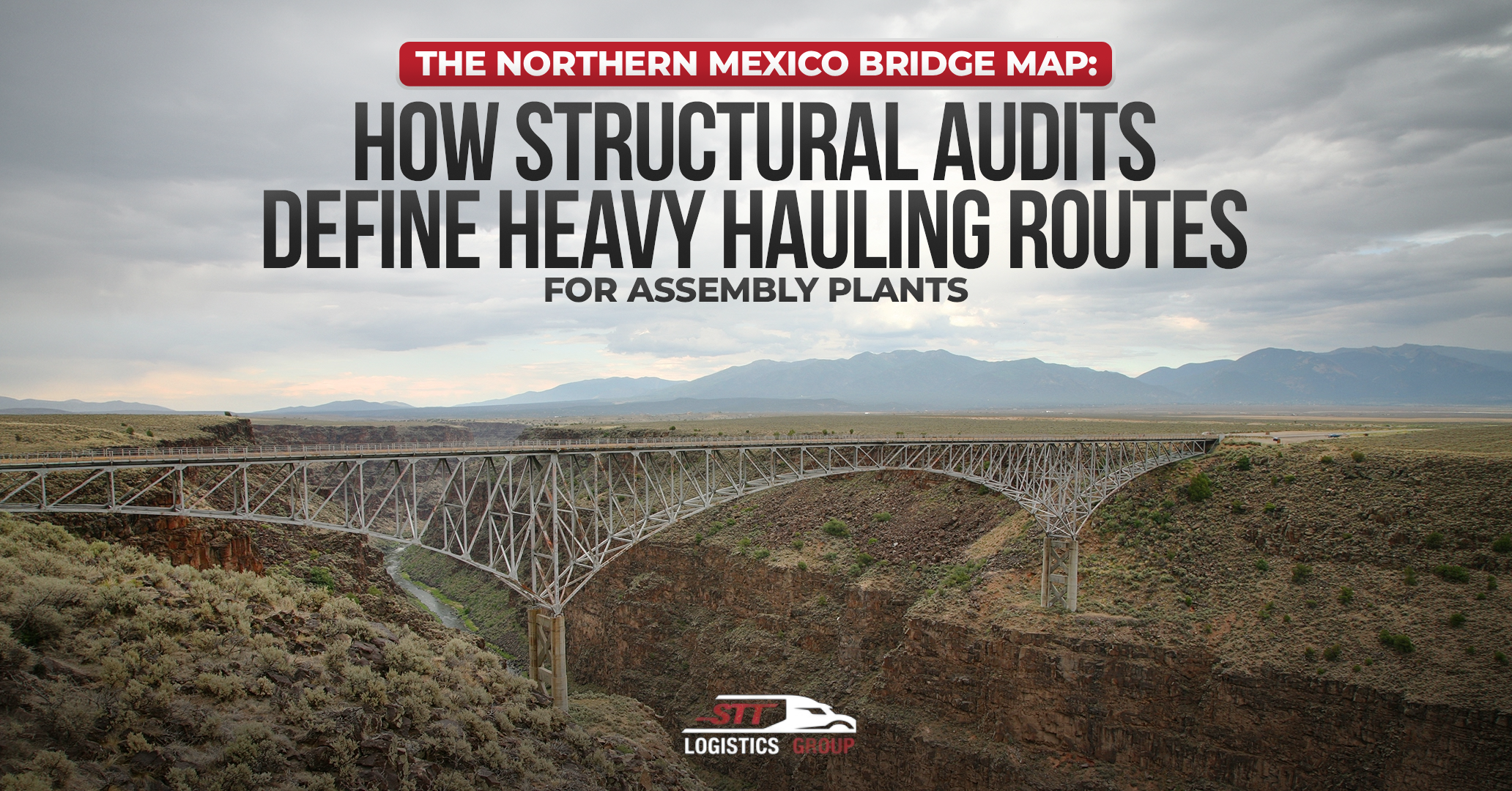

Moving oversized automotive machinery across borders requires more than just big trucks and experienced drivers. In fact, it demands meticulous engineering and a deep understanding of infrastructure limits. For supply chain managers sourcing from or expanding into Latin America, the Northern Mexico bridge map has become the ultimate blueprint for successful logistics.
Every year, millions of tons of industrial equipment travel through Mexican corridors to feed automotive assembly plants. However, a single weak overpass can halt a multi-million dollar operation. This is where structural resistance audits come into play, serving as the invisible backbone of heavy hauling.
Why Infrastructure Audits Dictate Your Logistics Route
When transporting heavy components like stamping presses or robotic assembly lines, standard GPS routes are useless. Instead, specialized logistics providers must rely heavily on the Northern Mexico bridge map to plot viable paths.
- Weight Distribution Matters: Heavy hauling configurations distribute immense weight across dozens of axles. Consequently, structural engineers must calculate bending moments and shear stress before a truck ever hits the asphalt.
- Active Evaluations: Bridges are actively evaluated by Mexican authorities and private logistics auditors to determine their maximum load capacity. If a bridge shows signs of wear, its rating is downgraded, immediately altering the transport landscape.
- The Cost of Failure: Ignoring these limits leads to catastrophic infrastructure damage, severe legal penalties, and massive supply chain delays.
According to data compiled by the World Economic Forum in their Global Competitiveness Report, Mexico ranks 49th globally for road infrastructure quality. While main trade corridors are highly developed, secondary roads often feature older bridges that cannot support modern heavy-hauling configurations. Therefore, up-to-date mapping isn’t just helpful—it is mandatory for operational safety.
Balancing the Logistics Equation: Active vs. Passive Planning
In heavy haul logistics, both human action and structural limitations must balance perfectly.
On one hand, logistics engineers actively analyze current infrastructure data to predict potential bottlenecks. They design custom transport configurations, coordinate with local authorities, and secure the necessary federal permits. This proactive approach ensures that every potential hazard is mitigated beforehand.
On the other hand, routes are strictly dictated by the physical realities of the terrain. If a specific overpass along the Laredo or Colombia solidarity border crossing undergoes maintenance, your cargo is automatically rerouted by infrastructure constraints. By understanding how these passive physical limits interact with active engineering solutions, STT Logistics Group ensures your cargo arrives without a scratch.
Mapping the Future of Automotive Supply Chains
As nearshoring continues to accelerate, the demand for reliable heavy hauling routes in Monterrey, Saltillo, and Chihuahua is skyrocketing. New manufacturing hubs are being built at a record pace. Meanwhile, the Northern Mexico bridge map is constantly updated to reflect new construction and structural reinforcements.
Navigating this complex regulatory and physical landscape requires an experienced partner who understands the data behind the infrastructure.
Secure Your Heavy Haul Route Today
Do not let infrastructure surprises stall your next major industrial project. STT Logistics Group has the expertise, the technology, and the regional knowledge to keep your assembly plant machinery moving safely across borders.
- Contact us today to claim your FREE QUOTE! * Stay ahead of the latest supply chain insights and logistics updates by following our brand-new page on Instagram and Facebook: @sttlogisticsgroup