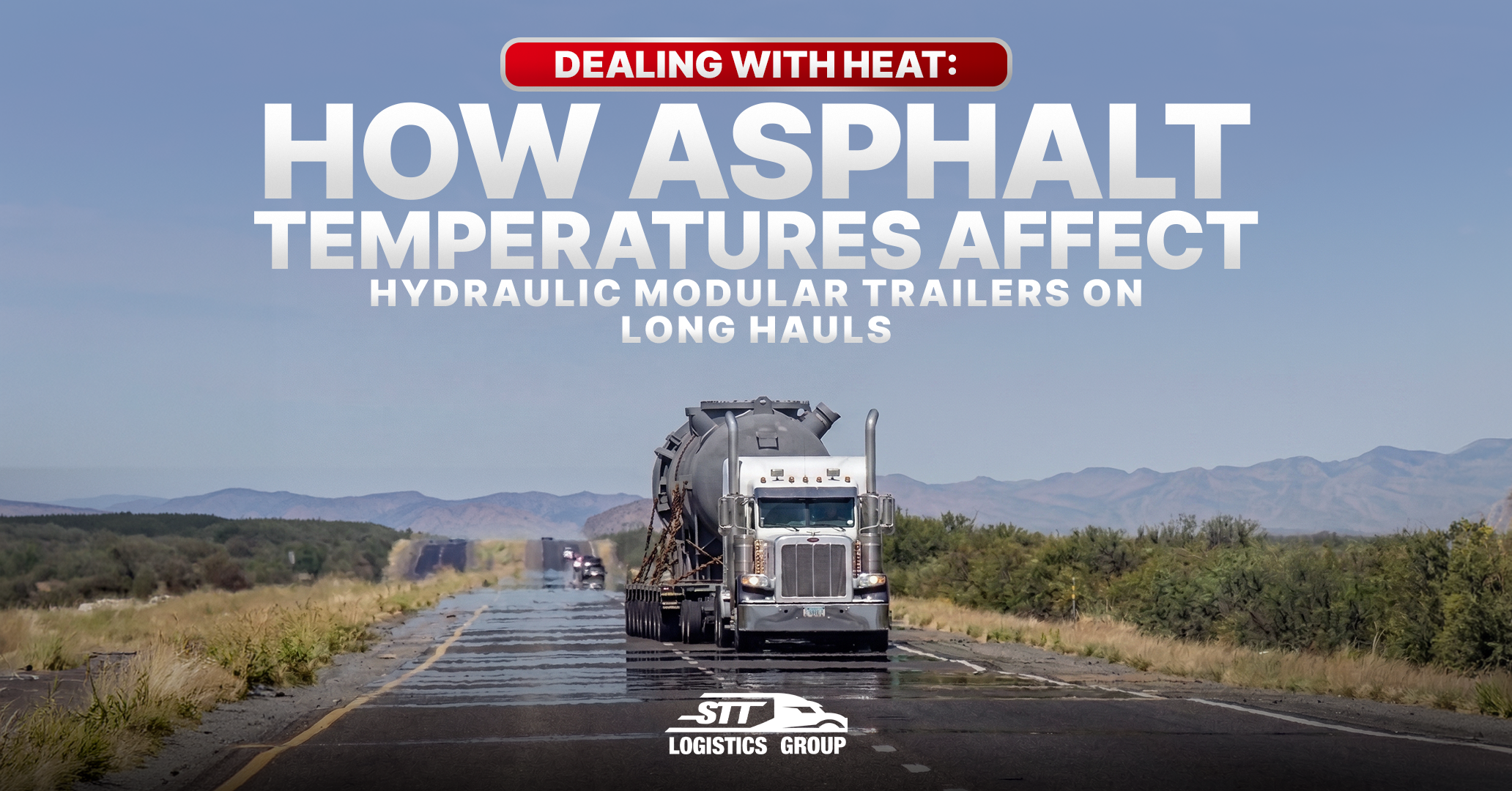

When managing heavy haul logistics, operators often focus heavily on route planning, load distribution, and regulatory permits. However, environmental factors play an equally critical role in transport safety, especially during peak summer months. Extreme heat creates significant challenges for specialized transport equipment, and the ground beneath the tires directly compounds this issue. Hydraulic modular trailers are specifically engineered to carry thousands of tons, yet their complex hydraulic suspension and steering systems remain vulnerable to intense thermal stress.
On long-distance hauls, the combination of high ambient temperatures and radiation from the road surface can cause the temperature of dark asphalt to soar up to 140°F (60°C) or higher. This radiating heat acts as a constant thermal blanket underneath the trailer. As a result, this extreme environment directly alters the fluid pressure and mechanical integrity of the axle lines.
The Science Behind Thermal Expansion and Fluid Pressure
To understand why this happens, we must look at how hydraulic modular trailers operate. These trailers rely on a closed hydraulic system where oil shifts between suspension cylinders to balance immense weight over uneven terrain.
Active forces drive the vehicle forward, while passive forces work within the fluid lines to absorb road vibrations. Under normal conditions, this system maintains a precise equilibrium. However, when the trailer travels for hours over blistering asphalt, thermal energy transfers from the road into the hydraulic lines, valves, and cylinders located just inches above the pavement.
According to basic thermodynamic laws, fluids expand when they are heated. In a sealed hydraulic circuit, this thermal expansion creates several operational risks:
- Pressure Spikes: Because hydraulic fluid cannot compress easily, its expansion triggers rapid pressure spikes within the suspension lines.
- Seal Degradation: High heat degrades the integrity of rubber seals and O-rings, which leads to fluid leaks.
- Fluid Thinning: Excessive heat reduces the viscosity of the hydraulic oil, meaning the fluid thins out and loses its ability to lubricate moving parts effectively.
Balancing Active and Passive Controls for Safe Transport
How do logistics teams counteract this invisible threat? The safety of a heavy haul relies on a delicate balance of active driver management and passive mechanical safeguards.
Important Note: Modern hydraulic modular trailers feature integrated pressure-relief valves designed to bleed off excess pressure automatically. However, continuous exposure to asphalt heat can easily overwhelm these standard safety margins during extended journeys.
Active interventions must be deployed by the transport crew to protect the equipment. Operators should regularly monitor the digital gauges connected to the trailer’s Power Pack Unit (PPU). If fluid temperatures approach critical thresholds, the transport team must schedule planned stops in designated cooling zones. During these intervals, heat dissipates naturally from the axle lines, allowing the fluid pressure to stabilize back to safe operational parameters.
Safeguarding Your Heavy Cargo
Ultimately, ignoring the thermal impact of the road surface can cause systemic hydraulic failure. A sudden drop in suspension pressure could destabilize an oversized load, endangering the crew, the cargo, and the public. By integrating asphalt temperature assessments into summer routing strategies, heavy haulers protect their assets and ensure a seamless delivery process.
Optimize Your Next Heavy Haul with STT Logistics Group
Do you need to move oversized cargo without worrying about thermal risks or mechanical failures? Let our team of heavy-duty transport experts handle the logistics for you.
Contact us today to get your [FREE QUOTE] and discover how we keep your freight moving safely, no matter the weather.
Don’t forget to stay updated on industry insights and company updates—follow our brand-new official social media page at @sttlogisticsgroup!