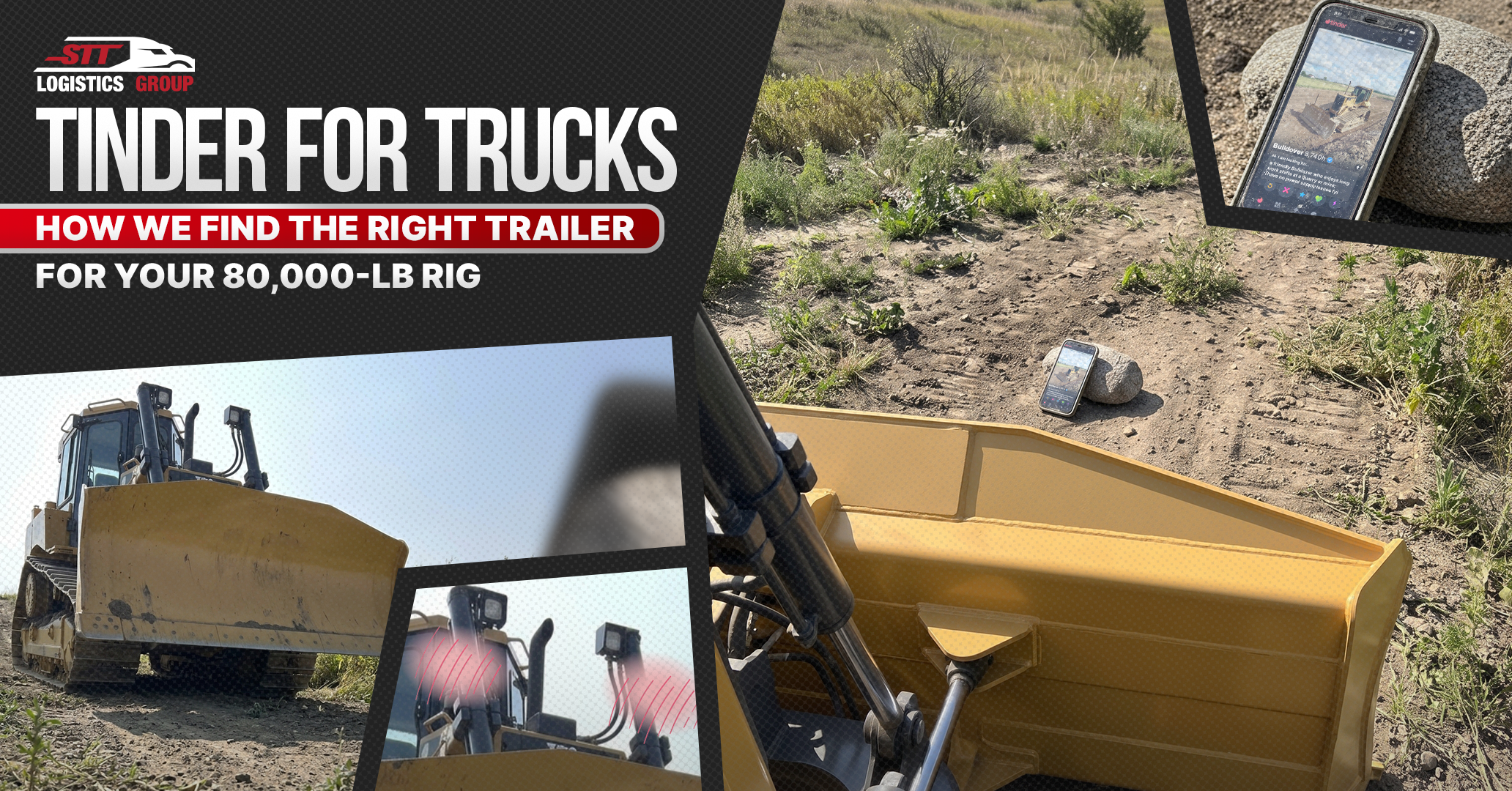
Swiping right on the wrong profile on a dating app might cost you an awkward dinner and twenty bucks. Swiping right on the wrong heavy machinery trailer, however, can cost you thousands of dollars in bridge clearance fines, damaged equipment, and stranded permits.
When your freight weighs up to 80,000 pounds and stands well over legal height limits, you cannot settle for a casual encounter. Your equipment needs its mechanical soulmate. Yet, dispatch boards are often treated like blind dates, where freight and trailers are mismatched without considering dimensions or axle limits.
Let’s review the dating profiles of the top three heavy-haul contenders—Flatbeds, Step Decks, and RGNs—so you never get ghosted by transit authority checkpoints again.
The Contenders: Meet Your Matches
1. The Standard Flatbed
- The Bio: “Low-maintenance, reliable, goes everywhere, loves standard palletized cargo.”
- The Reality Check: Flatbeds sit roughly 60 inches (5 feet) off the ground. In most US states, the maximum legal clearance for non-permitted freight sits around 13 feet, 6 inches. Consequently, if your excavator stands 10 feet tall, your total loaded height reaches nearly 15 feet.
- The Verdict: Left swipe. An oversized permit will be required immediately, or worse, your cargo will scrape an overpass.
2. The Step Deck (Single Drop)
- The Bio: “A little more adaptable, stylish drop-down deck, ready to take on slightly taller loads.”
- The Reality Check: By lowering the main deck height to roughly 34 to 40 inches above the tarmac, the step deck buys you an extra 15 to 20 inches of precious vertical headspace. Nevertheless, heavy industrial gear must still be loaded using ramps or cranes. If your machinery is extremely heavy or top-heavy, loading remains a nerve-racking ordeal.
- The Verdict: A solid “maybe” for medium tractors, but still a potential mismatch for massive construction iron.
3. The RGN (Removable Gooseneck)
- The Bio: “Ground-hugging stance, detachable neck, heavy-duty build, loves extra-tall machinery and roll-on confidence.”
- The Reality Check: This is the undisputed winner. When an RGN trailer is used, the gooseneck is detached completely, transforming the trailer bed into a ramp that rests directly on the pavement. Equipment is driven straight onto the deck without precarious wooden cribbing or unstable loading docks. Furthermore, a well-built RGN typically features a well height of only 18 to 24 inches off the pavement.
- The Verdict: A verified super-like.
Why the Deck Height Difference Matters
Route planning is directly dictated by freight geometry. According to infrastructure analysis published by the Federal Highway Administration (FHWA), vertical bridge clearances on the U.S. Interstate Highway System are typically engineered between 14 and 16 feet, with older urban and rural underpasses dipping significantly lower.
Because of these tight parameters, every inch of deck height saved prevents hundreds of detour miles. When an RGN is chosen as your heavy machinery trailer, vertical clearance is minimized substantially. Costly bridge strikes are avoided, routing permits are approved faster by state DOTs, and unnecessary escort vehicle fees are eliminated.
Find Your Match with STT Logistics Group
Matchmaking 80,000-lb industrial freight with the exact right rig requires more than guesswork—it requires specialized logistics expertise. Whether your project demands an extendable multi-axle RGN, a drop-deck carrier, or specialized heavy-haul escorts, freight solutions are tailored to your route and cargo specifications by our logistics specialists.
Ready to introduce your tall excavators and wheel loaders to their ideal match?
Contact STT Logistics Group today to claim your Free Quote!
Don’t forget to follow our brand-new page on social media at @sttlogisticsgroup for industry tips, route updates, and behind-the-scenes heavy-haul action.