
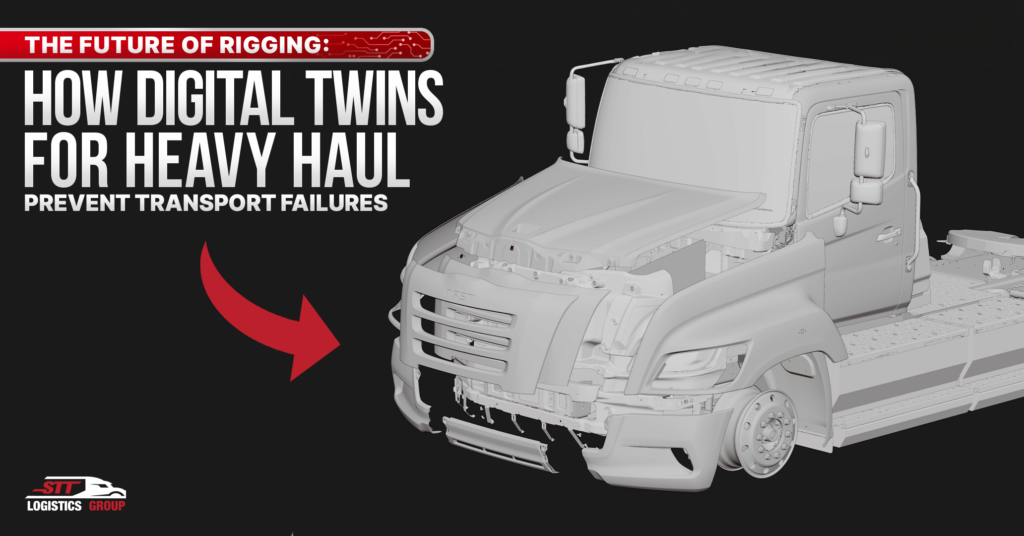
Moving oversized cargo is a high-stakes game where there is absolutely no room for error. Traditionally, engineers have relied on experience and manual calculations to secure massive loads onto lowboys. However, the logistics industry is currently experiencing a massive technological shift. Digital twins for heavy haul logistics are changing the game by allowing teams to simulate cargo securing virtually, long before the freight ever touches the trailer bed.
What is a Digital Twin in Heavy Transport?
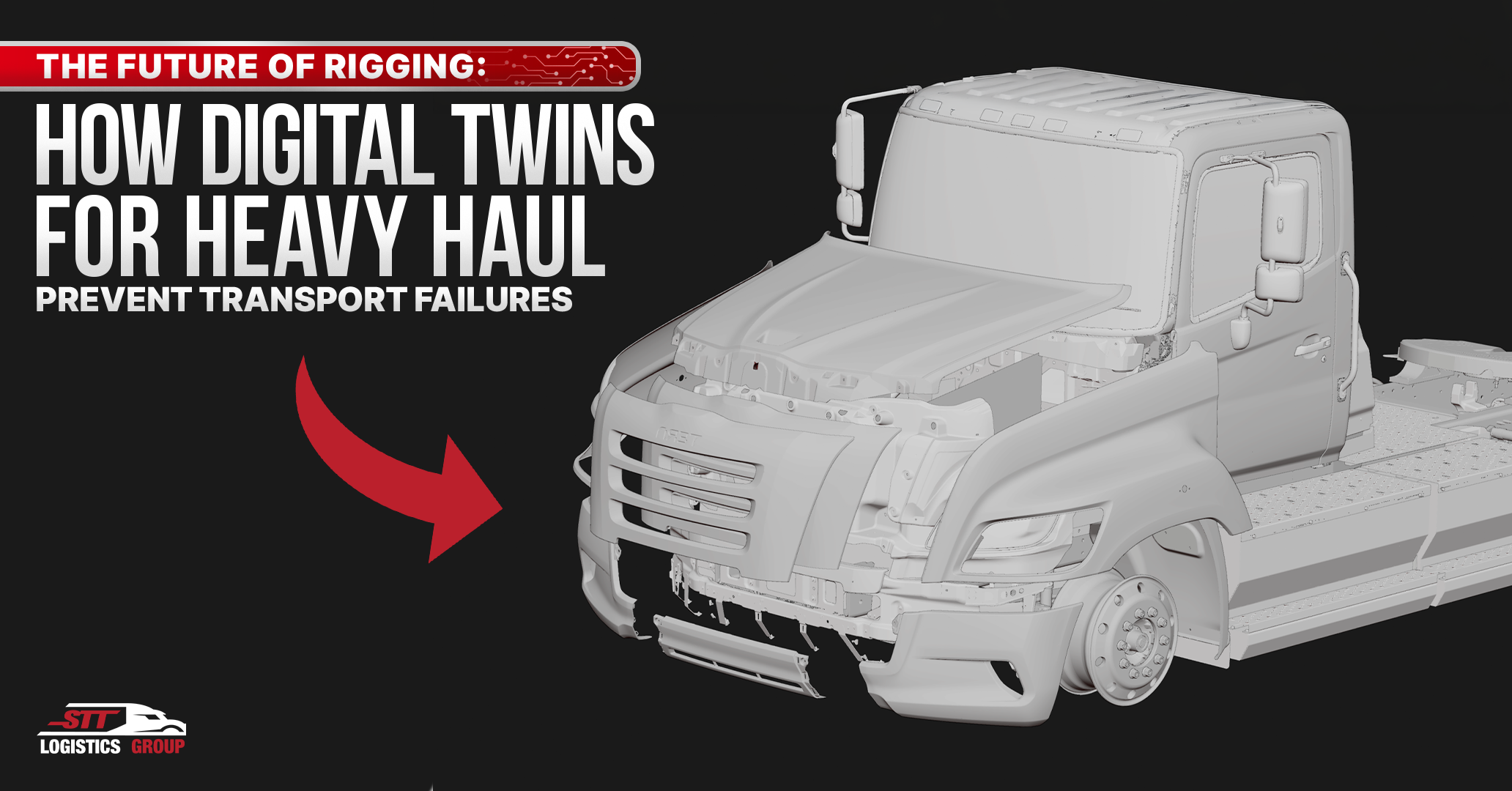
A digital twin is a highly accurate virtual replica of a physical object or system. In the context of heavy trucking, engineers create a digital counterpart of both the specific cargo (like a massive wind turbine or an industrial transformer) and the lowboy trailer.
By utilizing advanced telemetry and 3D modeling, dispatchers and engineers can test how the load will behave under real-world conditions.
While traditional methods get the job done, virtual simulations elevate safety to an entirely new level. Both active and passive engineering strategies are perfectly balanced through this technology. For instance, engineers actively program road variables into the software, while the vulnerabilities of the trailer are passively monitored by the AI to detect potential structural failures before they happen.
Simulating the Securement Before the Rubber Meets the Road
Why should logistics providers simulate the tie-down process virtually? The answers lie in efficiency, safety, and cost reduction.
- Predicting Center of Gravity: Heavy loads often have asymmetrical shapes. A digital twin calculates the exact center of gravity, ensuring the weight is distributed perfectly across the lowboy axles.
- Testing Chain and Strap Tension: Instead of guessing the optimal tie-down points, simulation software calculates the exact force required to secure the load against centrifugal forces and sudden braking.
- Preventing Structural Damage: The system simulates potholes, sharp turns, and steep inclines. Consequently, potential cargo shifts are identified in the virtual world rather than on a busy highway.
Furthermore, this technology saves massive amounts of time. Loading crews actively execute the securing plan with absolute confidence because the entire transit route has already been simulated and approved by the software.
Why the Industry is Adopting Virtual Simulations
The adoption of this technology is not just a passing trend; it is backed by hard data. According to a comprehensive research report by Gartner, the business value of digital twins will reach $131 billion by 2024, with supply chain and logistics sectors being among the primary drivers of this growth. Companies that implement these virtual models experience a significant drop in transport incidents and a drastic reduction in loading times.
Secure Your Next Heavy Haul with STT Logistics Group
At STT Logistics Group, we stay ahead of the curve so your high-value cargo remains completely safe. Whether you are moving heavy machinery across the state or handling complex over-dimensional freight, we leverage the best logistics strategies to guarantee a seamless delivery.
Don’t leave your heavy haul to guesswork. Contact STT Logistics Group today to get your FREE quote! For more updates on logistics technology, heavy haul tips, and industry insights, make sure to follow us on our brand-new page: @sttlogisticsgroup.