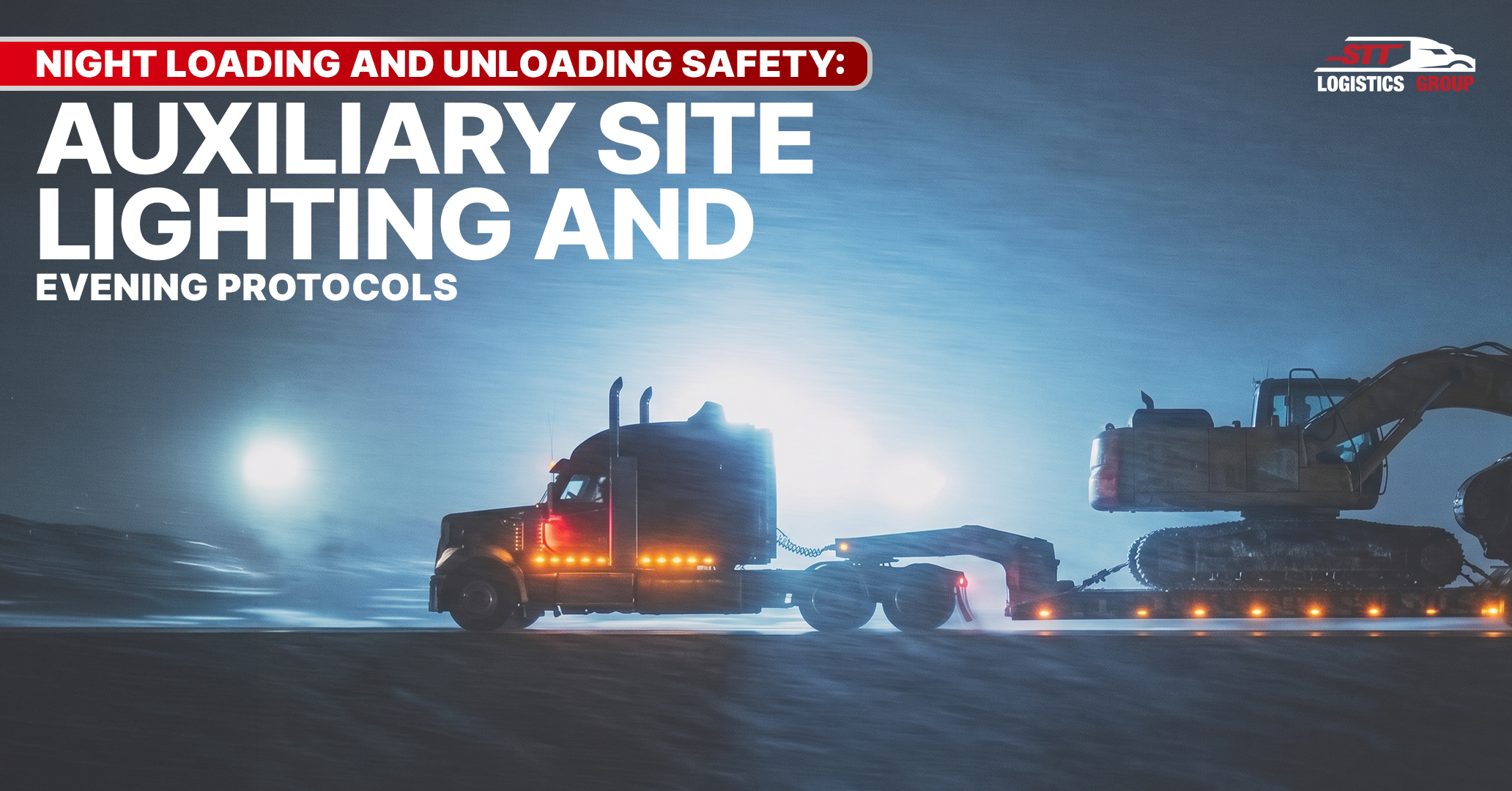

As fall transitions into winter, reduced daylight hours create serious visibility challenges for transportation and freight operations. When sunrises arrive later and sunsets happen earlier, heavy machinery and warehouse crews frequently operate under dark or dimly lit conditions. Ensuring night loading and unloading safety is no longer just a best-practice recommendation—it is a critical driver of operational continuity, driver wellbeing, and risk mitigation.
The Heightened Risk of Low-Visibility Operations
Visibility drops significantly during autumn and winter twilight hours, which directly elevates the risk of site accidents. Darkness distorts distance perception, hides ground hazards, and compromises pedestrian visibility around heavy equipment.
According to data compiled by the National Safety Council (NSC), traffic and transport-related fatalities spike dramatically during hours of darkness, even though overall traffic volume drops. Reduced visibility impairs a driver’s depth perception and slows reaction times, making active freight staging areas particularly vulnerable zones.
When logistics managers prioritize structured visibility protocols, costly freight collisions and personal injury claims can be systematically minimized.
1. Auxiliary Site Lighting: Illuminating the Staging Area
Standard overhead depot lights or tractor headlights rarely provide sufficient coverage for heavy loading zones. To establish optimal night loading and unloading safety, specialized site illumination must be actively deployed.
- Portable LED Light Towers: These mobile towers are deployed across large yards to eliminate deep shadows around trailer doors and drop zones.
- Focus LED Task Lights: Mounting dedicated exterior lighting directly onto loading docks brightens the interior of trailers where forklifts maneuver.
- Glare Reduction Adjustments: High-intensity lights should be aimed downward at an angle to prevent blinding equipment operators and incoming truck drivers.
While high-intensity lighting systems are installed by facility team members, regular maintenance schedules must be followed to ensure every bulb and fixture functions correctly before night shifts commence.
2. Essential Evening Protocols for On-Site Crews
Illumination represents only half of the equation; rigorous operational protocols complete the safety net. Site supervisors must strictly enforce key night protocols to safeguard every worker on the tarmac.
- Mandatory High-Visibility PPE: All ground personnel must wear ANSI Class 2 or Class 3 reflective vests and headwear. Reflective material allows operators to spot workers from greater distances.
- Clear Pedestrian Walkways: Designated ground corridors are designated and painted with high-contrast reflective paint, keeping foot traffic entirely separate from forklift corridors.
- Enhanced Communication Systems: Standard hand signals often fail in dark environments. Drivers and dock workers should utilize two-way radios or illuminated wand signals during positioning maneuvers.
- Pre-Shift Yard Audits: Before loading begins, debris, ice, or loose equipment must be cleared from the drop zone to prevent slips, trips, and trailer misalignments.
Partnering for Safer Freight Solutions
Managing seasonal shifts requires proactive planning, reliable equipment, and experienced logistics partners who prioritize safety at every step. At STT Logistics Group, strict safety standards are embedded into every route, load, and drop-off we manage, regardless of the time or season.
Don’t let shorter daylight hours slow down your supply chain or compromise your team’s safety.
Get Your Free Quote Today! Reach out to our transport experts to streamline your shipments safely this season.
Make sure to follow our journey and stay updated with the latest logistics insights on our new official page: @sttlogisticsgroup!