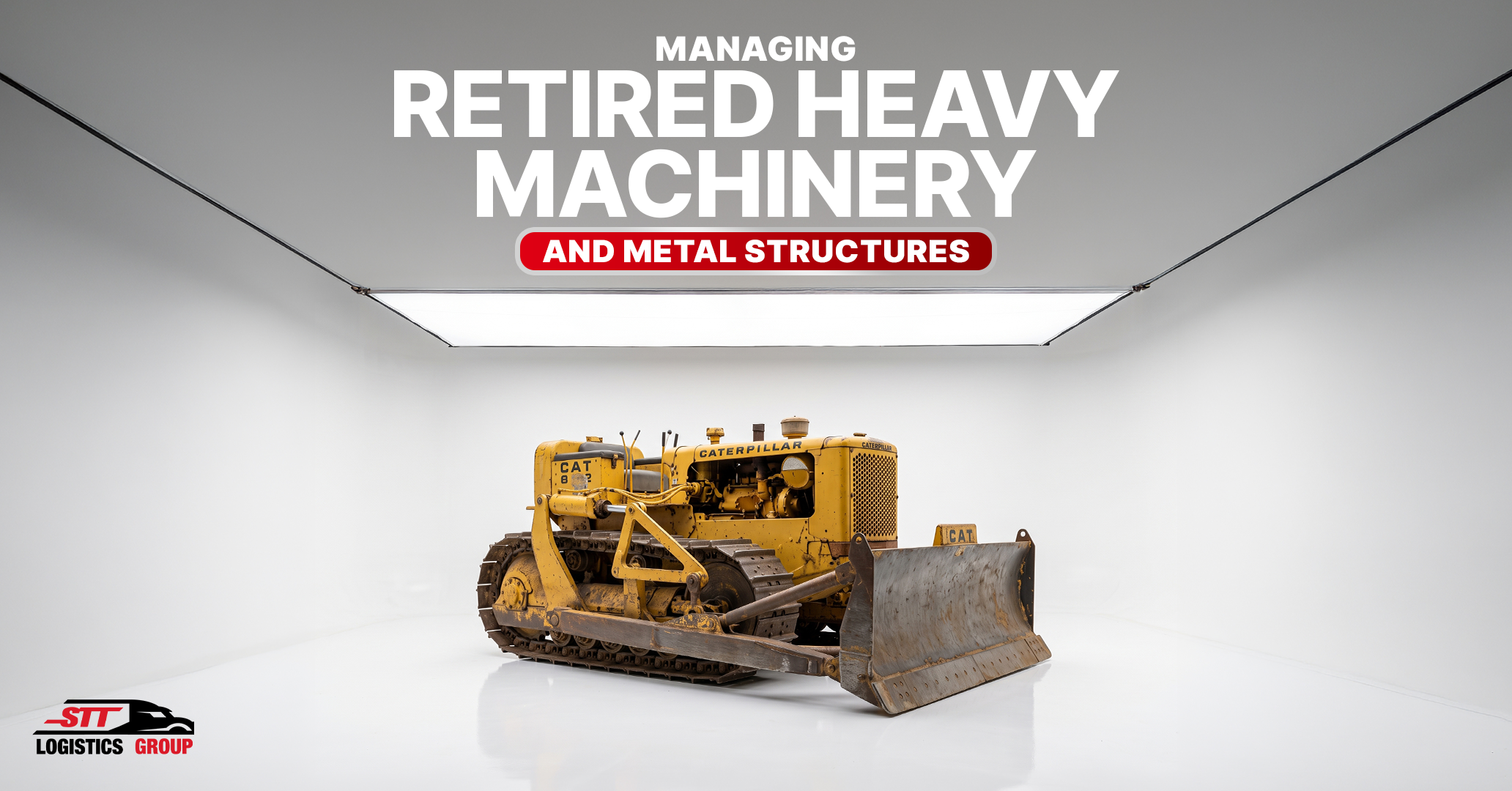

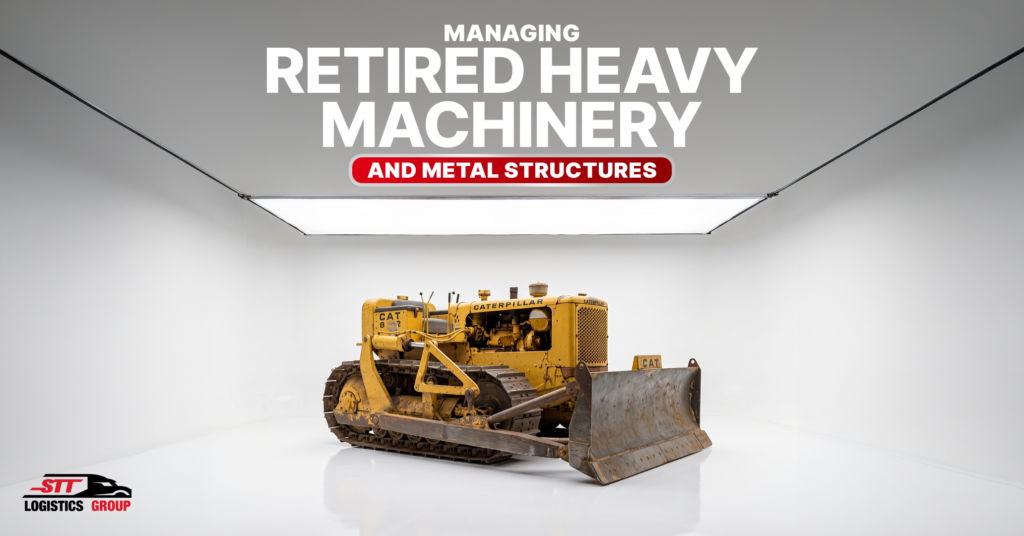
Managing end-of-life industrial machinery requires more than standard transport solutions. When heavy equipment reaches the end of its operational lifecycle, companies must clear space while minimizing environmental impact. Consequently, industrial equipment recycling logistics has become a vital pillar for modern supply chain operations.
Moving massive metallic structures—such as giant cranes, decommissioned boilers, or heavy production rigs—demands specialized heavy-haul transport, route planning, and rigorous compliance. STT Logistics Group manages every stage of this complex reverse logistics process. As a result, retired machinery moves safely from industrial sites directly to recycling plants or remanufacturing facilities.
Why Reverse Logistics Matters for Retired Machinery
Reverse logistics transforms obsolete metal assets into valuable resources. Specialized carriers dismantle, load, and transport these colossal units, preventing environmental contamination and recovering valuable scrap metals like steel, copper, and aluminum. Furthermore, sustainable asset recovery delivers direct financial and operational benefits:
- Resource Preservation: Scrap recycling reduces energy consumption compared to raw material extraction.
- Cost Recovery: Recycled metal provides cash back or offsets original decommissioning expenses.
- Regulatory Compliance: Proper disposal ensures alignment with local and federal environmental standards.
According to the Institute of Scrap Recycling Industries (ISRI), recycling one ton of steel conserves 2,500 pounds of iron ore, 1,400 pounds of coal, and 120 pounds of limestone. Because steel scrap plays such a massive role in global manufacturing, efficient reverse logistics directly supports circular economy goals.
The Process: From Decommissioning to Remanufacturing
Transporting oversized metallic assets involves precise coordination:
- On-Site Preparation: Technicians disassemble large machinery into manageable, legal load sizes.
- Heavy-Haul Routing: Specialized flatbeds, step-deck trailers, or multi-axle heavy haulers receive the load, while planners secure state permits and escort vehicles.
- Delivery & Circular Processing: Vehicles transport the metallic scrap to certified recycling hubs or remanufacturing plants for overhaul.
However, moving non-operational or oversized machinery requires expert oversight. Therefore, working with experienced logistics coordinators eliminates transit delays and mitigates site hazards.
Ready to Upgrade Your Reverse Logistics?
If your facility is upgrading machinery or clearing obsolete metal structures, STT Logistics Group handles the heavy lifting from start to finish. Contact our team today to streamline your industrial equipment recycling logistics and claim your FREE QUOTE!
Don’t forget to follow our official page @sttlogisticsgroup for industry updates, oversized load showcases, and heavy-haul insights!