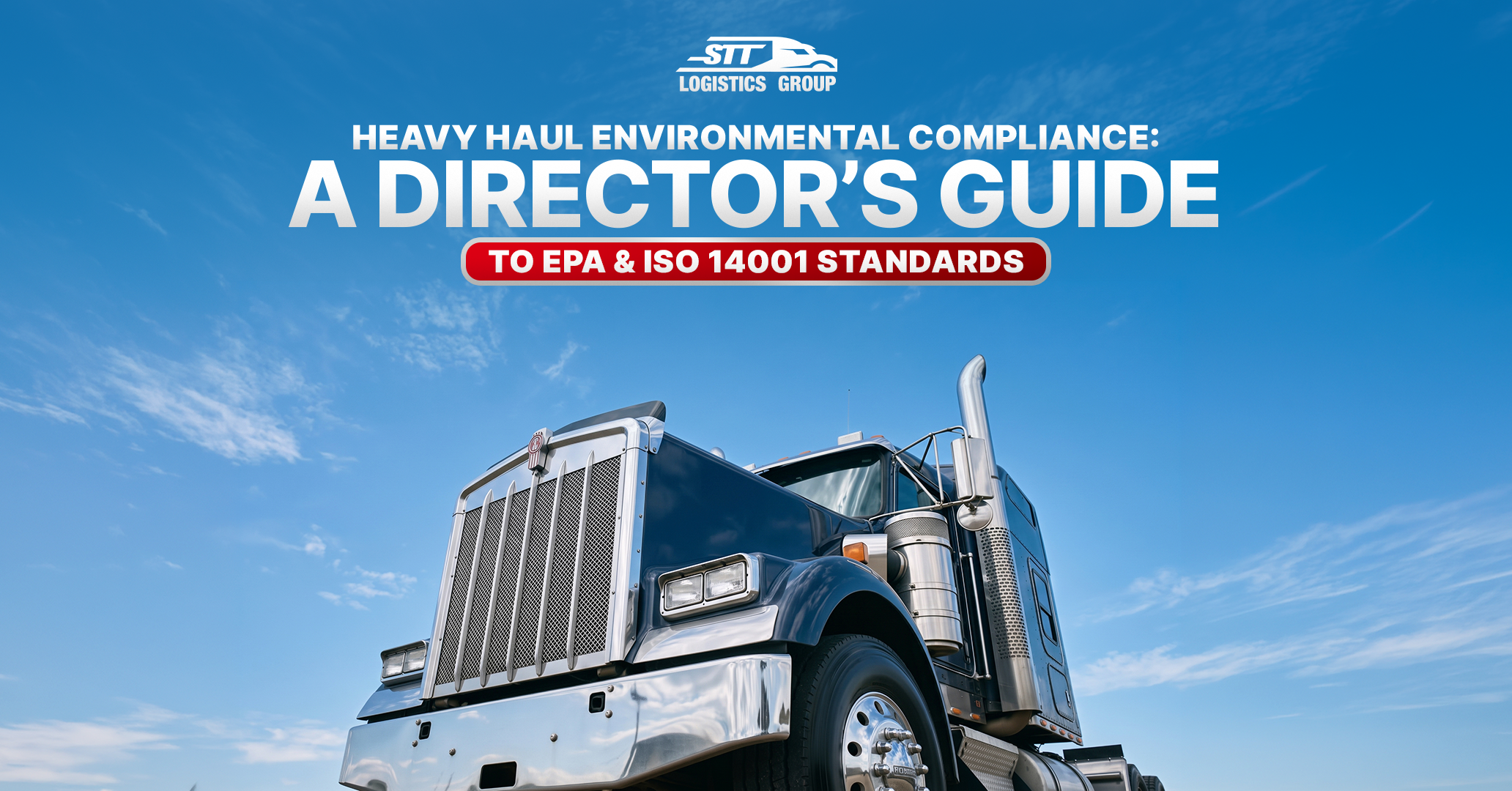

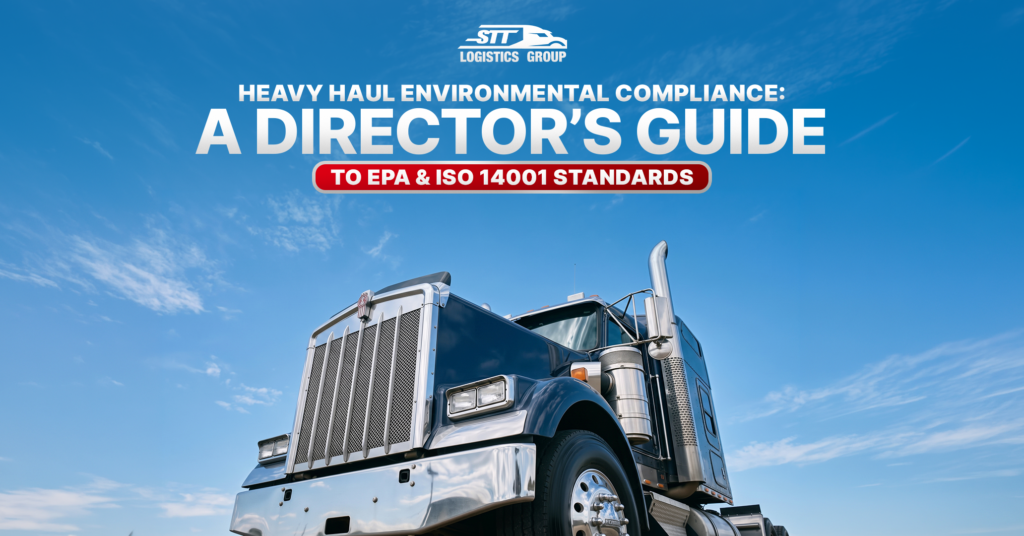
Managing heavy haul logistics requires balancing heavy equipment transportation with stringent legal standards. Today, operations directors must prioritize sustainability alongside timely deliveries. Achieving total heavy haul environmental compliance protects your supply chain from costly delays, environmental penalties, and brand damage.
Supply chain emissions represent a major focus for global climate initiatives. According to the International Energy Agency (IEA), global energy-related carbon dioxide emissions reached a record 37.4 billion metric tons in 2023, with the transport sector accounting for a significant portion of this output. To address these growing concerns, logistics leaders must actively audit their heavy transport operations.
Auditing Fleet Engines: Tier 4 and Euro VI Standards
To maintain compliance, you should first evaluate your carrier fleet’s engine technology. Advanced regulations mandate lower exhaust output for heavy-duty machinery and transport vehicles.
- Tier 4 Final Engines: Off-highway machinery and heavy haul rigs utilize Tier 4 Final technology to dramatically reduce nitrogen oxides (NOx) and particulate matter.
- Euro VI Standards: European standards demand advanced diesel particulate filters (DPF) and selective catalytic reduction (SCR) systems.
When your logistics team conducts a fleet audit, ensure your carriers provide certified documentation for these engine standards. Heavy transport operations pollute significantly less when modern engine technologies are enforced.
Implementing ISO 14001 Frameworks in Over-the-Road Freight
While EPA regulations set the legal baseline in the United States, ISO 14001 provides an international blueprint for Environmental Management Systems (EMS).
First, establish clear protocols for monitoring fuel consumption and idle times across all routes. Next, integrate risk-assessment procedures for every oversized load. By aligning your freight operations with ISO 14001 principles, environmental risks are systematically mitigated before your cargo hits the highway. Furthermore, shippers prefer working with ISO-certified logistics providers because verified frameworks reduce scope 3 emissions across the entire supply chain.
Hazardous Waste and Emergency Spill Management on Route
Oversized and super-heavy loads often involve specialized machinery containing hydraulic fluids, fuels, or hazardous substances. Consequently, route planning must include clear protocols for hazardous waste containment.
- Pre-route Hazard Mapping: Drivers and escorts must identify environmentally sensitive zones, such as waterways and reserves, prior to transit.
- Spill Kit Verification: Adequate spill containment kits must be inspected and placed on board every transport vehicle.
- Emergency Response Readiness: Local emergency response teams should be notified whenever superheavy loads carry regulated materials through their jurisdiction.
In addition, driver training programs are routinely updated by leading logistics managers to handle unexpected leaks or incidents efficiently.
Partner with STT Logistics Group
Navigating complex environmental regulations for superheavy cargo does not have to slow down your business. At STT Logistics Group, we streamline your supply chain while ensuring strict adherence to EPA guidelines and ISO standards.
Contact our expert team today to secure your FREE QUOTE and elevate your heavy transport strategy!
Don’t forget to follow our new official page @sttlogisticsgroup for industry insights, logistics updates, and heavy-haul solutions.