

In the world of heavy haul transportation, moving a colossal piece of equipment is often seen as the final act of strength. However, the true artistry lies in the unseen and meticulous work that happens long before the truck’s engine ever starts: namely, the heavy haul route survey and logistics engineering. Therefore, this isn’t just about finding the shortest path; it’s about building a flawless bridge from origin to destination, ensuring every mile is a safe and strategic success.
The Foundation of a Flawless Move: Pre-Planning is Everything
For this reason, before any heavy machinery can be mobilized, a comprehensive route survey is conducted. Ultimately, this process is the logistical blueprint for a safe and successful journey. It involves a team of experts who meticulously assess every aspect of the route, thereby identifying potential obstacles and engineering solutions to overcome them.
As a study by Sea of Gravity, a company specializing in complex project logistics, highlights: “One of the most consistent issues in heavy haul logistics is underestimating how long planning actually takes. Many teams wait until fabrication is nearly complete before involving a logistics partner. By that point, the schedule is locked, permits are rushed, and availability for specialized equipment is limited. Consequently, that creates unnecessary pressure on the back end of the project.” Thus, this underscores that a deep commitment to pre-planning heavy transport is not a luxury, but a necessity.
The Engineering Checklist: From Bridges to Power Lines
Moreover, a thorough heavy haul route survey goes far beyond a simple GPS check. Instead, it’s a detailed logistics engineering exercise that includes several critical components:
- Bridge Clearance Analysis: First and foremost, this is one of the most critical steps. Engineers must verify not only the vertical clearance of every bridge and overpass but also the structural integrity and weight-bearing capacity. A seemingly minor miscalculation could, in fact, have catastrophic consequences, leading to delays and significant damage.
- Road Strength Assessment: In addition, the route must be capable of withstanding the immense weight of the cargo and the specialized transport vehicles. Pavement quality, soil stability, and potential for subsidence are all evaluated to prevent road damage or, worse yet, an accident.
- Utility Line Survey: Furthermore, power lines, telephone cables, and other overhead utilities can pose a significant challenge. The survey team maps out these lines and coordinates with utility companies to arrange temporary line lifts, de-energizing, or other necessary accommodations to ensure a clear path.
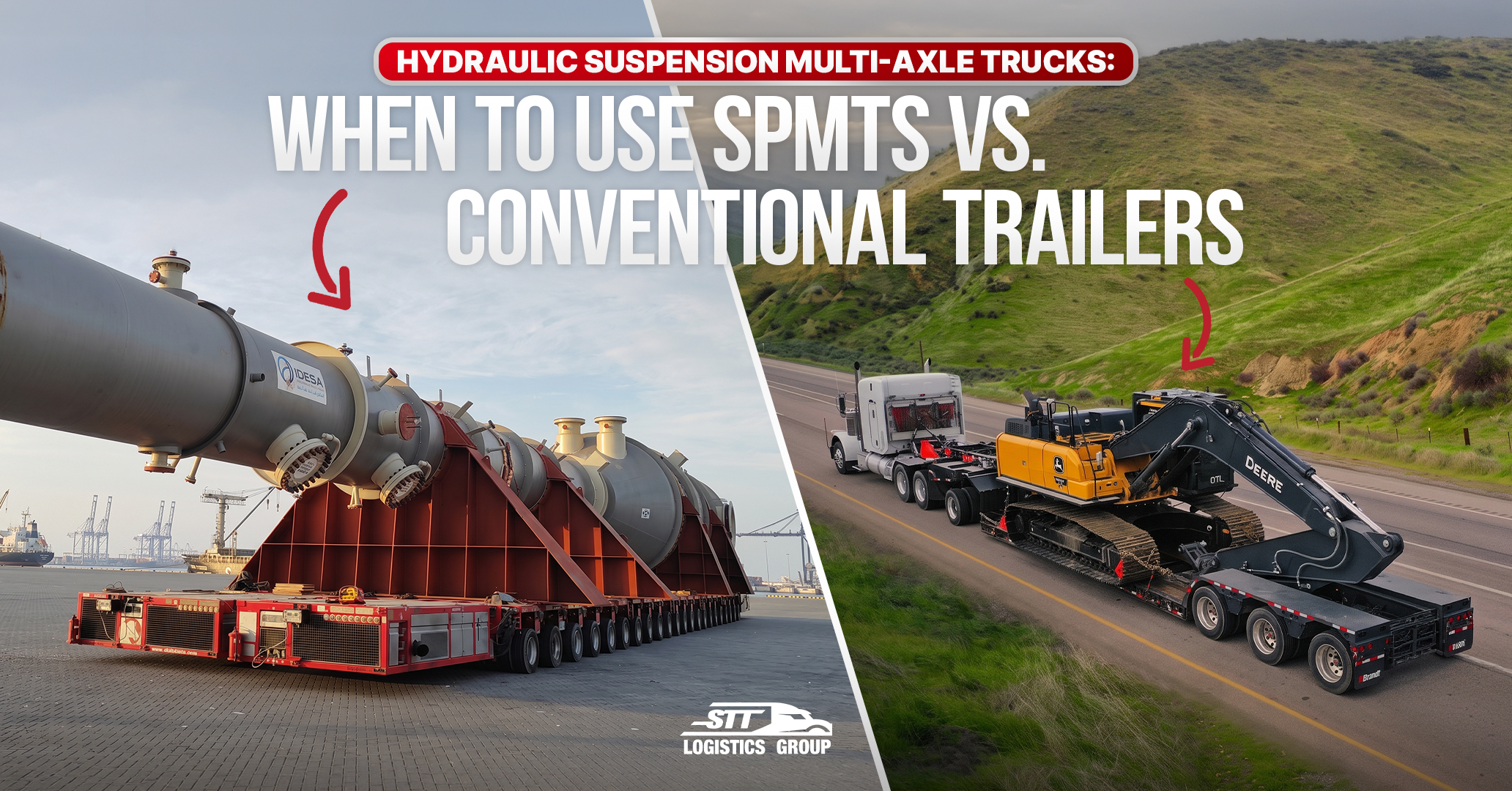
- Geometric and Topographical Review: Finally, the team analyzes every curve, turn, and slope. Steep grades, sharp corners, and narrow road sections require specialized planning and, in some cases, the use of unique transport equipment like self-propelled modular transporters (SPMTs).
STT Logistics: Your Partner in Precision Engineering
In conclusion, at STT Logistics, we believe that the true measure of our success isn’t just in the delivery. It’s the meticulous planning that makes it possible. Therefore, our team of experts specializes in heavy haul route surveys and logistics engineering. Turning potential barriers into seamless paths forward. Ultimately, we don’t just move your equipment; we engineer its journey to perfection.
Ready to ensure your next critical project is built on a foundation of logistical excellence?
Contact STT Logistics today for a comprehensive route survey and expert heavy haul planning.