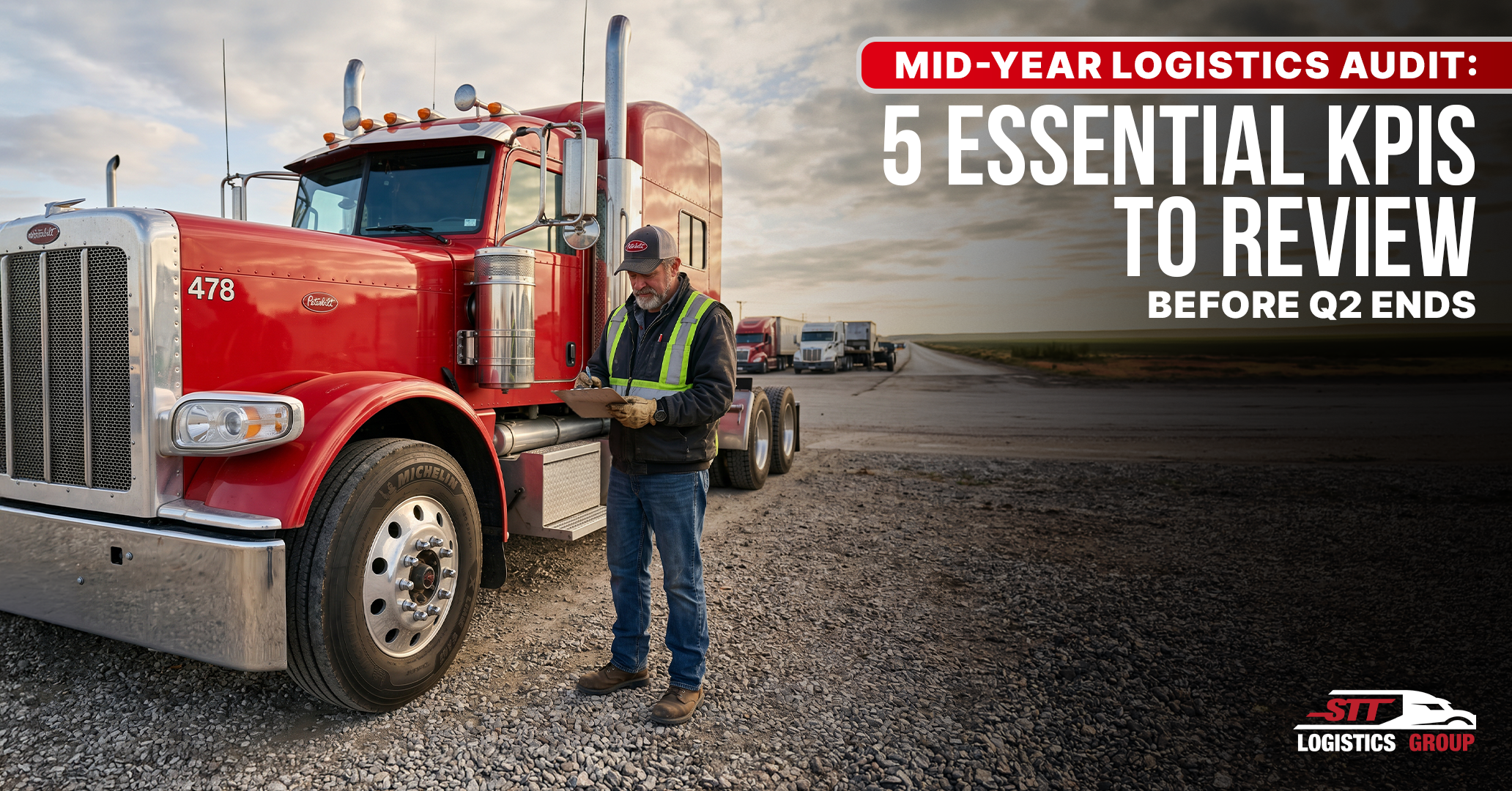

As we approach the halfway point of the year, savvy businesses realize that hope is not a strategy. To ensure your supply chain remains resilient, performing a Mid-Year Logistics Audit is the most effective way to pivot toward a more profitable second half.
By evaluating your performance now, you can identify bottlenecks before they become year-end disasters. Here are the five critical Key Performance Indicators (KPIs) you should analyze during your Mid-Year Logistics Audit.
1. Transportation Cost per Unit
Understanding your shipping spend is the cornerstone of any Mid-Year Logistics Audit. This metric is calculated by dividing your total freight costs by the number of units shipped.
- Active Voice: STT Logistics Group monitors these fluctuations daily to protect your margins.
- Passive Voice: Unexpected surcharges are often overlooked by shippers until the budget is already exceeded.
2. On-Time Delivery (OTD) Rate
Customer satisfaction depends entirely on reliability. During your Mid-Year Logistics Audit, you must determine if your carriers are meeting their promised windows. According to a 2023 supply chain report by Gartner, organizations that prioritize real-time visibility see a 20% improvement in customer satisfaction scores.
3. Inventory Turnover Ratio
Are you sitting on “dead stock” or moving products efficiently? A healthy turnover ratio indicates that your sales and logistics teams are in sync. However, if your stock is lingering, your Mid-Year Logistics Audit should prompt a revision of your procurement strategy.
4. Order Accuracy
Mistakes are expensive. This KPI measures the percentage of orders processed without errors (wrong items, damaged goods, or incorrect addresses). While automated systems reduce human error, manual checks are still highly valued by top-tier logistics managers.
5. Warehouse Capacity Utilization
Space is money. If you are paying for empty shelves—or worse, paying for overflow storage—your efficiency is suffering. Consequently, this indicator helps you decide whether to scale down or seek more strategic warehousing solutions for the remainder of the year.
Conclusion
Performing a thorough Mid-Year Logistics Audit allows you to transform raw data into a competitive advantage. Although the market is volatile, your strategy doesn’t have to be.
Ready to Optimize Your Supply Chain?
Don’t wait for the end of the year to fix today’s problems. Contact us today at STT Logistics Group to get your FREE QUOTE and let our experts streamline your operations.
👉 Follow us on our new page: @sttlogisticsgroup