
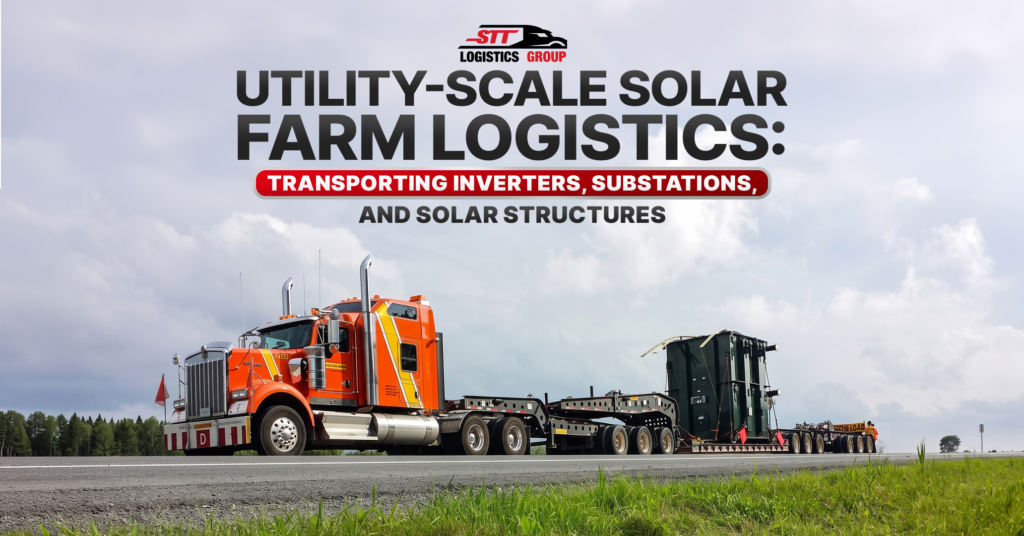
Utility-scale solar projects are rapidly expanding across rural and desert landscapes. While wide-open spaces offer maximum sun exposure, they also present steep logistical challenges. Delivering thousands of solar components to unpaved, high-risk locations requires precision planning and specialized equipment. Successful developers rely on optimized utility-scale solar farm logistics to prevent delays, protect critical cargo, and keep clean energy projects on schedule.
Navigating Remote Terrains and Unpaved Access Roads
Solar developers frequently build utility-scale facilities on remote, undeveloped land. Because these sites lack paved highways, moving heavy freight across desert sand or unpaved dirt trails creates immediate risks. Oversized loads can easily sink into soft ground, get stuck in narrow passageways, or suffer structural vibration damage.
To overcome these barriers, logistics teams perform rigorous route surveys before the first truck leaves the yard. Logistics experts analyze turning radiuses, evaluate dirt road load capacities, and coordinate ground clearance adjustments for specialized trailers. Moreover, transport managers deploy all-wheel-drive heavy-haul tractors and multi-axle trailers to distribute weight evenly, ensuring that heavy cargo reaches its final location safely.
Moving Heavy-Haul Equipment: Inverters and Substations
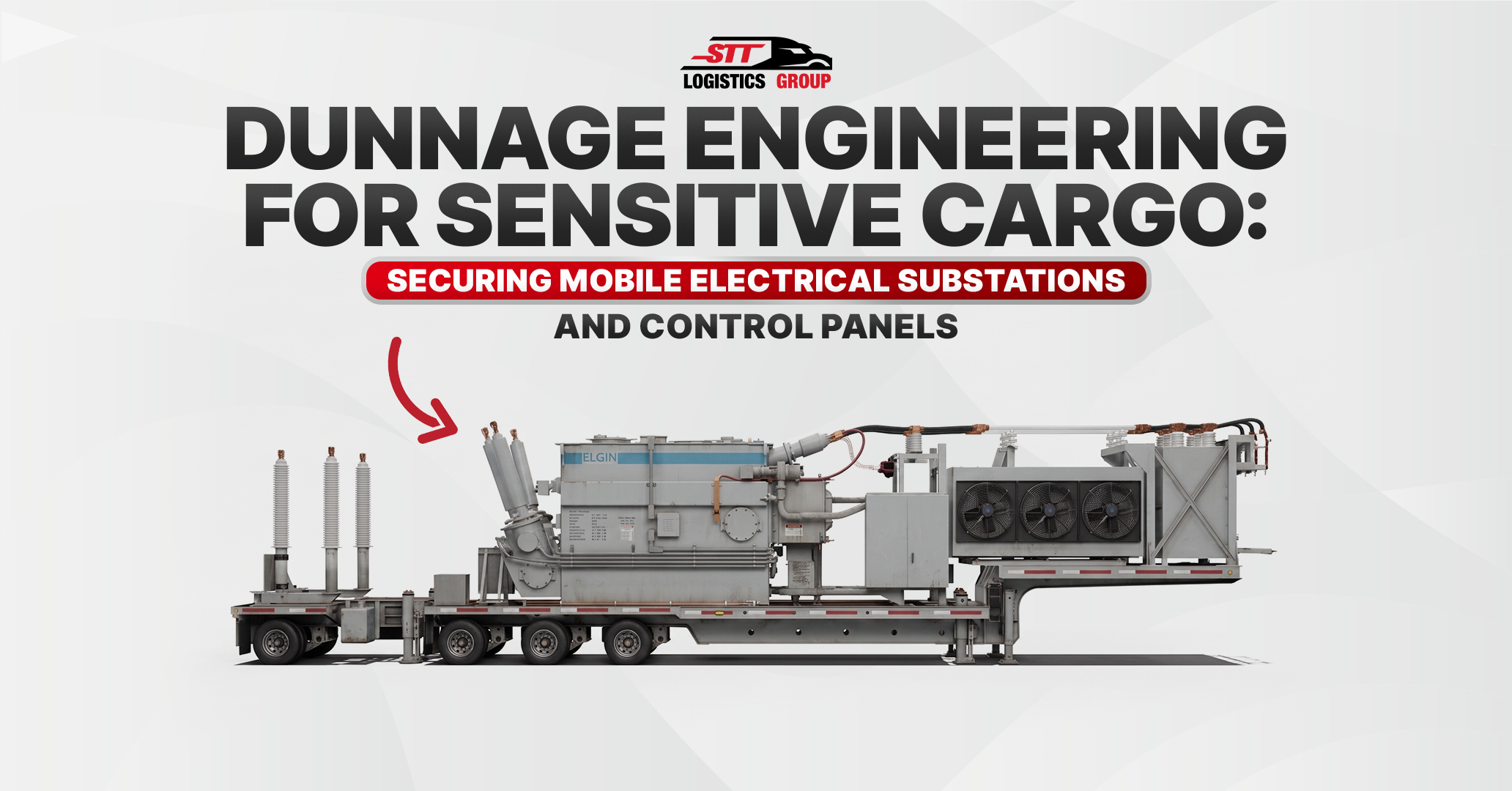
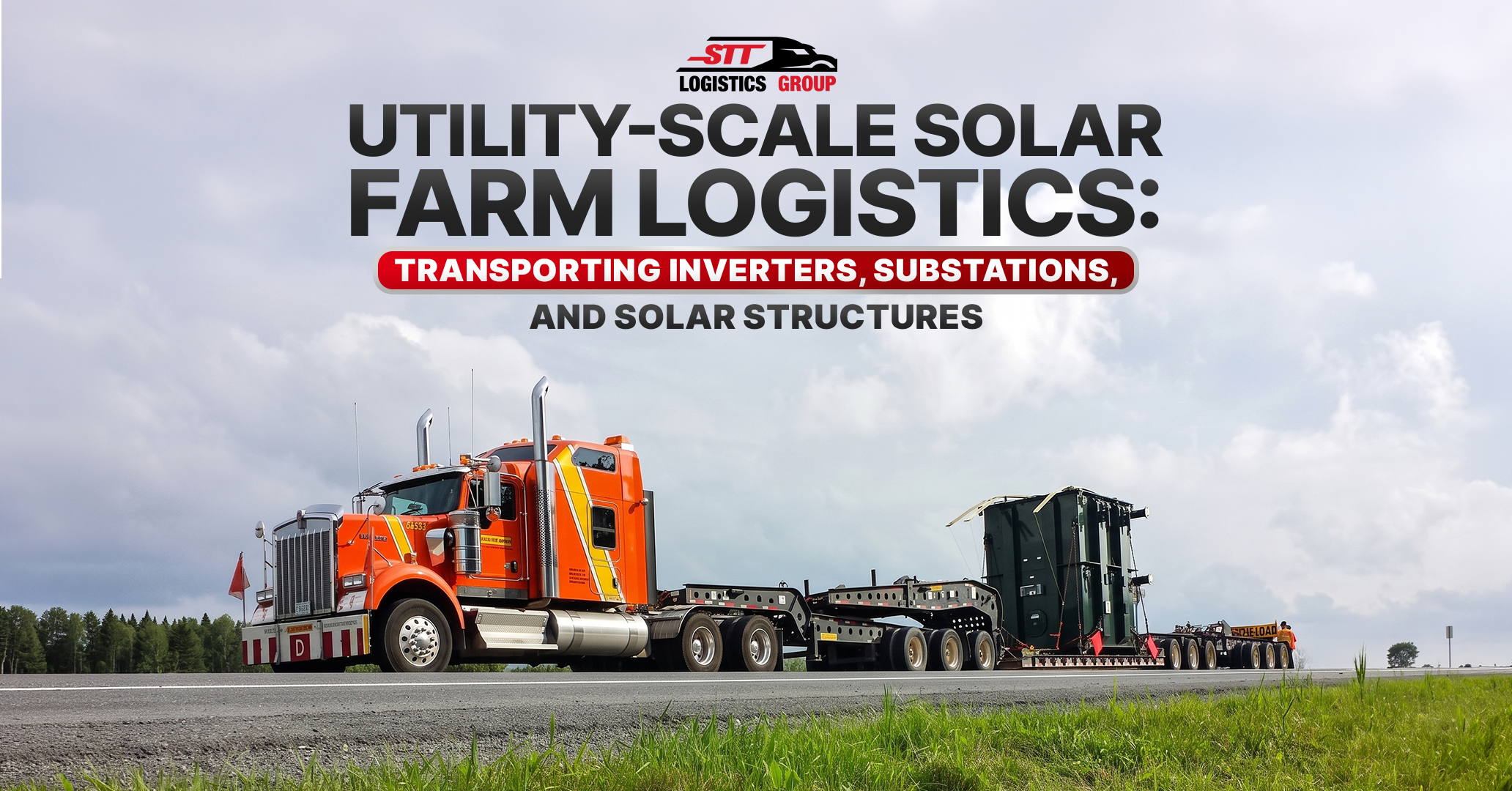
Inverters and substations form the operational heart of any solar facility. Because these delicate, high-value components weigh tens of thousands of pounds, their movement demands maximum care.
First, logistics specialists secure the cargo using specialized rigging and hydraulic equipment. During transit, driver crews monitor the cargo continuously using real-time GPS and shock sensor technologies. Furthermore, logistics coordinators secure local permits and arrange police escorts early in the planning process, avoiding costly bottlenecks at state or municipal borders.
Managing High-Volume Deliveries: Tracker Systems and Panels
Moving utility-scale components is not just about extreme weight; it is also about extreme volume. A typical large-scale project requires thousands of fixed-tilt structures, single-axis tracker systems, and panel arrays delivered in a tightly choreographed sequence.
Site managers cannot store hundreds of containers at once due to limited staging space on rural sites. Therefore, logistics providers implement Just-in-Time (JIT) delivery schedules. Components arrive in exact installation order, allowing crane and assembly crews to unload materials directly onto mounting positions. Consequently, staging area congestion is minimized, and handling damage drops significantly.
The Real Impact of Clean Energy Growth
The demand for specialized renewable freight management continues to surge alongside global investments. According to the International Energy Agency (IEA), renewable capacity additions reached nearly 510 gigawatts (GW) in 2023, with solar PV accounting for three-quarters of these global additions. This unprecedented growth highlights how crucial reliable supply chains have become for the renewable energy sector.
Secure Your Solar Supply Chain Today
Complex solar projects require an experienced supply chain partner who understands heavy-haul freight, remote terrain operations, and strict site schedules. Whether you are moving massive substations or managing high-volume tracker shipments, STT Logistics Group has the expertise and equipment to power your project forward.
Ready to streamline your next renewable energy shipment? Contact STT Logistics Group today to get your FREE quote!
Don’t forget to follow our new official page at @sttlogisticsgroup to stay updated on industry insights and heavy-haul logistics solutions.