
Modern bridge construction relies heavily on prefabricated structural elements to ensure longevity, safety, and structural integrity. However, transporting long concrete and steel beams from manufacturing facilities to jobsites presents significant logistical hurdles. While these heavy components form the backbone of transportation infrastructure, moving them across public roads requires specialized equipment, rigorous planning, and precise civil engineering coordination.
Turning Radius Challenges and Steerable Dollies
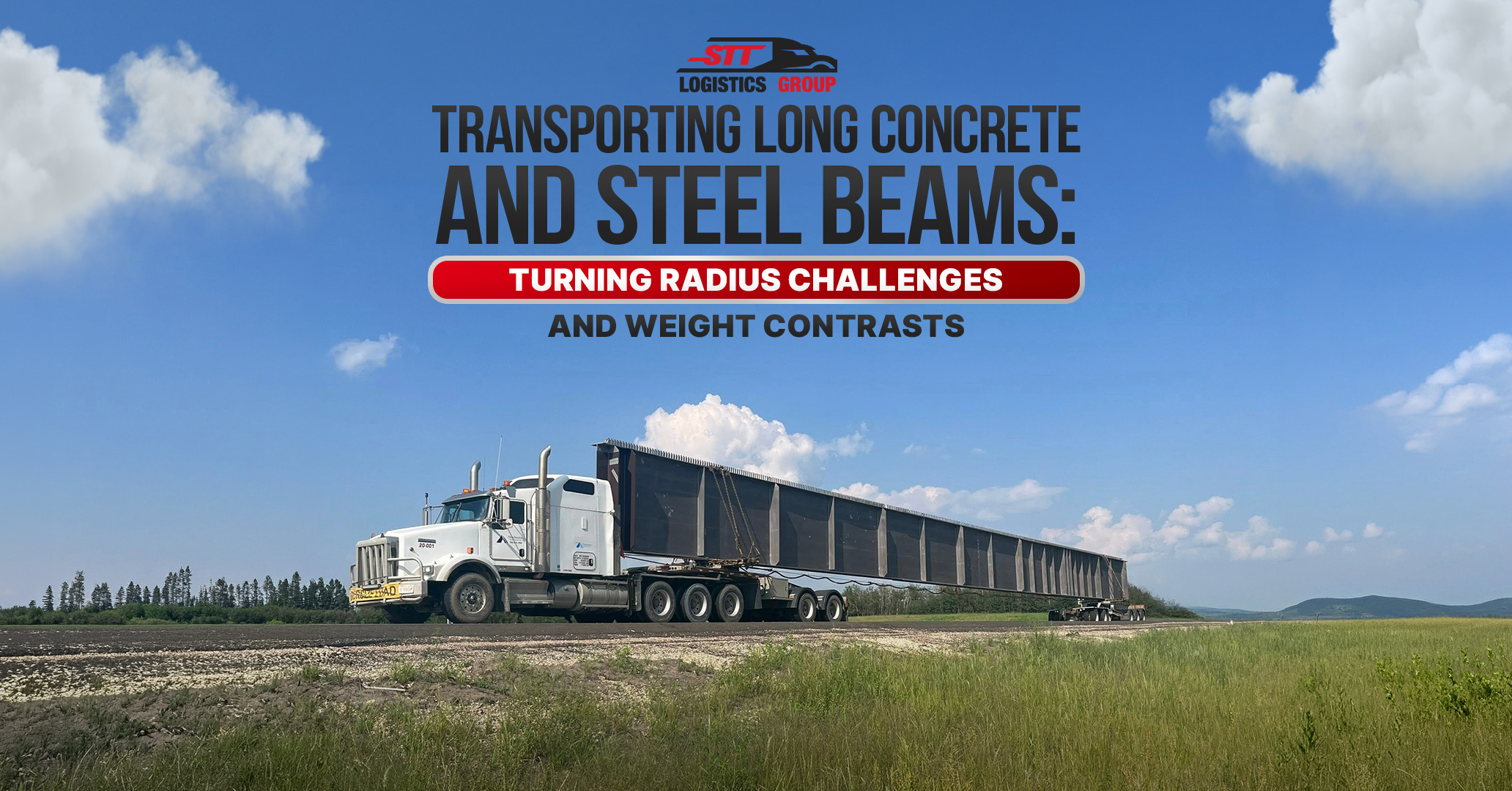
Navigating tight turns and winding highways with oversized beams is one of the most demanding tasks in heavy haul logistics. Because standard trailers lack the maneuverability required for 100-plus-foot structures, logistics teams utilize steerable dollies and multi-axle heavy transport configurations.
- Steerable Dollies: Independent rear-steering dollies allow operators to control the back end of the load, significantly reducing the swept path on tight curves.
- Route Surveying: Transport engineers perform thorough route sweeps before departure, identifying potential geometric constraints, low-clearance bridges, and sharp turn intersections.
- Civil Engineering Coordination: Logistics teams work directly with bridge design engineers to evaluate road stress limits, off-ramps, and staging areas near the construction zone.
These specialized transport methods reduce risk, prevent traffic disruptions, and protect structural components during transit.
Weight Contrasts: Concrete vs. Steel Beams
Although both materials are essential to bridge building, concrete and steel beams pose contrasting challenges regarding weight distribution and structural flexibility.
| Feature | Pre-stressed Concrete Beams | Structural Steel Beams |
| Weight Density | Extremely high dead weight per linear foot | Lighter per linear foot compared to concrete |
| Axle Configuration | Requires multi-axle heavy trailers to distribute immense concentrated weight | Requires specialized tie-downs to secure longer, flexible spans |
| Maneuverability Impact | High center of gravity increases rollover risk on banked curves | Flexibility requires stability frame supports to prevent dynamic deflection |
According to industry data compiled by the Federal Highway Administration (FHWA), state regulations often require specialized multi-axle permits when gross vehicle weights exceed standard 80,000 lb limits, making precise weight distribution crucial for highway safety and infrastructure protection.
By pairing specialized steerable dollies with advanced route planning, heavy-haul professionals safely deliver massive beams to bridge sites, keeping critical infrastructure projects on schedule.
Partner with STT Logistics Group
Do you need reliable logistics management for your next major infrastructure or heavy-haul project? Transporting long concrete and steel beams requires industry expertise, state-of-the-art equipment, and flawless execution.
Contact STT Logistics Group today to talk with our heavy haul specialists and get your free quote! Don’t forget to follow our new official page at @sttlogisticsgroup to stay updated on our latest projects and logistics insights.