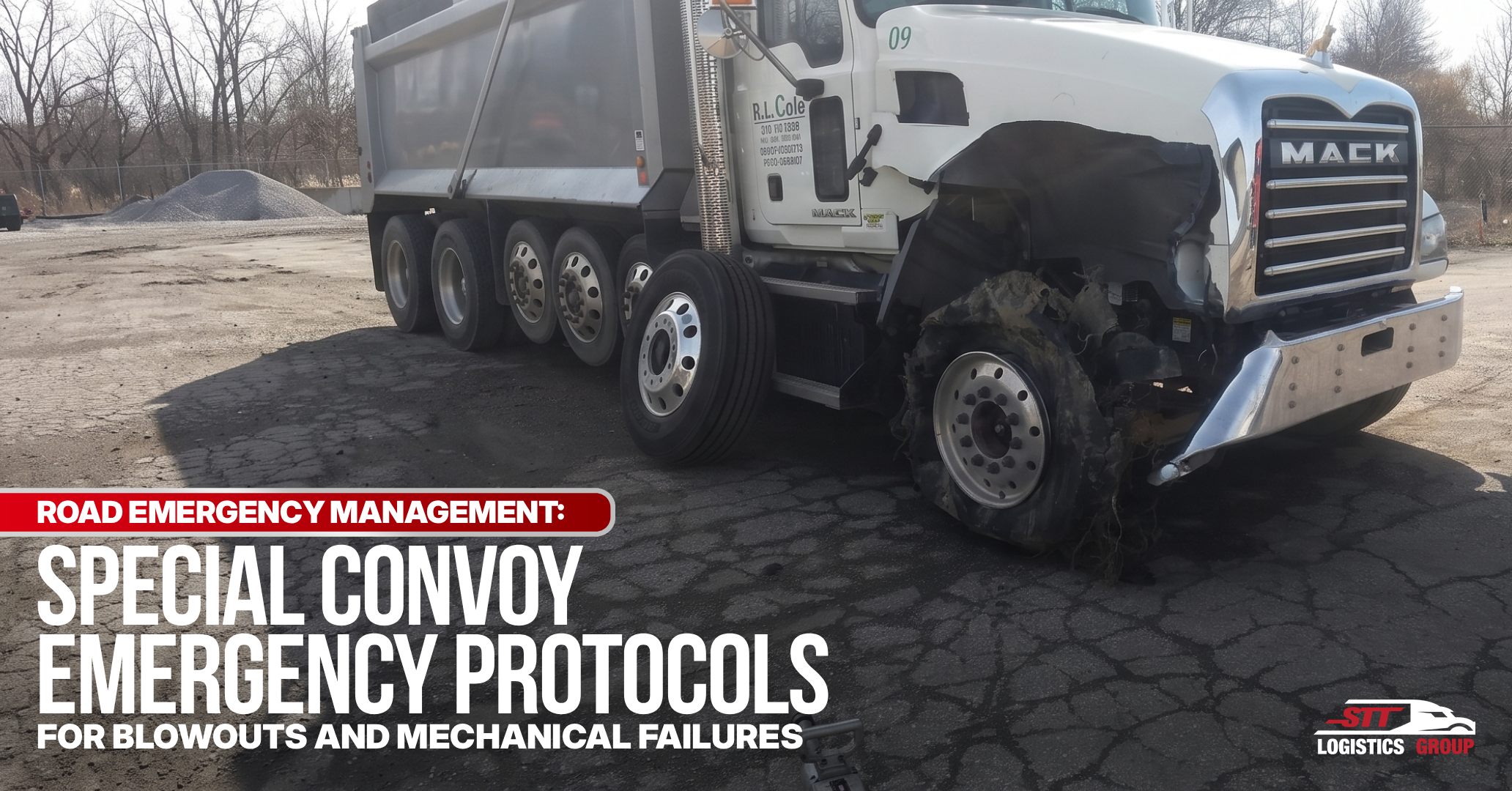


Transporting specialized freight and heavy machinery requires meticulous route planning and highly trained personnel. However, unexpected road hazards can occur at any moment. When a heavy haul transport encounters sudden multiple tire blowouts or major mechanical failure, the entire fleet faces potential danger. Consequently, mastering special convoy emergency protocols becomes essential to protect drivers, valuable cargo, and other motorists on the highway.
Furthermore, unexpected breakdowns can cost logistics companies thousands of dollars per hour in downtime. According to official safety data from the Federal Motor Carrier Safety Administration (FMCSA), mechanical breakdowns and vehicle failures account for approximately 10% of all commercial motor vehicle crashes in the United States. Therefore, having structured response plans prevents minor mechanical issues from escalating into severe transit disasters.
Key Protocols During a Heavy Haul Breakdown
When a vehicle within a specialized fleet suffers a severe failure, immediate action must be taken by both the driver and the escort team. Below are the crucial steps followed by industry leaders during highway emergencies.
1.1. Secure the Perimeter & Signal the Fleet: Immediate Response.
First, the affected driver must activate hazard lights immediately. Simultaneously, escort vehicles (pilot cars) use radio channels to alert all units in the convoy. The entire team is instructed to maintain a safe distance while speed is gradually reduced.
2.2. Safe Evacuation to the Shoulder: Positioning.
Next, the driver slowly steers the heavy load toward a wide shoulder or emergency turnout. If a total stop on the travel lane is unavoidable, pilot vehicles are positioned behind the disabled rig to buffer incoming highway traffic.
3.3. Deploy Safety Markers & Warnings:Regulatory Compliance.
In accordance with DOT regulations, reflective triangles and safety flares are placed along the highway by crew members. Clear visibility is established to give approaching traffic ample warning, especially at night or during adverse weather.
4.4. Dispatch Mobile Heavy-Duty Repair Units:Resolution.
Finally, emergency dispatch services are contacted to send heavy-duty mobile tire or mechanic trucks. Meanwhile, route managers inform state authorities if the obstruction impacts scheduled permit hours.
Balancing Safety and Delivery Timelines
While delays are frustrating, safety should never be compromised in heavy transport operations. Rigorous adherence to special convoy emergency protocols guarantees that cargo integrity remains intact while road hazards are safely mitigated. By working with experienced logistics partners, fleet managers ensure every contingency is anticipated long before the truck rolls onto the highway.
At STT Logistics Group, our specialized freight operations are backed by rigorous emergency training, state-of-the-art monitoring, and proactive route planning. We handle your heavy haul loads with maximum efficiency and strict safety standards.
Need Reliable Heavy Haul & Oversized Freight Solutions?
Don’t leave your valuable cargo to chance! Contact STT Logistics Group today to get your free quote!
Make sure to follow us on our new official page @sttlogisticsgroup for the latest industry insights, logistics tips, and fleet updates!