

The logistics landscape is shifting rapidly as we enter the new year. For heavy haul carriers and shippers, staying informed about the 2026 DOT Permit Updates is no longer just a recommendation—it is a requirement for operational survival. As of January 1, several federal and state-level changes have taken effect, fundamentally altering how permits are issued and how cargo is moved across major U.S. freight corridors.
The Shift to a Unified Identification System
One of the most significant 2026 DOT Permit Updates involves the administrative identification of motor carriers. For decades, companies were identified by both USDOT and MC numbers. However, the FMCSA has officially begun the phase-out of the MC numbering system.
Consequently, carriers must now transition to using only their USDOT number for all registration, insurance filings, and permit applications. This move was designed to reduce fraud and eliminate “chameleon carriers” that used multiple identities to bypass safety regulations. Furthermore, it is vital that your internal documentation and decals reflect these changes to avoid unnecessary delays during roadside inspections.
Stricter Enforcement on Weights and Dimensions
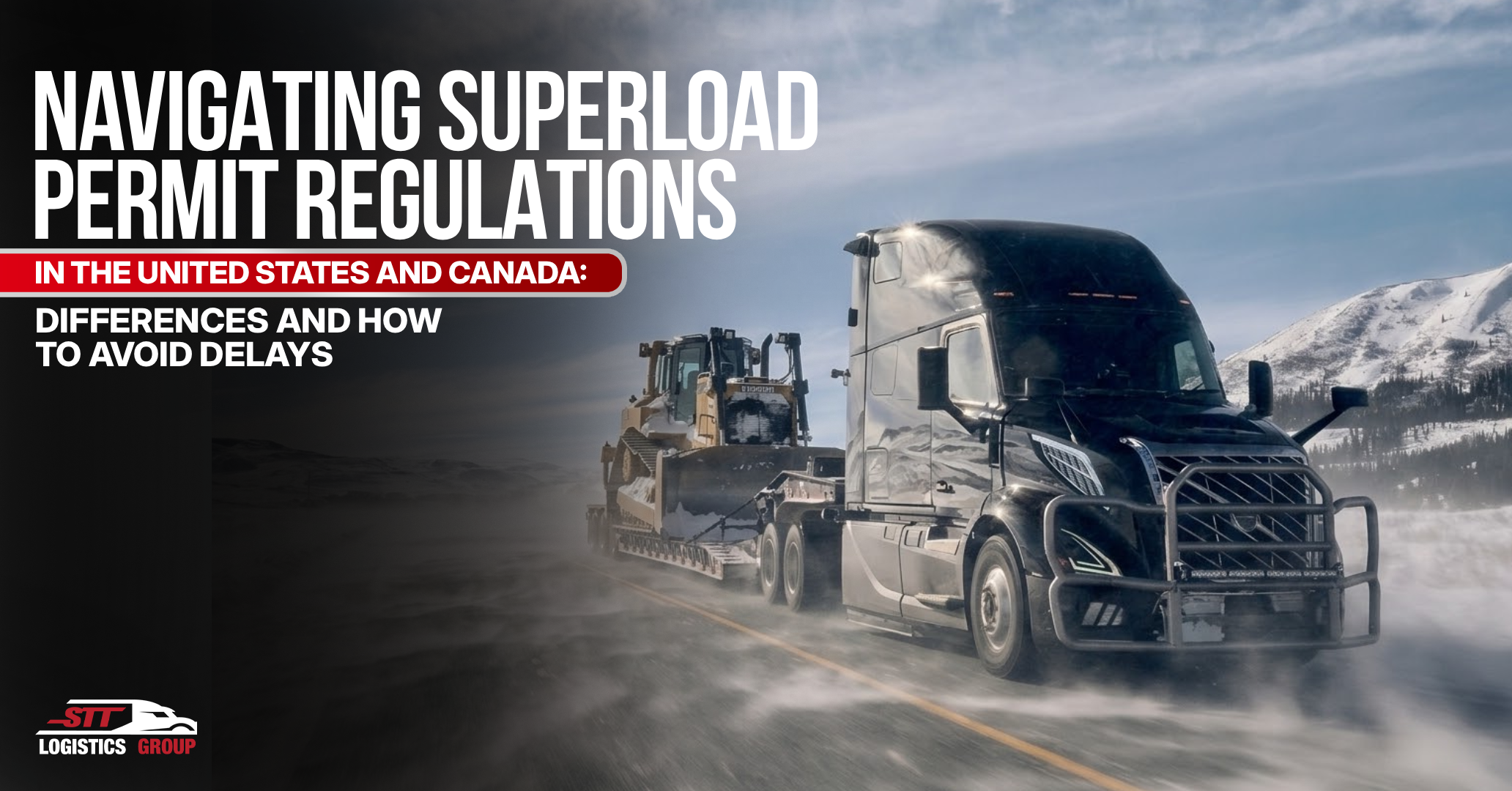
As infrastructure projects under the recent federal authorization bills continue, new bridge safety audits have led to stricter enforcement of the Federal Bridge Formula. While standard limits remain at 80,000 lbs, many of the 2026 DOT Permit Updates focus on the precision of axle-weight distribution for non-divisible loads.
STT Logistics Group monitors these route-specific changes daily to ensure your heavy equipment arrives without citation.
Specialized permits are now being scrutinized with higher frequency by state authorities to protect aging bridge infrastructure.
In light of these developments, states along the primary STT routes—including Texas, California, and the Southeast—have implemented more rigorous “Superload” definitions. These updates mean that even a slight deviation from your permitted dimensions could lead to immediate grounding of the vehicle.
A Growing Industry Under Scrutiny
The importance of these regulations is underscored by the sheer scale of the industry. According to the American Trucking Associations (ATA), the trucking industry is now a $906 billion sector, responsible for moving over 11.27 billion tons of freight annually.
Because such a massive volume of goods is transported daily, the DOT has intensified its focus on digital compliance. In addition to weight restrictions, the 2026 DOT Permit Updates include a mandate for fully digital medical certifications. Additionally, the Drug & Alcohol Clearinghouse now provides real-time data to state agencies, ensuring that only qualified drivers are behind the wheel of heavy haul vehicles.
How to Stay Compliant
Navigating the 2026 DOT Permit Updates requires a proactive approach. You should review your fleet’s registration status and verify that all electronic logging devices (ELDs) are compatible with the updated FMCSA safety vetting protocols.
STT Logistics Group remains committed to being your partner in compliance. We handle the complexities of multi-state permitting so you can focus on your core business operations.
Get Your Free Quote Today
Don’t let new regulations stall your progress. Whether you are moving oversized machinery or high-value industrial components, our team is ready to assist.
Contact us now to get your Free Quote and ensure your 2026 shipments are fully compliant!
For more industry insights and daily updates, follow us on our new page: @sttlogisticsgroup



2 Responses
Your remark is professional and contributes to a clearer direction.
Thi is a great article no doubt about it, i just started following you and i enjoy reading this piece. Do you post often ? we have similar post on the german best freelancer platform called https://webdesignfreelancerdeutschland.de/ you can check it out if you want. Thank you