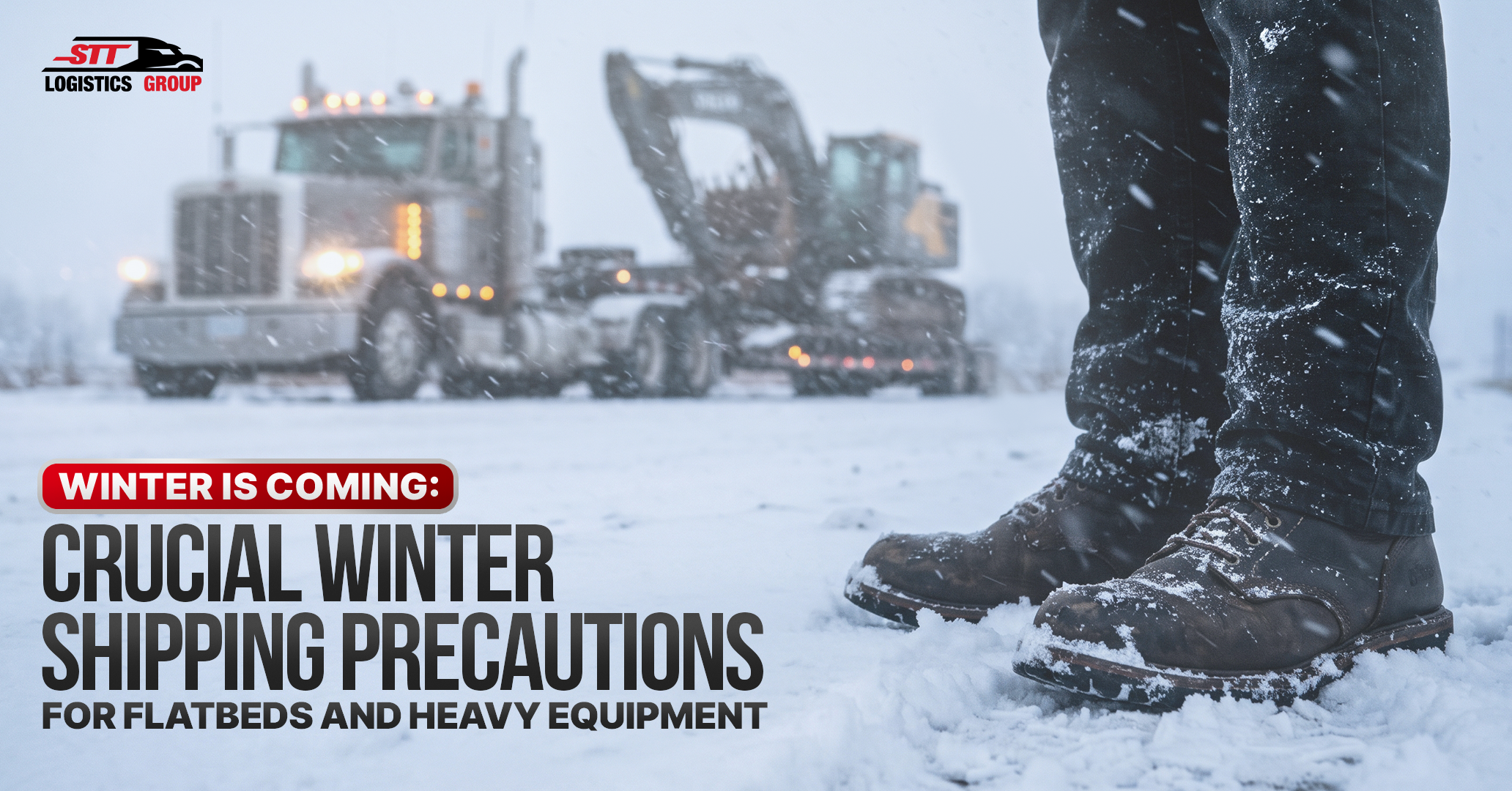

Television series often dramatize ice road trucking with theatrical cliffhangers, but real-world logistics tells a much different story. Long-haul transport through subzero conditions is not a Hollywood stunt; rather, it is a disciplined operational science. When freezing temperatures arrive, freight managers must implement strict winter freight shipping precautions to guarantee driver safety and protect multimillion-dollar payloads.
Hauling flatbed cargo and oversize heavy machinery in subzero weather presents distinct vulnerabilities. Unlike dry vans, open-deck trailers leave sensitive equipment fully exposed to snow, freezing rain, and corrosive chemicals. According to data from the Federal Highway Administration (FHWA), roughly 24 percent of weather-related vehicle crashes occur on snowy, slushy, or icy pavement each year. Furthermore, winter weather causes an estimated 544 million vehicle-hours of delay annually across US highways. Consequently, proactive safety measures are mandatory to avoid catastrophic roadside incidents.
Here is an operational breakdown of how professional carriers prepare flatbeds and heavy machinery to keep supply chains moving through winter weather.
1. High-Performance Tarping and Securement Checks
Open-deck loads are vulnerable to freezing precipitation that can freeze hydraulic lines, crack fittings, or obscure load securement points. Therefore, seasoned freight coordinators prioritize premium tarping techniques:
- Heavy-Duty Lumber and Steel Tarps: Standard poly-tarps become brittle and crack in sub-zero winds. Heavy-duty vinyl or cold-crack treated tarps (rated down to -40°F) are deployed to shield sensitive electronics and machined metals.
- Preventing Water Pockets: Tarps must be pulled drum-tight. If water pools and turns to ice, hundreds of pounds of shifting deadweight are added to the trailer, which increases rollover risk.
- Frequent Chain Tension Inspections: Metal contracts under extreme cold. Consequently, binder chains and straps loosen during transit. Drivers are instructed to inspect bindings after the first 50 miles and at every scheduled stop thereafter.
2. Tire Chains: Compliance and Practical Traction
Mountain passes in states such as Colorado, Wyoming, and Washington strictly enforce commercial vehicle chain laws. Ignoring these mandates leads to hefty fines and dangerous shutdowns.
However, chain management goes beyond mere legal compliance. Installing tire chains is a fundamental safeguard that restores traction when climbing steep grades or descending slick passes. Dispatchers ensure that trucks carry complete sets of triple chains, single chains, and cross links before an open-deck trailer is assigned a northern route.
3. Combatting Road Salt and Chemical Corrosion
Highway departments spread millions of tons of sodium chloride, magnesium chloride, and calcium chloride each winter to melt road ice. While road salts keep highways open, road spray deposits severe chemical residue onto open-deck cargo.
Without targeted winter freight shipping precautions, expensive construction and agricultural equipment can suffer rapid surface pitting, structural corrosion, and electrical failure:
- Protective Fluid Coatings: Exposed cylinders, pivot pins, and hydraulic shafts should be coated with rust inhibitors or marine-grade grease prior to departure.
- Immediate Post-Trip Decontamination: Once the machinery reaches its destination, undercarriage hot-water pressure washes must be performed to eliminate chemical salts before oxidization takes hold.
4. Cold-Weather Heavy Equipment Pre-Trip Conditioning
Moving bulldozers, excavators, and industrial generators requires specialized equipment preparation:
- Fuel Treatment: Diesel fuel gels at low temperatures. Winter additives and anti-gel conditioners must be mixed into fuel tanks, and block heaters should be engaged during layovers.
- Battery and Fluid Maintenance: Low temperatures reduce battery output by up to 50 percent. Coolant must be checked with a refractometer to ensure freeze protection matches the lowest expected route temperature.
- Pneumatic Brake Drainage: Moisture inside commercial air brake lines turns to ice and causes total brake lockup. Air tanks must be purged daily, and air dryer cartridges must be replaced before winter operations begin.
5. Proactive Winter Route Planning
Safe winter freight management depends on dynamic dispatching. Experienced logistics teams monitor satellite forecasting, real-time Department of Transportation (DOT) feeds, and road closure alerts well ahead of the driver’s route.
When severe blizzards or black ice advisories emerge, freight is rerouted through lower-elevation corridors, or staging breaks are scheduled proactively. Rushing through severe winter weather never pays off; safety, reliability, and precision planning must always dictate the schedule.
Safeguard Your Winter Shipments with STT Logistics Group
Winter weather introduces real risks to flatbed freight and oversized cargo, but the right logistics partner eliminates the guesswork. At STT Logistics Group, our specialized team executes comprehensive winter freight shipping precautions on every haul, keeping your heavy equipment and open-deck cargo secure from pickup to final drop-off.
Ready to protect your freight this season? Contact us today to get your free quote!
Be sure to follow our brand-new page on Instagram and Facebook at @sttlogisticsgroup for industry updates, flatbed shipping tips, and heavy-haul insights.