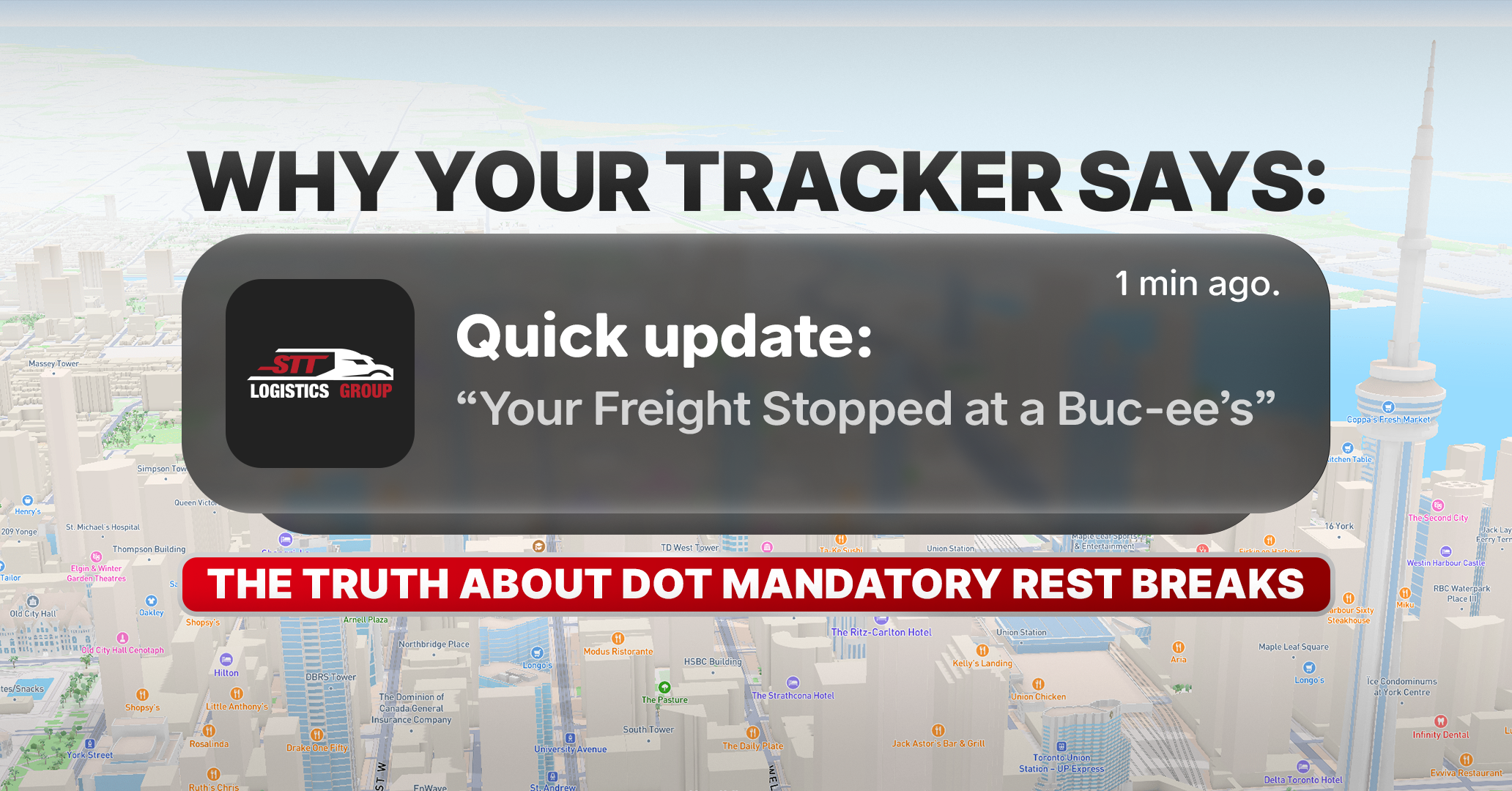

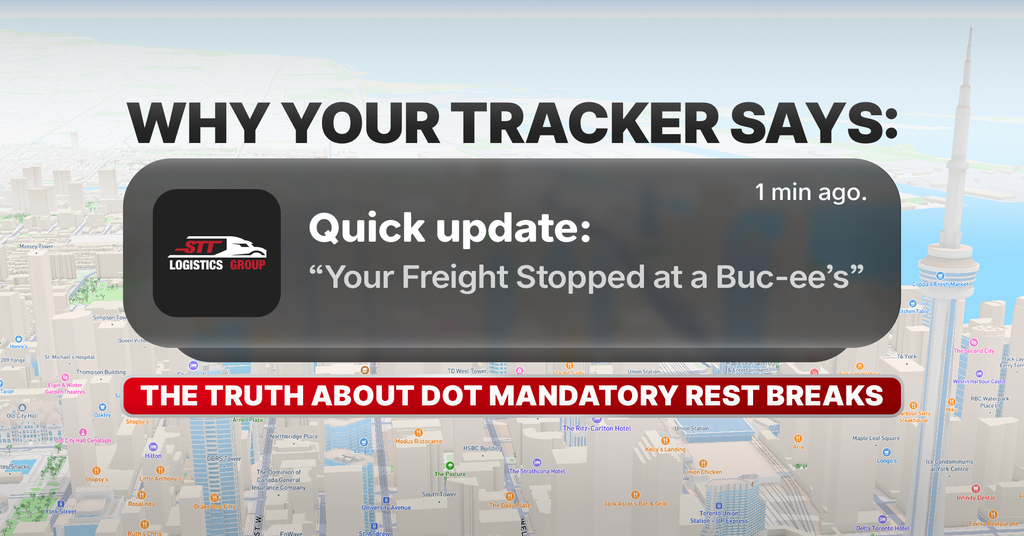
You are tracking a high-priority shipment in real time. The estimated delivery window looks tight, the map refreshes, and suddenly, your 53-foot dry van stops moving. It isn’t stranded at a warehouse dock or stuck in gridlock traffic. Instead, the GPS pin shows your cargo sitting comfortably in the parking lot of a massive Buc-ee’s travel center.
Before you assume your carrier got distracted by warm beaver nuggets or fresh brisket sandwiches, there is an essential regulatory explanation behind the stop. Your driver is actively complying with federal safety regulations: specifically, the DOT Hours of Service mandatory rest breaks.
While a pause mid-transit can feel counterproductive to a tight shipping deadline, these planned stops are engineered to protect your freight, other motorists, and the logistics network as a whole.
The Federal Rules: Why Trucks Must Stop
Truck driving requires intense focus, quick reflexes, and endurance. To combat driver fatigue on federal highways, strict operating limits are enforced across the United States. Under federal law, commercial motor vehicle operators must strictly observe DOT Hours of Service mandatory rest breaks established by the Federal Motor Carrier Safety Administration (FMCSA).
The key guidelines governing property-carrying commercial drivers include:
- The 11-Hour Driving Limit: Drivers may drive a maximum of 11 hours after 10 consecutive hours off duty.
- The 14-Hour Driving Window: Driving cannot occur beyond the 14th consecutive hour after coming on duty, even if non-driving tasks occupied parts of the shift.
- The 30-Minute Rest Break: A continuous 30-minute break must be taken after an operator has accumulated 8 cumulative hours of driving time without an interruption of at least 30 minutes.
- The 60/70-Hour Weekly Limit: Total on-duty time cannot exceed 60 hours across 7 consecutive days, or 70 hours across 8 consecutive days.
Consequently, when you observe a stationary trailer mid-route, that pause is legally mandated. Electronic Logging Devices (ELDs) synchronize directly with vehicle engines, recording every minute behind the wheel. If these mandatory rest periods are violated, severe financial penalties and immediate out-of-service orders are handed down by safety inspectors.
The Real Data: Why Well-Rested Drivers Keep Your Cargo Safe
Cargo delays can be frustrating, but transit damage and fatal highway accidents are catastrophic. The connection between driver alertness and roadway safety is thoroughly documented by transportation authorities.
According to a comprehensive driver fatigue study conducted by the Federal Motor Carrier Safety Administration (FMCSA), driver alertness degrades measurably during extended duty periods, with critical lapses in vigilance climbing sharply as continuous driving hours increase. Furthermore, the FMCSA’s Large Truck Crash Causation data reveals that driver fatigue is a cited factor in roughly 13% of heavy truck crashes.
When your carrier pulls over into a rest stop, several crucial benefits are achieved simultaneously:
- Accident Rates Plummet: Alert drivers react faster to sudden lane changes, emergency braking, and adverse weather conditions.
- Cargo Stays Undamaged: Abrupt swerves and harsh braking events—frequent side effects of micro-sleep and drowsy driving—are significantly minimized when operators are well-rested.
- Insurance and Liability Remain Protected: When DOT Hours of Service mandatory rest breaks are prioritized by carriers, clean compliance records are maintained, preventing cargo impoundment and legal disputes.
Why Buc-ee’s and Mega Travel Plazas?
Commercial haulers do not stop at random convenience stores. Finding parking for an 80,000-pound combination vehicle is notoriously challenging across nationwide interstate corridors. When drivers plan their required stops, mega-plazas like Buc-ee’s, Love’s, or Pilot Flying J provide safe, well-lit spaces where a mandated 30-minute reset can be completed efficiently.
While the vehicle engine cools, the driver grabs a meal, stretches, and conducts a routine walk-around visual inspection of the trailer seals, tires, and hitch assemblies. Far from being wasted time, this operational pause ensures your shipment arrives intact and fully accounted for.
Reliable Freight Management with STT Logistics Group
At STT Logistics Group, we understand that true freight reliability requires balancing regulatory compliance with dependable transit times. We partner with vetted, professional carriers who treat both highway safety standards and your delivery schedules with the utmost discipline.
Planning your next freight movement across North America? Connect with our dedicated logistics coordinators today to receive your customized, hassle-free free quote.
Get in touch with us today for your [Free Quote] and ensure your cargo is handled by the industry’s best.
Make sure to also follow our brand-new official social media page at @sttlogisticsgroup for regular logistics insights, industry updates, and behind-the-scenes transportation tips!