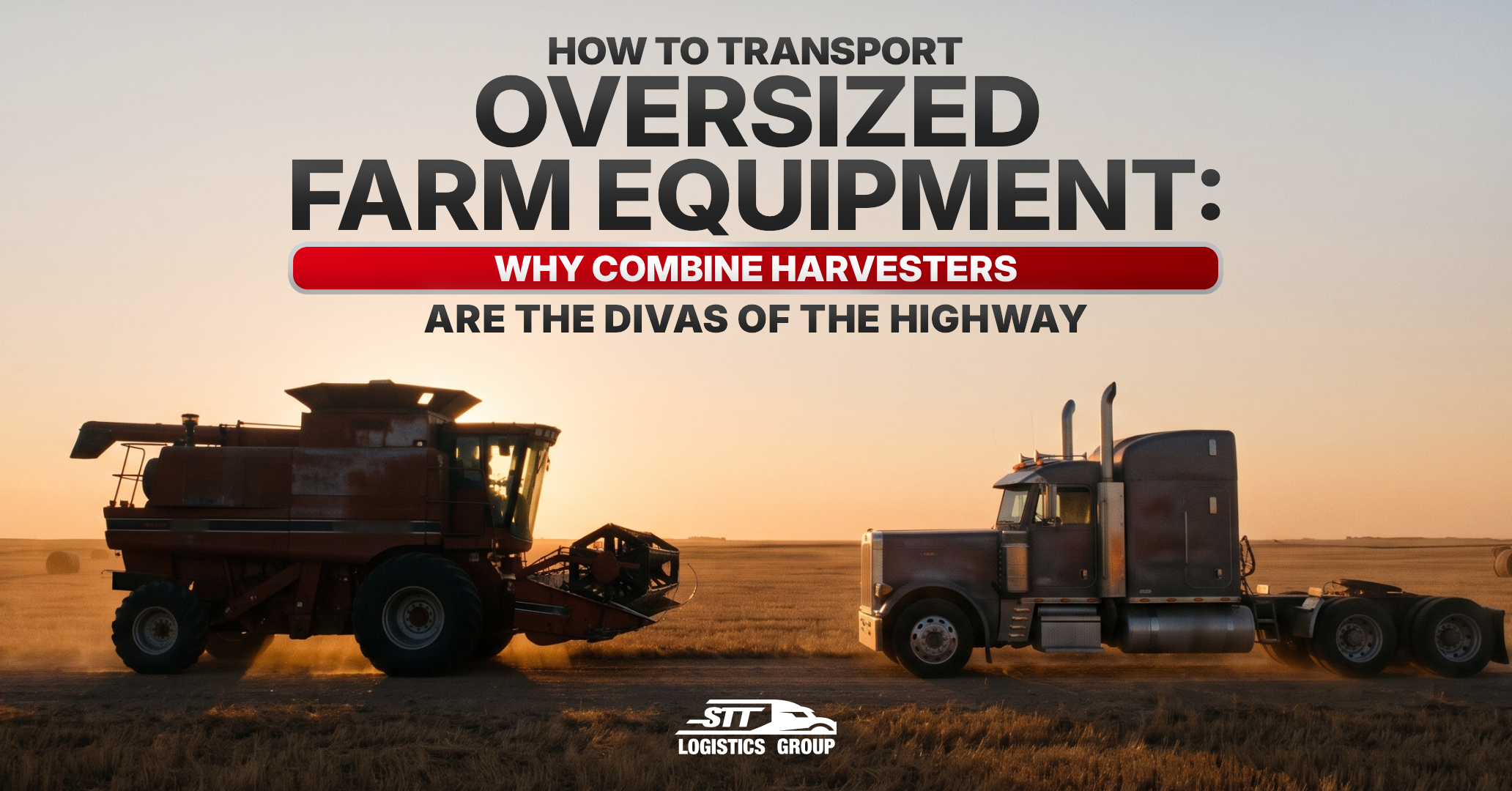
When harvest season approaches, timing is everything for agricultural operations. Crops will not wait for delayed machinery, and every passing hour directly impacts yield quality. However, before these powerful machines can roll through wheat fields or corn belts, they must navigate narrow public roads, highway bridges, and strict interstate regulations. Combine harvesters in particular demand unmatched attention to detail—earning them a reputation as the true divas of the highway.
Moving giant agricultural machinery requires precision, specialized trailers, and meticulous route assessment. Here is what shippers need to know to safely transport oversized farm equipment before the busy season begins.
The Massive Challenge of Moving Combines
Modern combines are engineered for peak field productivity, which means wider bodies, taller profiles, and massive detachable headers that frequently stretch beyond 35 to 45 feet. When mounted on a trailer, a combine quickly exceeds standard legal transport dimensions:
- Width and Height Constraints: Standard legal freight width typically tops out at 8.5 feet (102 inches), with legal height limits around 13.5 to 14 feet depending on the state. Combine harvesters easily push past these boundaries, immediately reclassifying the shipment as a wide load or superload.
- Header Logistics: Massive grain and corn headers cannot safely travel attached to the combine body over long distances. Consequently, they are detached and secured onto dedicated header trailers, turning a single combine move into a coordinated multi-piece logistics operation.
- Weight Distribution: Even with empty grain tanks, industrial harvesters place intense, concentrated axle loads on transport trailers, necessitating specialized lowboy (RGN) trailers to keep center-of-gravity low and bridge-law compliant.
Key Steps to Transport Oversized Farm Equipment Smoothly
To balance deadlines and road safety, agricultural freight requires a strict, step-by-step logistics plan.
1. Plan Detailed Route Surveys in Advance
Before tires touch asphalt, the entire route must be vetted. Low-hanging power lines, construction zones, rural overpasses, and narrow bridge spans present serious hazards for oversized machinery. Furthermore, pilot escort cars (lead and chase vehicles) are frequently mandated by state departments of transportation to alert oncoming traffic and ensure adequate clearance.
2. Secure State-by-State Wide-Load Permits
Because oversize load regulations vary across state lines, permits must be acquired for every jurisdiction along the haul route. Traveling hours are often restricted—many states prohibit wide-load transit during night hours, major holidays, or peak weekend traffic. Therefore, working with an experienced logistics partner ensures all state permits, travel curfews, and signage requirements are lined up well before dispatch day.
3. Prepare the Equipment for Transit
Thorough preparation safeguards both the driver and the machine:
- Disassemble dual wheels or folding augers if required to reduce excessive width.
- Thoroughly clean excess mud, crop residue, and debris to comply with inter-county agricultural biosecurity rules.
- Secure every moving component, latch access ladders, and lock safety pins prior to chaining down.
The Economic Stakes Behind Agricultural Freight
Logistical delays in agriculture carry substantial financial consequences. According to data published by the USDA Economic Research Service, farm machinery and equipment represent one of the largest capital asset categories in the United States agricultural sector, with total farm sector asset values exceeding trillions of dollars. When multi-hundred-thousand-dollar machinery sits stalled on an interstate due to improper permitting, farmers face severe operational downtime during tight harvest windows.
Move Your Machinery with STT Logistics Group
Hauling agricultural machinery requires proven experience, specialized heavy-haul carriers, and seamless coordination. At STT Logistics Group, we manage every detail of your heavy machinery transport—from pilot car coordination and bridge permits to secure tie-down protocols.
Do not let logistics bottlenecks delay your harvest season. Contact STT Logistics Group today to claim your [free quote] and get your equipment delivered safely on schedule.
Be sure to follow our journey and stay updated with industry freight insights on our new official social media page: @sttlogisticsgroup.