Cruising down an American interstate often reveals standard freight: dry vans, shipping containers, and refrigerated units. Occasionally, however, traffic slows, yellow caution lights flash, and a behemoth rolls past that defies belief. Whether it is an entire aerospace frame or a life-sized prehistoric predator, specialized heavy haul trailers make it happen every day.
Drivers frequently wonder: what is considered an oversized load in the US? Furthermore, how do logistics carriers legally haul these colossal, bizarre items across interstate lines?
Here is an inside look at how heavy-haul permitting transforms the impossible into daily freight—along with five of the wildest items permitted on modern highways.
What Is Considered an Oversized Load in the US?
Commercial trucking across the nation operates within strict dimensional boundaries. Under baseline regulations enforced by the Federal Highway Administration (FHWA), standard commercial motor vehicles cannot exceed a gross vehicle weight of 80,000 pounds, a width of 102 inches (8.5 feet), a single axle weight of 20,000 pounds, or a tandem axle weight of 34,000 pounds.
Consequently, freight is classified as an oversized load in the US when any single dimension or total weight exceeds standard statutory thresholds:
- Width: Anything exceeding 8 feet 6 inches (102 inches).
- Height: Loads reaching above 13 feet 6 inches to 14 feet (determined on a state-by-state basis).
- Length: Combinations stretching beyond standard state maximums (typically 53 to 65+ feet).
- Gross Weight: Any setup surpassing 80,000 pounds gross vehicle weight (GVW).
Whenever cargo cannot be broken down within eight working hours without destroying its core utility or value, it is officially classified as a “non-divisible load”. Once this determination is made, specialized permits are granted by state departments of transportation to move extraordinary freight legally.
5 Wild Things Legally Hauled on Flatbed Trailers
Specialized flatbeds, step decks, double drops, and multi-axle RGN (removable gooseneck) trailers allow carriers to transport cargo that seems straight out of science fiction.
1. Full-Scale Dinosaur Replicas
Theme parks, museums, and educational institutions require prehistoric titans transported in one complete piece. A 60-foot Tyrannosaurus rex or a towering Brachiosaurus cast cannot simply be folded into a dry van. Instead, these massive figures are rigged onto lowboy trailers, braced with specialized soft-rigging gear, and moved across state lines under strict daylight travel permits.
2. Commercial Rocket Boosters & Space Capsules
The private space sector has transformed heavy transport. Rocket stages and solid rocket boosters regularly travel across public highways between manufacturing facilities and launchpads. Because of extreme width and delicate guidance systems, these components require complex multi-axle trailers, police escorts, and precise route surveys to ensure clearance beneath overhead utility lines.
3. Fully Built Architectural Tiny Homes
Manufactured and modular houses have long dominated wide-load corridors, but fully constructed custom tiny homes present unique challenges. Because many feature peaked metal roofs and distinct architectural framing, they frequently test maximum legal height limits (often exceeding 13.6 feet). As a result, lowboy and drop-deck trailers are deployed to keep their overall profile beneath overpasses and bridge networks.
4. Commercial Airplane Fuselages & Wings
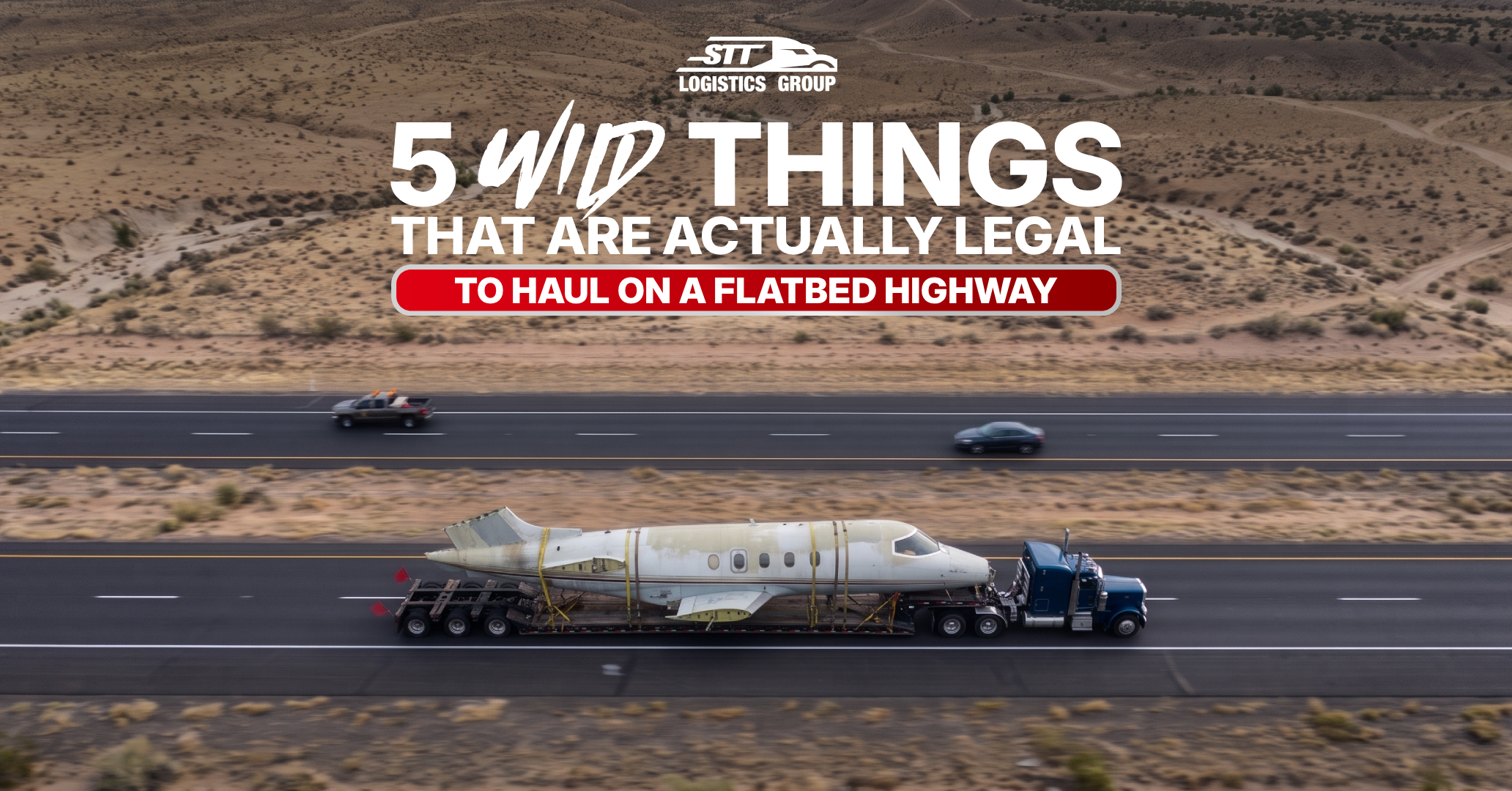
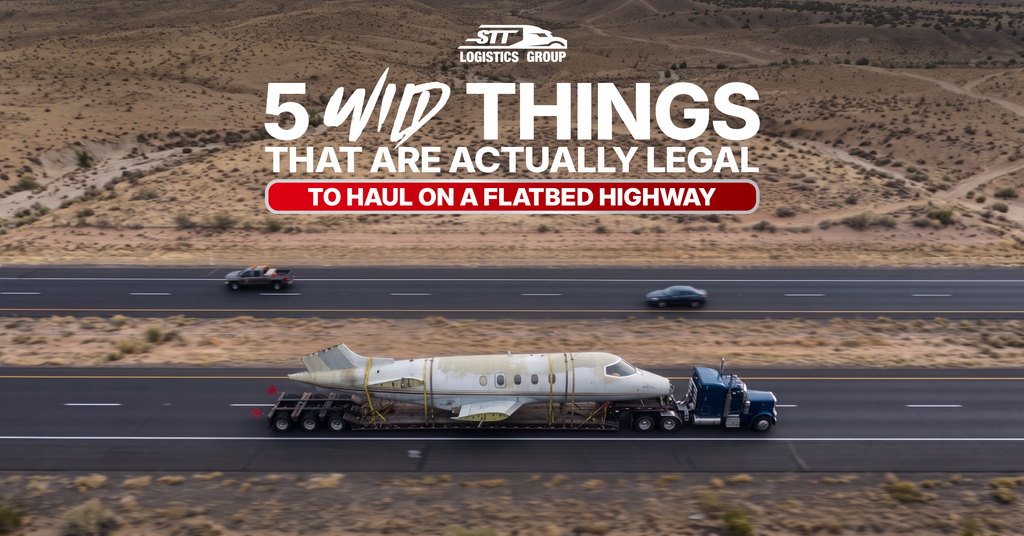
Retired jetliners and factory-fresh aircraft sections regularly travel overland. Decommissioned fuselages destined for flight schools, Hollywood sets, or scrap facilities span over 100 feet in length. Transporting an airplane fuselage requires an oversized load in the US configuration that often mandates both front and rear pilot cars, height-pole lead vehicles, and custom route engineering.
5. Giant Industrial Kilns & Autoclaves
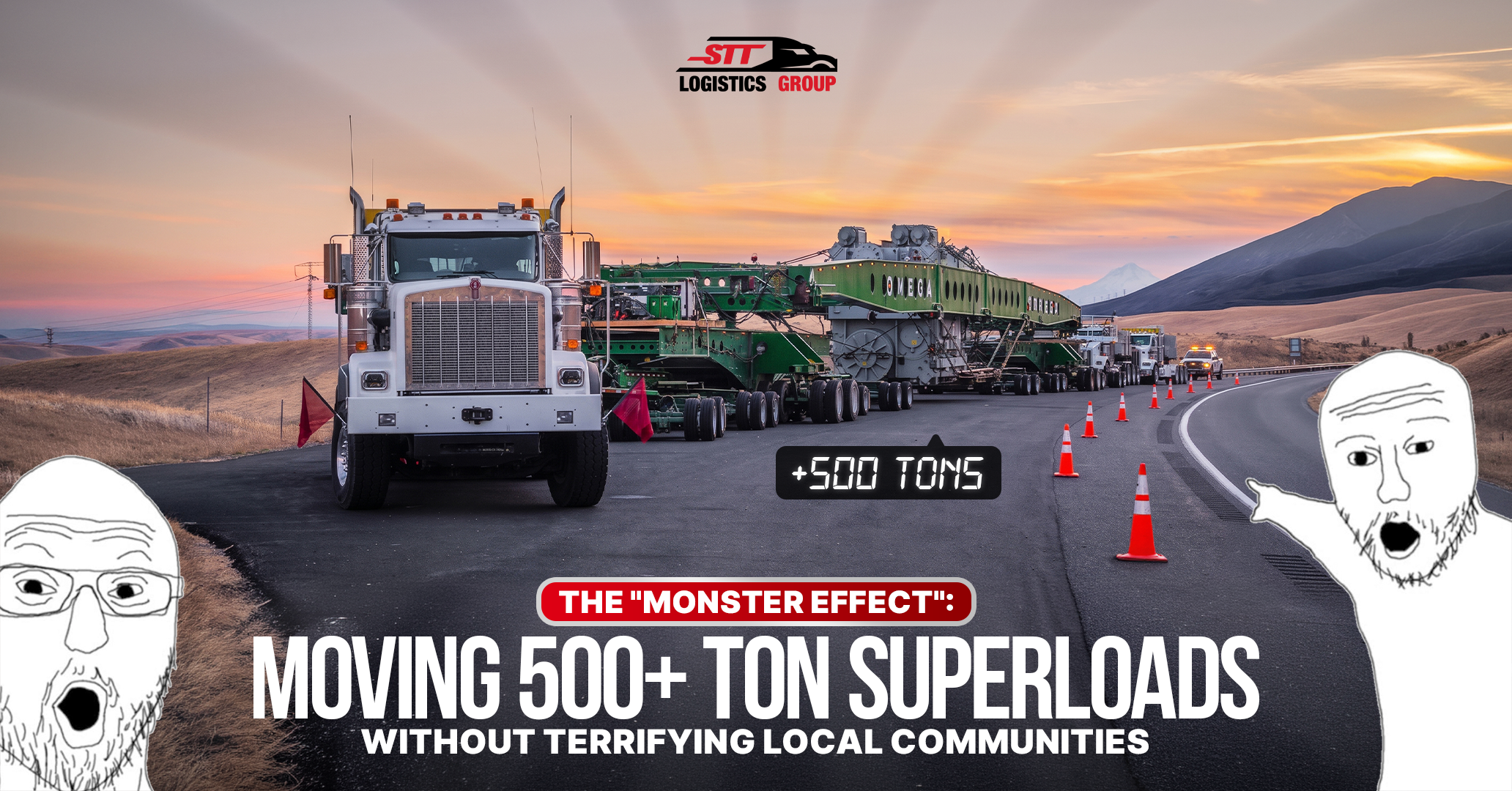
Massive cylindrical pressure vessels used in aerospace curing and cement manufacturing easily weigh hundreds of thousands of pounds. These units routinely exceed the standard 80,000-pound cap. To distribute such immense weight safely across the pavement, specialized dual-lane transporters equipped with 12 to 24 separate axle lines are utilized, ensuring bridges and roadway surfaces remain protected throughout the journey.
How Permits Make the “Impossible” Totally Legal
Navigating an oversized load in the US requires far more than strapping cargo onto a flatbed and hitting the highway. Behind every successful heavy-haul run lies meticulous planning and regulatory compliance:
- Route Surveys & Bridge Formulas: Highways, bridge weight capacities, and tunnel curvatures are thoroughly analyzed before departure. Specialized software and physical pole cars ensure zero clearance conflicts occur along the journey.
- Escort & Pilot Cars: Loads exceeding specific dimensions (typically widths over 12 feet) require certified escort vehicles to warn nearby motorists and manage intersection crossings.
- Restricted Travel Windows: Oversized freight movement is frequently restricted to daylight hours, and travel through major metropolitan areas during morning or evening peak rush hours is prohibited.
- Safety Equipment: High-visibility “OVERSIZE LOAD” banners, safety flags, and auxiliary strobe lighting must be inspected and mounted before wheels roll onto public pavement.
When engineered correctly, even the most outrageous cargo arrives safely and on schedule.
Move Your Heavy Freight with STT Logistics Group
Do you have heavy equipment, machinery, or non-divisible freight that pushes standard highway boundaries? Let our specialized logistics experts manage the complex routing, state permits, and equipment selection for you. Contact us today for a free quote on your next shipment! Stay up to date with real-world heavy haul projects, industry tips, and freight insights by following our brand-new page on social media: @sttlogisticsgroup.