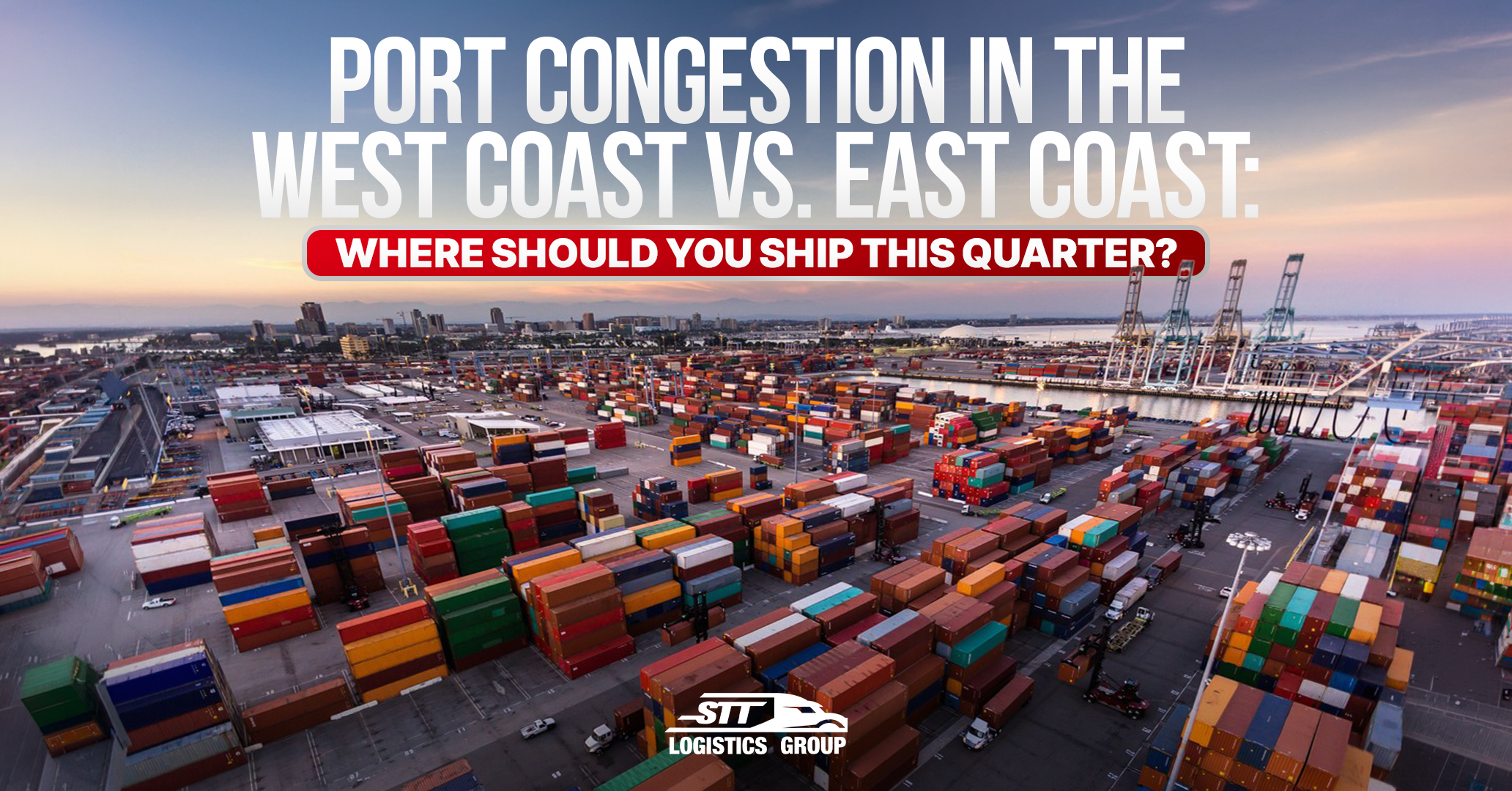

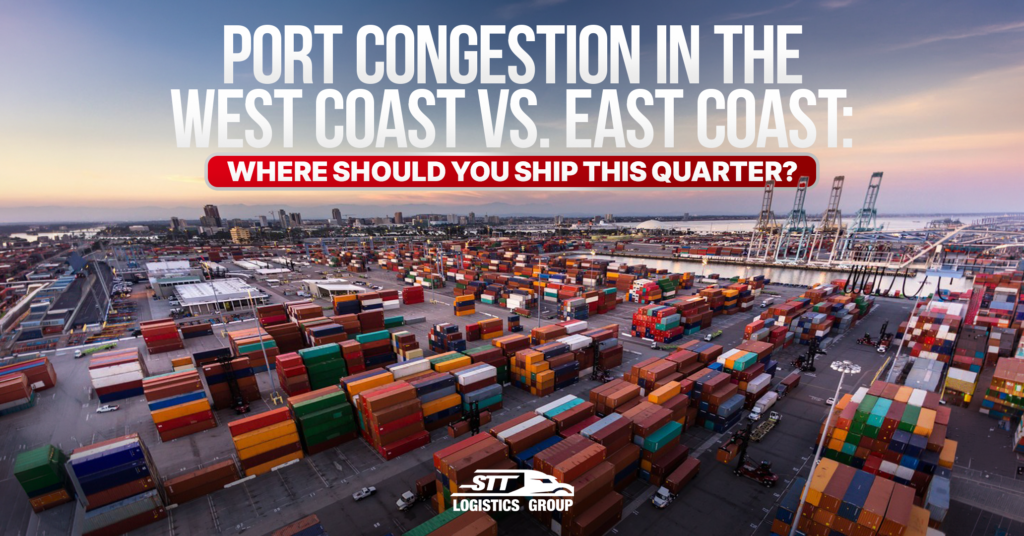
Navigating the complexities of global trade requires more than just a boat and a dock; it demands strategic foresight. As we move through the second quarter of 2026, shippers are once again facing the age-old dilemma: Port congestion in the West Coast vs. East Coast. Deciding where to offload your cargo can determine whether your supply chain remains fluid or grinds to a costly halt.
The Current Landscape: A Tale of Two Coasts
For much of the past year, the West Coast has reclaimed its title as the primary gateway for Transpacific trade. West Coast port congestion was largely mitigated by improved labor stability and infrastructure upgrades in late 2025. However, recent surges in e-commerce volumes have begun to test these limits once again.
Meanwhile, the East Coast is experiencing a different set of challenges. While many shippers shifted East to avoid historical delays in California, this migration has led to increased “vessel bunching” in Atlantic hubs. According to recent data from the April 2026 Port Congestion Index, the North American region remains relatively stable with an average delay of only 1.9 hours, yet certain East Coast terminals are seeing slight upticks in dwell times due to infrastructure projects.
Analyzing the Trade-Offs
When evaluating port congestion in the West Coast vs. East Coast, you must consider both transit time and inland reliability.
- The West Coast Advantage: Faster ocean transit from Asia is offered by ports like Los Angeles and Long Beach. Because these ports have streamlined their rail-to-dock operations, many importers are returning to the Pacific route to save days on the water.
- The East Coast Reality: Reliability is often provided by the East Coast for cargo destined for the Midwest or the Atlantic seaboard. Nevertheless, longer transit times through the Panama Canal—which is still managing fluctuating water levels—can add unpredictability to your schedule.
Strategies for This Quarter
Strategic diversification is recommended by logistics experts to combat port congestion in the West Coast vs. East Coast. Rather than relying on a single entry point, savvy businesses are splitting their shipments. This approach ensures that if a localized strike or a technical bottleneck occurs on one coast, the entire inventory is not at risk.
Moreover, the “last mile” should be prioritized. Even if a port is clear, a shortage of chassis or truck drivers can delay your cargo once it hits land. At STT Logistics Group, we continuously monitor these trends to ensure your heavy hauling and specialized freight move without interruption.
Ultimately, the choice between port congestion in the West Coast vs. East Coast depends on your final destination and urgency. While the West Coast currently offers faster ocean legs, the East Coast remains a resilient alternative for regional distribution.
Optimize Your Supply Chain Today!
Don’t let port delays disrupt your operations. Whether you are moving oversized machinery or standard containers, STT Logistics Group provides the expertise you need to navigate 2026’s shipping hurdles.
Contact us today for your FREE QUOTE and let our experts handle the heavy lifting!
📱 Follow us on our new page: @sttlogisticsgroup for daily industry updates and logistics tips.